
Between October 2 and October 9, 2026, major developments included Google Cloud’s persistent Gemini Agents, Anthropic’s Claude Haiku 5.5, Mistral’s Large 4 model, and new tools for AI image generation and enterprise automation.
Here are the top 10 AI and technology news stories this week, explained in simple language, with original source links so you can explore each development in more detail.
1. Google Cloud Introduces Persistent Gemini Agents for Long-Running Tasks

Source: VentureBeat — Google Cloud unveils persistent Gemini Agents
Google Cloud is developing persistent Gemini Agents designed to handle tasks that continue beyond a single conversation. According to VentureBeat’s October 8 report, these agents receive their own Gmail, Calendar, and Drive storage, giving them a dedicated working environment.
The development also points toward a more flexible AI ecosystem: Google supplies Gemini models, while the agents can already use Anthropic’s Claude models, with additional model support planned.
Why this matters
Traditional chatbots usually wait for a prompt before responding. Persistent agents are designed to maintain context and carry out longer-running assignments.
Imagine delegating a research task to an AI agent that organizes information, maintains relevant files, and continues working as a project develops.
This could be useful for research, project coordination, reporting, and repetitive administrative work. However, organizations will still need to manage permissions carefully when agents can access email, calendars, and business documents.
2. Anthropic Launches Claude Haiku 5.5 With Lower API Pricing

Source: VentureBeat — Claude Haiku 5.5 launch
Anthropic introduced Claude Haiku 5.5 on October 7, targeting users who need fast AI responses without paying the highest prices associated with more capable models.
VentureBeat reports that the model’s API input pricing starts at $0.10 per million tokens, representing a substantial reduction compared with more expensive model options. MarkTechPost also reports a one-million-token context window.
A large context window can help developers process longer documents or maintain more information within a single request, although the practical results still depend on the task and model configuration.
Why this matters
For businesses building AI-powered applications, model pricing directly affects operating costs.
A customer-support assistant, document-processing workflow, or content tool may handle thousands of requests. A lower-cost model can make these services more economical, provided its quality is sufficient for the job.
The smart approach is to test inexpensive models on routine tasks and reserve more capable models for difficult reasoning or high-impact decisions.
3. Claude AI Expands Into Google Docs, Sheets, and Slides
Source: VentureBeat — Claude integration with Google Workspace
Anthropic is making Claude more accessible within everyday productivity workflows. A VentureBeat report published October 7 describes the ability to open Claude directly in Google Docs, Sheets, and Slides, with the ability to open and edit files through Claude as well.
This reflects a broader shift in the AI industry. Rather than asking people to move between separate applications, companies are bringing AI capabilities closer to the documents and tools people already use.
Why this matters
Consider a freelancer preparing a client report. They may need to analyze spreadsheet data, summarize research, and turn the findings into a presentation.
Integrated AI tools could reduce the effort involved in moving information between applications.
Still, users should review AI-generated calculations, summaries, and presentations before sharing them. Convenience does not eliminate the need for accuracy checks or appropriate data permissions.
4. Mistral AI Introduces Large 4, a New Open-Weight Model

Source: MarkTechPost — Mistral Large 4
Mistral AI introduced Mistral Large 4, nicknamed “Le Chonk,” as a public preview on October 6.
MarkTechPost reports that the model has approximately 1.05 trillion total parameters and 49 billion active parameters in its mixture-of-experts architecture. It supports image input and a one-million-token context window, with an open-weight release planned for later in October.
Open weights can give developers more flexibility over deployment and customization, although hardware requirements and the specific license still determine how practical a model is to run.
Why this matters
The AI industry is not limited to a competition between a few closed-model providers.
Open-weight models give businesses and developers more choices, including the possibility of hosting AI in their own infrastructure or adapting it to specialized workflows.
For smaller teams, the important question is not simply which model has the most parameters. It is which model delivers suitable quality, speed, cost, and deployment flexibility.
5. Cohere North 2 Focuses on More Affordable Enterprise AI Agents
Source: VentureBeat — Cohere North 2
Cohere’s North 2 platform addresses several practical challenges involved in running AI agents inside businesses.
VentureBeat reported on October 5 that the updated platform includes memory across sessions, shared organizational knowledge, user quotas, rate limits, and organization-wide spending caps.
It also supports cloud deployment, on-premises environments, and fully air-gapped installations.
Why this matters
Building a demonstration agent is relatively easy compared with managing one across an organization.
Businesses need to control how much an agent can spend, what information it can access, and whether it can operate in environments with strict security requirements.
Persistent memory can also help agents maintain useful context between sessions instead of repeatedly starting from scratch.
For businesses evaluating enterprise AI, spending limits and deployment controls may be just as important as model intelligence.
6. Magnific One Targets More Consistent AI-Generated Images

Source: VentureBeat — Magnific One image generation
AI image generation has become easier, but professional users still face a familiar problem: generated images do not always match a company’s brand guidelines.
Magnific One, announced on October 8, combines AI-powered creative direction with a Brand Kit feature. The company says its tools can apply visual guidelines, check generated images for inconsistencies, and help users correct problems before publishing.
VentureBeat reports that Magnific One builds on OpenAI’s GPT Image 2 technology, with additional creative-direction features.
The company is positioning the product for professional workflows rather than image generation alone.
Why this matters
Social media managers, designers, agencies, and small businesses often need dozens of images that follow the same visual identity.
A reusable brand system could reduce repetitive prompting and make it easier to maintain consistent colors, typography, and imagery.
However, automated brand checks should not replace human review, particularly when images contain logos, product details, or text that must be accurate.
7. Businesses Become More Cautious About Letting AI Agents Change Production Systems

Source: VentureBeat — Enterprise trust in AI agents
AI agents can increasingly perform complex tasks, but businesses still need confidence that they will act reliably.
VentureBeat reported on October 8 that the share of surveyed organizations allowing certain production changes based solely on automated evaluation, or preparing to do so within a year, fell from 75% in July to 56% in August.
The survey involved separate groups of respondents, so these figures should not be treated as a definitive measurement of the entire enterprise market. Nevertheless, they highlight a significant concern: organizations may be investing in AI automation while remaining cautious about granting agents unrestricted authority.
Why this matters
A coding agent making a mistake in a test environment is different from an agent deploying faulty code to a live application.
Businesses should consider approval gates, audit logs, restricted permissions, testing environments, and rollback procedures before allowing AI systems to make consequential changes.
The practical lesson is simple: automate repetitive work first, and expand an agent’s authority only when its performance can be measured reliably.
8. Perplexity Releases New Embedding Models for Search and Retrieval
Source: MarkTechPost — Perplexity pplx-embed-v2-late
Perplexity introduced pplx-embed-v2-late, a family of embedding models designed for information retrieval.
MarkTechPost reports two sizes: a 0.6-billion-parameter model intended for edge deployment and a nine-billion-parameter model for building high-quality indexes. Both are reported as MIT-licensed, giving developers the option to self-host them under the license’s terms.
Embedding models convert text into numerical representations that make it possible to find semantically related information.
Why this matters
Embedding models are an important part of retrieval-augmented generation, commonly called RAG.
For example, a company could index its documentation and retrieve relevant passages before an AI assistant answers an employee’s question.
Better retrieval can help an AI application locate relevant information, although the final answer still depends on the quality of the source documents, retrieval setup, and language model.
9. Meta Open-Source Rebalancer for Large-Scale Infrastructure

Source: MarkTechPost — Meta AI Rebalancer
Meta has open-sourced Rebalancer, a C++ and Python library used to solve large-scale assignment and placement problems.
According to MarkTechPost’s October 6 report, Meta uses the system to handle approximately 40 million placement problems per day. It helps determine how to assign resources such as shards, servers, and traffic.
The project is available under the Apache 2.0 license.
Why this matters
AI progress depends on more than language models and chat interfaces. Large technology platforms also require efficient systems for scheduling workloads and allocating infrastructure resources.
Tools like Rebalancer illustrate how established optimization techniques remain valuable alongside modern AI.
For developers, open-source infrastructure libraries can also provide practical examples of solving difficult engineering problems at scale.
SEO keyword: Meta Rebalancer open source
10. IBM Bob Expands to Self-Hosted and Air-Gapped Environments
Source: MarkTechPost — IBM Bob self-hosted deployment
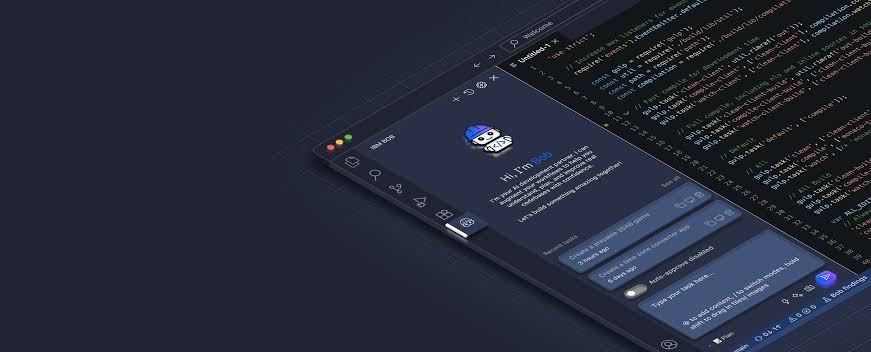
IBM has made a self-hosted deployment of IBM Bob, its agentic software development platform, generally available, according to MarkTechPost’s October 2 report.
The deployment options include on-premises infrastructure, private or sovereign clouds, and air-gapped networks. Organizations can bring their own models, with supported configurations depending on the environment.
An air-gapped system is isolated from external networks, which can be important for organizations with strict security or data-handling requirements.
Why this matters
Some companies cannot send source code or sensitive project information to a public AI service because of regulatory, contractual, or security constraints.
Self-hosted AI coding tools offer another deployment option for these environments, though organizations still need to evaluate access controls, model licensing, hardware costs, and operational responsibilities.
For developers, the broader trend is that AI coding tools are becoming available across a wider range of deployment environments.
The Biggest AI Trends to Watch This Week
These ten developments point toward five broader trends.
AI agents are moving into everyday work
Google’s persistent Gemini Agents and Cohere North 2 show the growing focus on systems that maintain context and complete longer-running tasks.
Smaller AI models are becoming more competitive
Claude Haiku 5.5 demonstrates why lower-cost models matter for applications that process many requests.
Open-weight models give developers more choices
Mistral Large 4 and Perplexity’s embedding models offer additional options for customization and self-hosting.
AI reliability is becoming a business requirement
The enterprise trust survey highlights why testing, human approval, and controlled permissions remain important.
AI tools are becoming part of existing workflows
Claude’s Google Workspace integration and Magnific One’s brand controls show how AI products are moving closer to the applications people already use.
What Should Developers and Businesses Do Next?
You do not need to adopt every new AI release immediately. Instead, identify the problem you want to solve.
- For productivity: Test integrated AI assistants on repetitive document, research, and reporting tasks.
- For development: Compare coding agents using your own representative tasks, not just published benchmarks.
- For RAG applications: Evaluate embedding models against your own documents and retrieval questions.
- For enterprise deployment: Review hosting requirements, data access, logging, permissions, and operating costs.
- For creative work: Test whether brand-aware image tools reduce the number of revisions needed to produce usable assets.
A small, well-measured pilot can tell you more than adopting a new tool because it is trending.
Frequently Asked Questions
What is the biggest AI news this week?
Some of the most notable developments include Google’s persistent Gemini Agents, Anthropic’s Claude Haiku 5.5, Mistral Large 4, and new enterprise tools for AI automation and image generation.
What is Claude Haiku 5.5?
Claude Haiku 5.5 is Anthropic’s lower-cost AI model aimed at fast, efficient workloads. Its usefulness depends on the task, model configuration, and the quality requirements of the application.
What are persistent AI agents?
Persistent AI agents are systems designed to retain relevant context and continue working on assignments beyond a single exchange. Their capabilities and level of autonomy depend on the product.
What is an embedding model used for?
An embedding model represents text or other information as numerical vectors. These representations help applications find related information, often as part of semantic search or RAG systems.
Are open-weight AI models free to use?
Some open-weight models can be downloaded and used under permissive licenses, but costs may still include hardware, hosting, inference, and maintenance. Always check the specific model’s license.
Can AI agents safely make changes without human approval?
That depends on the task, testing, permissions, and safeguards. For production systems or other consequential operations, human approval and rollback mechanisms may be appropriate.
Why is self-hosted AI important?
Self-hosting can give organizations more control over where AI runs and how data is handled. It also brings responsibility for infrastructure, updates, security, and ongoing maintenance.
Conclusion
The biggest AI news this week is not just about new models. It is about making AI more useful in real working environments.
Google is expanding persistent agents, Anthropic is targeting lower-cost AI workloads, Mistral is adding another open-weight option, and developers have new tools for retrieval, coding, and infrastructure management.
At the same time, businesses are being reminded that automation needs reliable testing, clear permissions, and appropriate human oversight.
For readers, the practical takeaway is to focus less on the hype around each release and more on what a technology can reliably help you accomplish.
Follow Tech Thrilled for clear explanations of AI news, practical AI tools, and the technology developments worth your attention.