
AI is becoming powerful enough to recreate software, websites and even video games without having access to their original source code. What once seemed like an extremely difficult engineering challenge is now becoming possible with modern AI tools.
You’ve probably seen some spicy videos and articles claiming that software is over. The argument is that AI has become so powerful that it can look at a video game, understand how it works and reproduce a playable version of it.
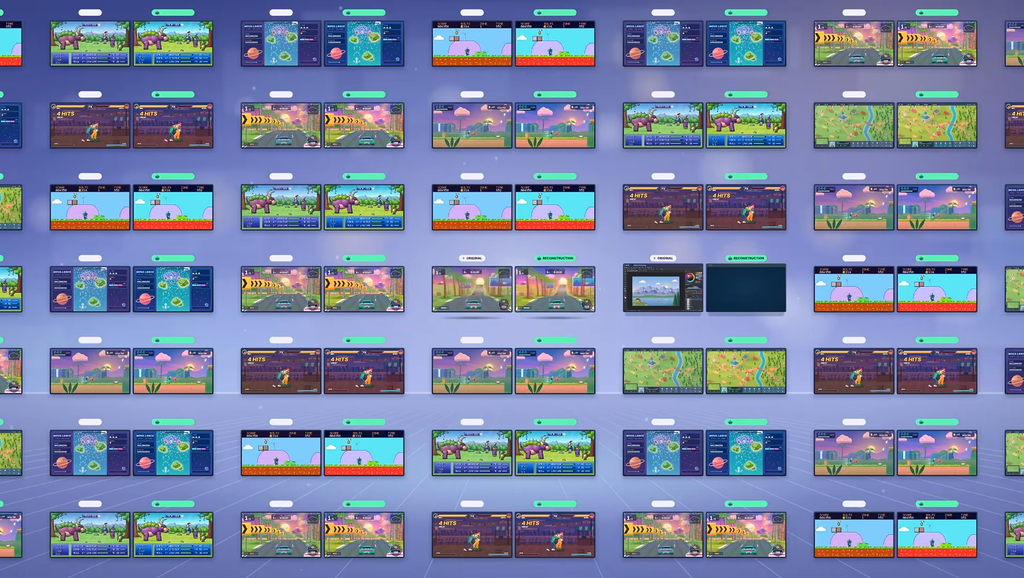
And surprisingly, this isn’t just speculation. Hundreds of AI-assisted reverse-engineering projects have already appeared, with some playable directly in your browser. Even popular tools like Photoshop and other Adobe applications are being reproduced.
So, how does this actually happen? And does it mean traditional software development is coming to an end?
Let’s cut through the noise and look at what the research actually tells us.
How AI Can Recreate Software Without Source Code
Traditionally, recreating an existing software application required access to its source code or a significant amount of manual reverse engineering.
But modern AI systems are approaching this problem differently.
An AI system can examine the compiled code of a program, understand what it does and then write a completely new program that performs the same functions.
And it gets even crazier.
AI doesn’t necessarily need to inspect the program’s internal code. It can also observe how the software behaves and attempt to reproduce that behaviour.
For example, an AI system can interact with a game or application, observe its responses and gradually build a new version that behaves in a similar way.
It then compares the differences, identifies mistakes and keeps improving its implementation until the recreated version becomes nearly identical in functionality.
In other words, AI can learn what software does and then attempt to build something that does the same thing.
Is Recreating Existing Software Legal?
Now, this raises an important question: is it actually legal to recreate existing software?
I’m not a lawyer, but courts have ruled that the functionality of software isn’t necessarily protected by copyright.
This means independent reimplementations of software functionality can potentially be legal, depending on the circumstances.
However, there is an important distinction.
The functionality of a program is one thing. Its visual assets are another.
Models, textures, game characters and other creative elements can be protected by copyright. So, reproducing how a game works doesn’t automatically give someone the right to copy its characters, artwork or other protected assets.
The legal situation can be complicated, but the important point is that recreating functionality and copying copyrighted content are not necessarily the same thing.
What Does Scientific Research Say About AI Software Reconstruction?
We mainly talk about the scientific side of AI, so let’s look at what actual research has demonstrated.
One research project tested whether AI systems could reconstruct entire software projects without access to their original source code.
Initially, the results weren’t particularly impressive.
For one particular program, the reconstructed version passed only around 15% of the tests.
But here’s where things get interesting.
In just nine months, performance improved dramatically, reaching nearly 100% on that particular evaluation.
And remember, these experiments used older AI models. Newer models are considerably more capable.
Even Small AI Models Can Recover Mathematical Rules
Another fascinating experiment involved a tiny AI model with just 12 million parameters.
That’s incredibly small by today’s standards. You could almost imagine running something that small on a toaster.
Yet, on specifically constructed tests involving software without available source code, the model recovered mathematical equations with around 90% accuracy.
Think about what that means.
The AI wasn’t simply copying code. It was observing the behaviour of software and recovering the mathematical rules behind it.
That’s almost like doing science.
AI Can Also Reconstruct the Appearance of Websites
So far, we’ve talked about reproducing software functionality. But what about its appearance?
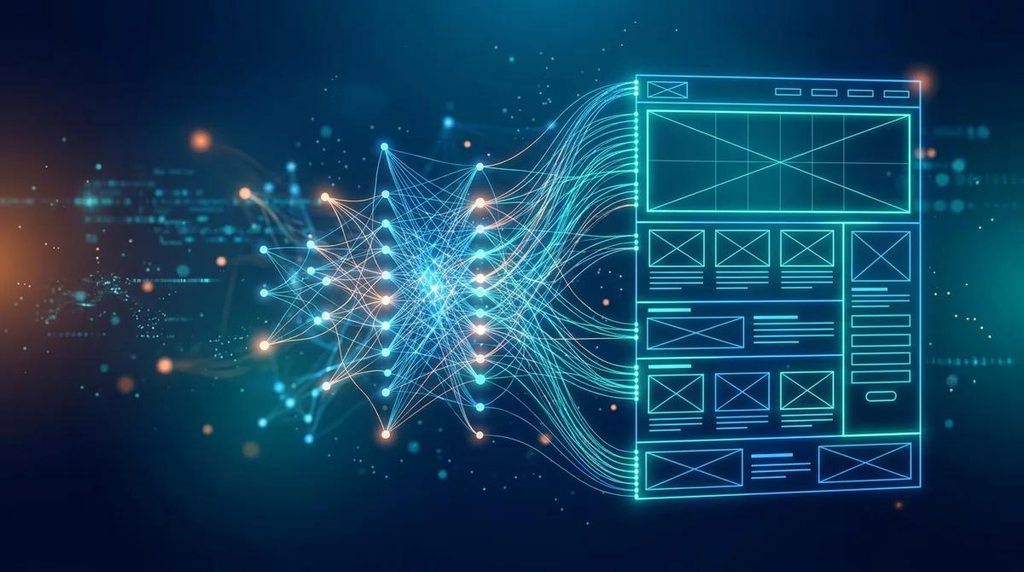
Researchers have also tested whether AI systems can recreate web pages simply by looking at them.
The results were impressive, with visual similarity scores reaching 0.938.
That represents a very high level of similarity in layouts and visual elements.
And here’s another surprising detail: the reconstructed websites used around 95% less code than the original versions.
Of course, a smaller implementation doesn’t necessarily mean every original feature has been preserved. But the results demonstrate just how efficiently AI can reproduce visual structures.
I wish I were kidding!
Why Is AI Software Reverse Engineering Working So Well?
There are two major reasons why AI systems are becoming increasingly effective at recreating software.
1. We Have Almost Unlimited Training Examples
Think about open-source software.
You can take an open-source repository, examine its source code and run the application. Now you have two things:
- The source code that created the application.
- The working application itself.
Together, these form a training pair.
An AI system can learn how source code translates into a working application and how different programming structures produce particular behaviours.
With enough examples, the model can become better at understanding the relationship between code and software functionality.
2. The Original Software Acts as a Ground Truth Oracle
The second reason is even more interesting.
Imagine that you want to recreate an existing game or application.
You don’t need to guess whether your implementation is correct. The original software is right there, available for testing.
The AI can write an initial version and compare its behaviour with the original.
Is it close? Is it far away?
You can run the original application, test different features and observe its responses for as long as necessary.
Then the AI adjusts its implementation, tries something new and tests again.
It’s essentially a continuous improvement process:
- Observe the original software.
- Generate an initial implementation.
- Run and test the new version.
- Compare its behaviour with the original.
- Identify differences and mistakes.
- Improve the implementation and repeat.
The AI can keep playing this game of hot and cold until its recreation becomes much closer to the original.
And that’s a powerful advantage.
The Problem: AI Companies Are Starting to Restrict These Capabilities
However, there is a growing problem.
Frontier AI companies are beginning to place restrictions on certain reverse-engineering tasks.
For example, Anthropic updated its Claude 5.5 Opus AI to discourage the recreation of existing games.
Some developers have also reported that the restrictions can affect legitimate reverse-engineering tasks.
This creates an interesting challenge.
AI systems are becoming increasingly capable of understanding and reproducing software, but access to those capabilities may depend on the policies of the companies developing the models.
That’s another argument for owning our own computing resources and having access to free, locally run AI models that nobody can simply take away.
Having control over your own compute and AI tools could become increasingly important as these capabilities improve.
Does This Mean Software Development Is Over?
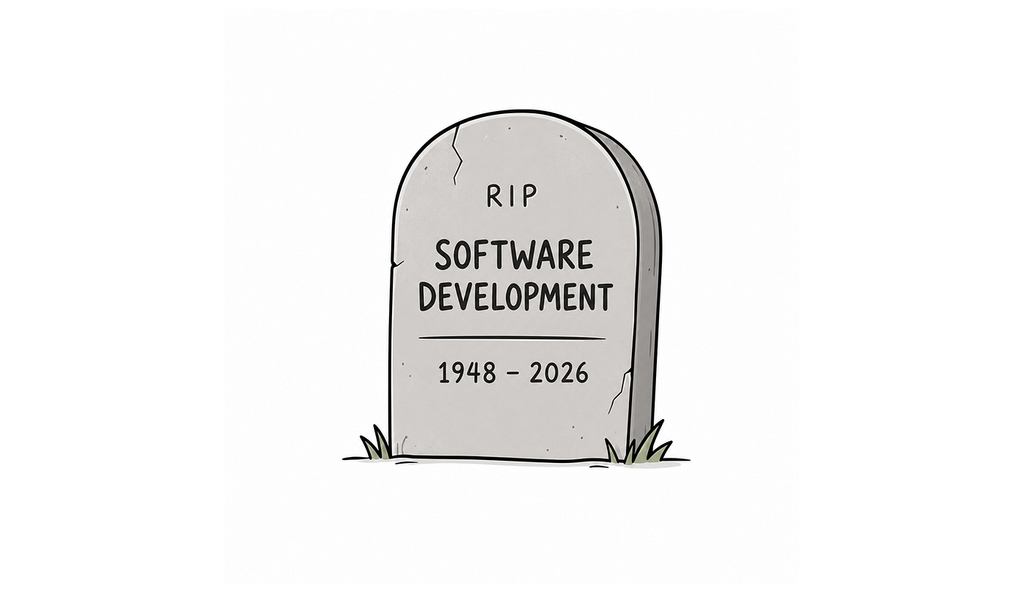
I think saying that software is completely over is a little dramatic.
But there is no denying that AI capabilities in software reconstruction and reverse engineering are improving rapidly.
And this could lead to something genuinely exciting.
Imagine being able to run your own versions of Photoshop or Final Cut Pro, created specifically for your needs and tailored to your personal preferences.
Instead of using software designed for millions of people, you could potentially have applications built around the exact features and workflows you want.
That sounds amazing!
Software could become much more personal, flexible and affordable, perhaps even free or nearly free in some cases.
But there is another side to this discussion.
The Industry Question: Will Custom AI-Built Software Be Useful?
Let’s say AI creates a customised version of Photoshop specifically for you.
It has all the features you need, works exactly how you like and costs almost nothing.
That’s great.
But what happens when you want to work at a professional graphic design company?
You’ll probably need experience with standard industry tools, such as Adobe’s applications.
Knowing how to use a homebrew application that nobody else has heard about may not be particularly useful in a professional environment.
We don’t yet know how much value the industry will place on skills involving individually generated software.
On the other hand, there’s a reasonable argument that the final work matters more than the specific software used to create it.
As long as the work gets done and you can collaborate effectively with other people, why shouldn’t you use whatever tools you prefer?
If custom-built applications support interchangeable file formats and work well with existing tools, they could become much more practical.
That could open the door to a future where people use software designed specifically for them rather than relying entirely on standard commercial applications.
The Future of Software Could Be Personalised
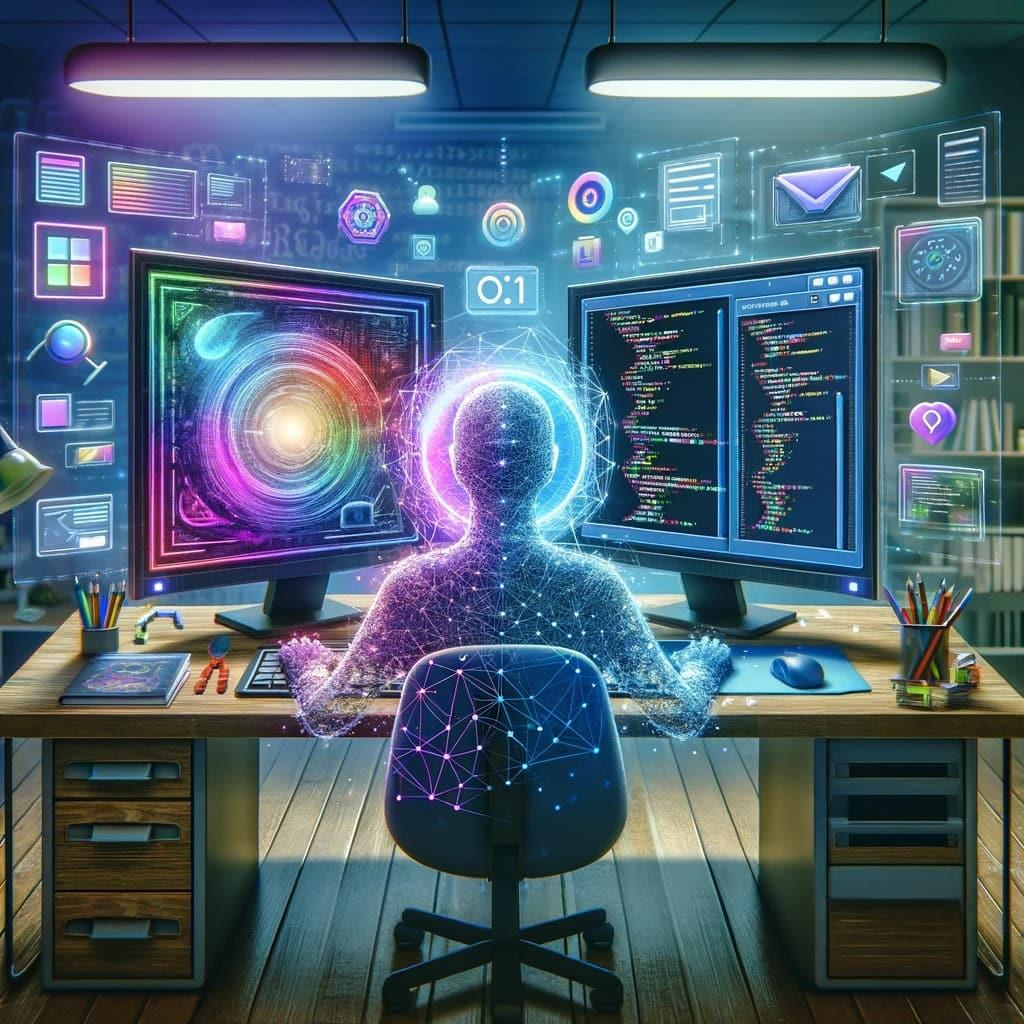
The bigger picture here is not simply that AI can recreate existing software.
It’s that AI could eventually make software development much more accessible.
You might not need to wait for a company to add a feature you want. You could potentially ask an AI system to build it for you.
You might not need an expensive application if a customised alternative can perform the same tasks.
And you might be able to experiment with entirely new workflows without depending on traditional software development cycles.
There is still a lot we don’t know about how useful, reliable and practical this approach will become.
But the research and early projects show that AI-assisted software reconstruction is an area worth watching.
Software isn’t necessarily over. But the way we create, use and interact with software could change dramatically.
And honestly, software tailored specifically for you sounds like an exciting future.
What a time to be alive!
Running Your Own AI Experiments
One final thing worth mentioning is the growing importance of having access to computing resources.
I regularly use Lambda to reproduce AI research papers, sometimes in just minutes.
It’s great for training your own models, fine-tuning existing ones, running inference and experimenting with text-to-image or video generation.
You can also run a DeepSeek chatbot or agent quickly and reliably.
Having access to powerful NVIDIA GPUs makes it easier to test ideas from research papers and see the results for yourself.
If you’re interested in experimenting with AI research, training models or running your own AI systems, having access to suitable GPU infrastructure can make a big difference.