
Imagine getting a medical scan reviewed with the help of artificial intelligence, receiving an earlier warning about a possible health problem, or helping a doctor compare treatment options using information from thousands of medical records.
This is no longer just a science-fiction idea. AI in healthcare is already being used in medical imaging, disease screening, patient monitoring and clinical decision support. It can help healthcare professionals identify patterns in complex medical data and make better-informed decisions.
But there is an important distinction: AI can support medical professionals, not automatically replace their judgment. A system that performs well in a controlled test may still make mistakes in real clinical settings.
So, how is AI changing healthcare, what can it actually detect, and what should patients know before trusting it? Let’s explore the technology, its real-world uses and the challenges that will shape its future.
What Is AI in Healthcare?
AI in healthcare refers to the use of artificial intelligence technologies to analyze medical information, identify patterns, support clinical decisions and assist with healthcare operations.
These systems can work with different types of information, including:
- Medical images such as X-rays, CT scans, MRIs and retinal photographs
- Electronic health records and patient histories
- Laboratory test results
- Heart rate and other signals from monitoring devices
- Medical research and scientific literature
For example, an AI-enabled imaging system may highlight an area on a scan that deserves closer attention from a radiologist. Another system may analyze retinal photographs to identify signs associated with diabetic eye disease.
The goal is not to let a machine make every medical decision. It is to give healthcare professionals additional information that may help them work more efficiently and identify important details.
Why Does Healthcare Need AI?
Healthcare professionals often work with large amounts of information while managing limited time and resources.
A doctor may need to review a patient’s medical history, compare test results, examine images and consider several possible explanations for symptoms. In busy healthcare systems, these tasks can create pressure on both clinicians and patients.
AI may help address some of these challenges.
The main opportunity is to make healthcare information easier to analyze and use. Depending on the application, AI can help prioritize medical images, organize patient data, identify patterns and support follow-up decisions.
However, technology alone cannot solve problems such as a shortage of doctors, limited hospital infrastructure or unequal access to treatment. AI works best when it is introduced into a well-designed healthcare process.
How AI Is Changing Medical Diagnosis

Diagnosis is one of the most visible areas of AI development. Medical diagnosis often involves recognizing patterns across images, measurements, symptoms and patient history. Machine learning systems can be trained to identify patterns in these types of data.
Here are some important applications.
1. Medical Imaging and Radiology
Medical imaging is one of the most established areas for AI-enabled healthcare tools.
Radiologists examine X-rays, CT scans, MRIs and other images to look for signs of disease or injury. AI software can analyze these images and help highlight findings that may need attention.
Depending on its intended use, an AI tool may help with:
- Identifying suspicious areas in medical scans
- Highlighting possible lung nodules
- Measuring or segmenting anatomical structures
- Improving image quality
- Prioritizing certain scans for review
For example, an AI system may flag a scan with a potentially urgent finding so that a radiologist can review it sooner.
This does not mean every AI-highlighted area represents a disease. The result needs to be interpreted in context by a qualified healthcare professional.
2. Cancer Detection and Screening
Cancer screening is another important area of research and clinical development.
AI systems can analyze medical images and other clinical information to identify patterns associated with certain cancers. In breast imaging, for example, AI tools may assist with reviewing mammograms. Other applications are being developed for lung, prostate and other types of cancer.
The potential benefit is earlier attention to suspicious findings and support for clinicians who review large volumes of images.
However, detecting a suspicious pattern is not the same as confirming cancer. A diagnosis may require additional imaging, laboratory tests, a biopsy and clinical evaluation.
Patients should also understand that AI performance can vary across populations, hospitals, imaging equipment and clinical settings.
3. Eye Diseases and Retinal Screening
Retinal photographs contain information that can help clinicians identify certain eye conditions.
AI-enabled systems can analyze retinal images for signs of diabetic retinopathy, a complication of diabetes that can damage the blood vessels in the retina.
This is particularly useful as a potential screening application because it may help identify people who need further eye examination.
The US Food and Drug Administration (FDA) lists AI-enabled medical devices that include systems for detecting diabetic retinopathy from retinal images. Their authorization applies to specific devices and intended uses, not to every AI eye-screening application.
4. Heart Disease and Patient Monitoring
AI can also help analyze signals from the heart and information collected through medical monitoring devices.
Depending on the system, it may help identify unusual patterns in heart rhythm data, support risk assessment or analyze information from wearable and clinical monitoring equipment.
Some AI-enabled medical devices are designed to estimate the probability of specific cardiovascular events or support the monitoring of patients with existing conditions.
These tools should not be treated as universal heart-disease detectors. A risk estimate is not a confirmed diagnosis, and symptoms that may indicate a medical emergency require immediate professional attention.
5. Clinical Decision Support
AI can help doctors bring together information from different parts of a patient’s medical record.
A clinical decision-support system may help organize test results, highlight potential medication-related concerns or provide information relevant to a doctor’s assessment.
Newer generative AI systems can also summarize medical information and help professionals work with large amounts of text.
But there is a major limitation: an AI-generated answer can sound convincing and still be wrong. Clinical information must be checked against reliable medical sources and the patient’s actual circumstances.
How AI Is Changing Treatment
AI’s role in medicine is not limited to identifying possible diseases. It can also support treatment planning and patient management.
Personalized Treatment
Two patients with the same diagnosis may have different medical histories, risk factors and responses to treatment.
AI systems can analyze combinations of patient information to help clinicians explore patterns that may be relevant to treatment decisions.
In the future, better-integrated clinical data may support more individualized care. However, a prediction from an AI model does not automatically prove that a particular treatment will work for an individual patient.
Remote Patient Monitoring
Healthcare providers can use connected devices to collect information such as heart rate, blood glucose readings and other health measurements.
AI may help analyze this information and identify patterns that deserve clinical attention.
For people managing long-term conditions, this could support more continuous monitoring between appointments. It does not mean every alert requires emergency treatment, or that a wearable device can replace a medical examination.
Drug Research and Development
AI is also being explored in drug discovery and biomedical research.
Researchers can use computational models to analyze biological data, explore potential drug candidates and prioritize experiments.
This may help researchers investigate possibilities more efficiently. But a promising result from an AI model is only one part of drug development. Laboratory research, clinical trials, regulatory review and safety evaluation remain essential.
Real-World AI Healthcare Developments in 2026
AI in healthcare is moving beyond demonstrations and into regulated medical products. Two developments show why this area deserves attention.
The FDA’s AI Medical Device List
The US Food and Drug Administration maintains a public list of AI-enabled medical devices authorized for marketing in the United States.
As of September 2026, the FDA reported that it had authorized more than 1,600 AI-enabled medical devices. The list includes products across different medical areas, including radiology, cardiovascular care, neurology and other specialties.
Examples described by the FDA include software for diabetic retinopathy detection, skin cancer diagnostic information, medical image enhancement and automated insulin dosing based on continuous glucose monitor readings.
This is an important indicator of how widely AI is being incorporated into medical technology. However, FDA authorization applies to the specific device and its intended use. It does not mean that every AI health application is approved or clinically reliable.
You can explore the FDA’s AI-enabled medical device information and its public device list.
New FDA Attention on Generative AI Medical Devices
On August 18, 2026, the FDA published a discussion paper seeking public feedback on how generative AI-enabled medical devices should be evaluated and regulated.
The paper discussed areas such as risk assessment, evaluation before a device reaches patients, monitoring after deployment, and the challenges posed by foundation models and agentic AI systems.
The proposed approach included assessing a device’s capabilities through non-clinical benchmarking and clinical confirmation.
This development matters because generative AI systems can produce new content and responses rather than simply classify a fixed set of inputs. Their performance and risks may require careful evaluation in the context where they are used.
The announcement was a discussion paper seeking feedback—not a final approval framework. You can read the FDA’s announcement for the details.
Benefits of AI in Healthcare
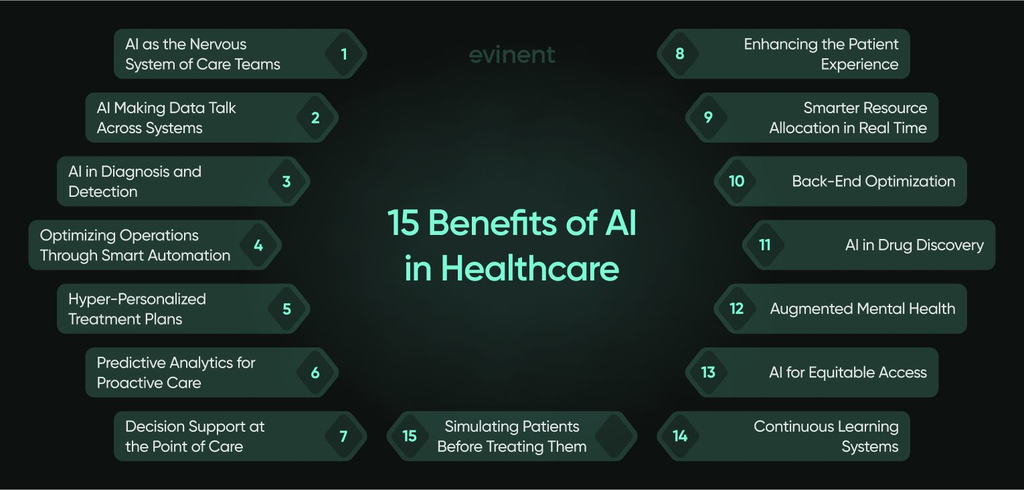
When properly designed, tested and used, AI can offer several potential benefits.
| Potential Benefit | What It Could Mean |
|---|---|
| Earlier detection support | Flagging patterns that deserve further examination |
| Faster image review | Helping prioritize or organize medical scans |
| Better data analysis | Finding patterns across large medical datasets |
| Clinical support | Providing additional information for healthcare professionals |
| Remote monitoring | Helping analyze data collected between appointments |
| Research assistance | Supporting the exploration of potential drug candidates |
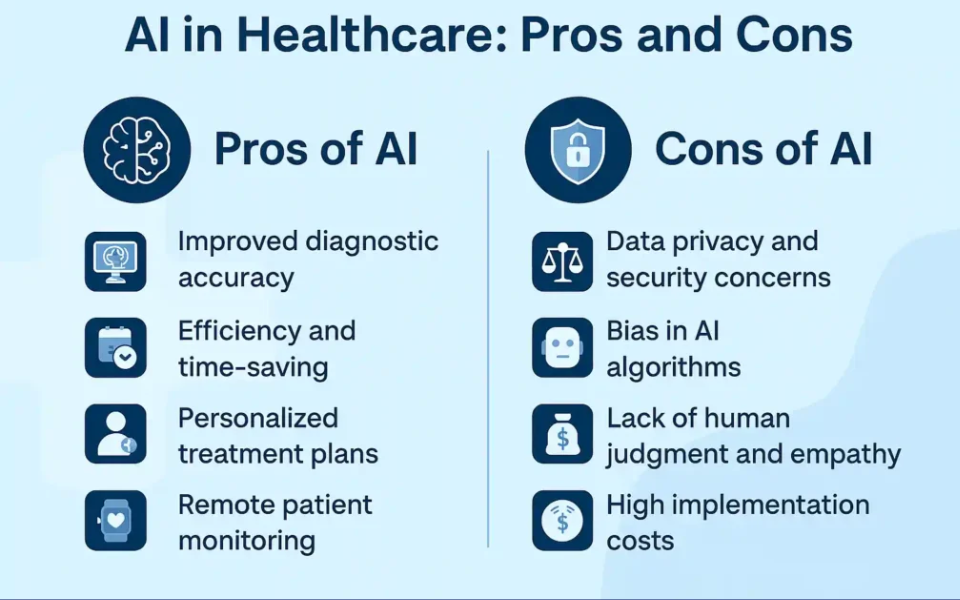
The key phrase is potential benefit. Results depend on the quality of the system, the data it was trained and tested on, its intended use and the way healthcare professionals use its output.
Risks and Limitations of AI in Healthcare
Medical technology has to meet a higher standard than an ordinary productivity app. A mistake can affect a person’s health, treatment or safety.
1. Incorrect Results
AI systems can miss important findings or flag something that is not actually a problem.
A false negative may fail to identify a condition that needs attention. A false positive may lead to unnecessary anxiety or additional testing.
This is why AI output should be interpreted within a proper clinical process.
2. Bias in Training Data
AI systems learn patterns from data. If the data used to develop or evaluate a system does not adequately represent the people who will use it, performance may vary across different populations.
For example, a model developed using images from a limited set of hospitals may not perform equally well with different equipment, patient groups or clinical conditions.
Testing across relevant populations is essential.
3. Patient Privacy and Data Security
Medical records contain sensitive personal information.
Healthcare organizations must consider how patient data is collected, stored, shared and processed when introducing AI tools.
Patients should not upload medical records, test results or identifiable health information to an unfamiliar AI service without understanding its privacy and security practices.
4. Lack of Clear Explanations
Some AI models can produce a result without providing a clear explanation that a clinician can easily verify.
This can make it harder to understand why a system flagged a scan or suggested a particular pattern.
For high-impact medical decisions, transparency, validation and professional oversight matter.
5. Overdependence on Technology
AI should not become a reason to stop questioning results.
A doctor must still consider symptoms, medical history, physical examination and other relevant evidence. A system’s output should not override clinical judgment without a sound reason.
The World Health Organization has emphasized that AI for health must be developed and used with attention to ethics, human rights, accountability and public benefit. Its guidance on AI ethics and governance provides a useful foundation for understanding these concerns.
Will AI Replace Doctors?
The short answer is no—not in the way many headlines suggest.
AI can assist with specific tasks, such as analyzing images, organizing information and identifying patterns. But being a doctor involves much more than recognizing patterns in data.
Healthcare professionals must understand a patient’s symptoms, medical history, circumstances, preferences and treatment goals. They also communicate difficult information, manage uncertainty and take responsibility for clinical decisions.
A 2024 study highlighted by the US National Institutes of Health found that an AI model could answer medical image-based quiz questions with high accuracy, yet still make mistakes when describing images and explaining its reasoning.
The lesson is important: getting the final answer right does not always mean the system understood the case correctly.
Read the NIH report on AI and medical decision-making.
The more realistic future is a combination of human expertise and carefully validated AI tools. Doctors who know how to use these systems responsibly may gain useful support, while patients still need qualified professionals to interpret their health information.
What Patients Should Know Before Trusting AI
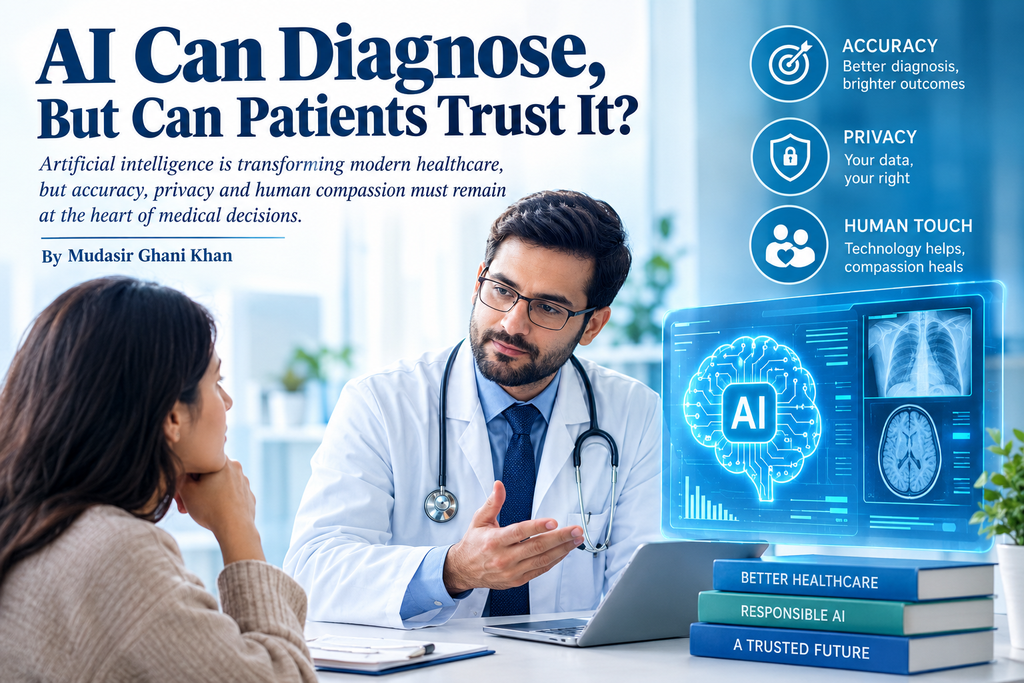
AI-powered health tools are becoming easier to access, but patients should approach them carefully.
Here are a few practical steps:
- Ask what the tool is designed to do. A screening tool, a monitoring device and a diagnostic system do not have the same purpose.
- Check its regulatory status. In the United States, look for the relevant device in the FDA’s public AI-enabled medical device information.
- Understand its limitations. Ask whether the tool has been evaluated for the relevant condition and patient population.
- Do not self-diagnose from an AI response. Use AI-generated information as a prompt for questions, not as a medical conclusion.
- Protect your health data. Review privacy policies before sharing personal medical information.
- Discuss important results with a qualified professional. Diagnosis and treatment decisions should be made with appropriate clinical guidance.
If you have urgent or severe symptoms, seek medical care rather than waiting for an AI tool to respond.
The Future of AI in Healthcare
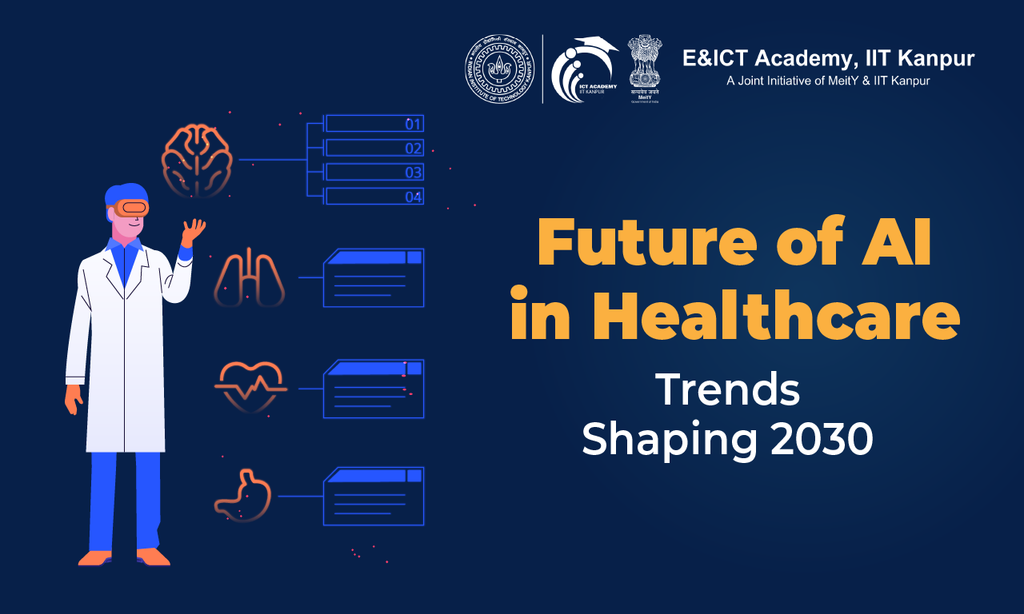
The next phase of AI in healthcare may involve systems that connect information from medical images, laboratory results, patient histories and monitoring devices.
Multimodal AI could help healthcare professionals work with different types of medical information together. More specialized systems may support screening, clinical workflows, research and personalized treatment planning.
At the same time, healthcare organizations will need stronger evaluation methods, clear accountability, secure data practices and ongoing monitoring.
The future will not be measured simply by how many hospitals adopt AI. It will be measured by whether these tools improve patient care safely, consistently and fairly.
AI may become one of medicine’s most useful tools—but its real value will depend on how responsibly people use it.
Frequently Asked Questions
1. What is AI in healthcare?
AI in healthcare is the use of artificial intelligence to analyze medical data, support disease detection, assist clinical decisions, monitor patients and improve healthcare processes. It is generally designed to support medical professionals rather than replace them.
2. Can AI detect diseases?
Some AI-enabled medical devices are designed to identify patterns associated with specific conditions, such as diabetic retinopathy or findings in medical images. Their capabilities depend on the device, its intended use and clinical validation. AI results do not automatically confirm a diagnosis.
3. How is AI used in medical diagnosis?
AI can analyze X-rays, CT scans, MRIs, retinal photographs and other medical information. It may highlight suspicious findings, measure structures or help prioritize cases for review by healthcare professionals.
4. Can AI replace doctors in the future?
AI may automate or support certain medical tasks, but it cannot fully replace the broader responsibilities of doctors. Clinical judgment, patient communication, physical examination and responsibility for treatment remain essential.
5. Is AI in healthcare safe?
Safety depends on the system, its intended use, the quality of its testing and how it is used in clinical practice. Regulated medical devices undergo applicable review, but no technology is error-free. Professional oversight remains important.
6. What are the biggest risks of AI in medicine?
Major concerns include incorrect results, biased training data, patient privacy, cybersecurity, limited transparency and overdependence on automated recommendations.
7. What is the future of AI in medical diagnostics?
AI may increasingly support medical imaging, screening, remote monitoring, clinical decision support and personalized care. Progress will depend on clinical evidence, regulation, data quality and responsible implementation.
8. Does the FDA approve every AI healthcare tool?
No. The FDA regulates medical devices, including certain AI-enabled medical devices, according to their intended use and applicable regulatory requirements. Not every health app or general-purpose AI chatbot is an FDA-authorized medical device.
Conclusion
AI Will Support the Next Chapter of Medicine
AI in healthcare is already moving from research into practical medical applications. It can help analyze scans, support screening, organize clinical information and assist healthcare professionals with complex tasks.
But the technology still has important limitations. Incorrect results, bias, privacy concerns and a lack of transparency must be addressed before AI can be trusted in more critical medical settings.
For patients, the most important takeaway is simple: AI can provide useful support, but it should not replace professional medical advice or independent clinical evaluation.
The future of medicine will not be about choosing between doctors and AI. It will be about bringing human expertise and responsible technology together to make healthcare safer, more accessible and more effective.