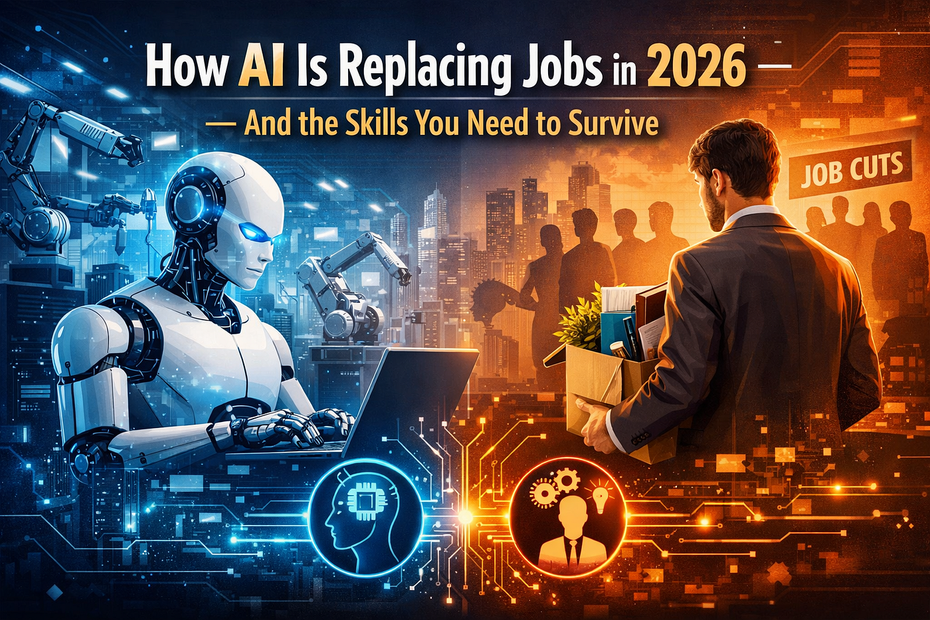
AI replacing entry-level jobs is a growing concern as companies use AI for coding, research, and routine tasks, raising questions about the future of work for fresh graduates.
AI is evolving rapidly, and tools like Anthropic Claude AI with a 1M Token Context are expanding what AI can do in the workplace.
Anthropic’s October 2026 employment research shows a decline in the share of junior technical hires at the company. Stanford researchers have also documented a widening employment gap for younger workers in occupations highly exposed to AI. Neither finding proves that AI alone is responsible for all employment changes, but both highlight a challenge: companies may need fewer people for some tasks that traditionally helped beginners gain experience.
What Did Anthropic’s CEO Warn About?

Anthropic CEO Dario Amodei warned in a May 2025 Axios interview that AI could eliminate half of US entry-level white-collar jobs and push unemployment higher. He identified areas such as technology, finance, law, and consulting as potentially exposed to AI-driven changes.
His warning focused on work that AI systems can increasingly perform, including routine analysis, document processing, basic coding, and other structured tasks. These activities often form part of an entry-level employee’s responsibilities.
The important distinction is that Amodei described a possible future scenario, not a measured prediction that exactly half of all entry-level jobs will disappear. Actual outcomes depend on how quickly businesses adopt AI, whether productivity creates new demand, what new jobs emerge, and how employers choose to reorganize their teams.
What Anthropic’s Latest Hiring Data Shows

On October 16, 2026, Anthropic published research examining how AI is changing work inside the company. Its findings provide a real-world example of how AI adoption can affect hiring patterns.
The company reported that junior technical employees represented a smaller share of its technical workforce than in early 2025. More strikingly, the share of junior technical hires fell from 27% to 9% over that period.
Anthropic linked these changes to the growing use of AI agents and coding tools. Its research describes employees using AI to write and debug code, build internal tools, process contracts, and complete other tasks more efficiently. The company also reported that hiring managers increasingly value autonomy and judgment alongside technical expertise.
These findings do not mean Anthropic stopped hiring junior employees or that every company will follow the same path. They describe hiring shares and workplace changes at one AI company. The company’s overall workforce and business needs also changed during this period.
Nevertheless, the findings raise a significant question for employers: if AI can handle more of the routine work assigned to beginners, how will new employees gain the experience they need to become senior professionals?
What Stanford’s Research Found About Young Workers

Research from Stanford’s Digital Economy Lab provides a broader view of the US labor market.
In an August 2026 revision of its study, Canaries in the Coal Mine? Six Facts about the Recent Employment Effects of Artificial Intelligence, researchers analyzed payroll data from ADP covering millions of US workers through June 2026.
One finding stood out: employment among workers aged 22–25 in highly AI-exposed occupations was about 19% below where it would have been if it had kept pace with similarly aged workers in less-exposed occupations.
The researchers did not find evidence of widespread economy-wide job displacement. They also emphasized that their data show an association rather than proving AI alone caused the employment gap. Other economic conditions and changes in hiring can influence these trends.
The research suggests that reduced hiring of younger workers may be an important part of the story. When a company automates routine work, it may decide to hire fewer beginners rather than dismiss large numbers of existing employees.
This distinction matters. A graduate struggling to find a first job may face a different challenge from an experienced worker whose employer introduces AI tools.
Which AI replacing entry-level jobs Tasks Are Most Exposed to AI?

AI does not affect every occupation in the same way. It is more useful to examine individual tasks than to label an entire profession as safe or doomed.
To understand how AI is changing the workplace, explore our guides on Anthropic Claude AI and Its 1M Token Context and Anthropic AI Safety and Claude Features. You can also read our latest insights on ChatGPT’s GPT-5 Model Picker.
1. Routine research and data processing
AI tools can summarize documents, extract information from spreadsheets, categorize records, and create initial research briefs. These capabilities can reduce the time required for routine information work.
Human review remains important when the information is sensitive, incomplete, or used for important business decisions.
2. Basic coding and debugging
Coding assistants can generate boilerplate code, explain errors, write tests, and suggest fixes. This can reduce the amount of simple implementation work available to beginners in some teams.
Developers still need to understand system design, test results, security, performance, and the real-world requirements behind a software project.
3. First drafts and routine content
AI can produce initial drafts of emails, reports, descriptions, and marketing content. Entry-level writers and assistants may therefore need to offer more than the ability to produce a basic first draft.
Research, interviews, editorial judgment, fact-checking, original insight, and a strong understanding of the audience can make human contributions more valuable.
4. Administrative and document-heavy tasks
Scheduling, form processing, meeting summaries, document review, and repetitive reporting can often be partly automated. This may change the responsibilities of administrative assistants and junior analysts.
However, coordination, discretion, stakeholder communication, and handling unexpected situations remain important parts of many roles.
5. Basic customer support
AI can respond to common questions, summarize support histories, and recommend solutions. More complex cases may still require human empathy, judgment, negotiation, or accountability.
The overall impact depends on the employer, the customers, the tools being used, and the complexity of the work.
Does This Mean Half of All Entry-Level Jobs Will Disappear?
No. The frequently repeated figure of 50% comes from Amodei’s warning about a possible future outcome in US entry-level white-collar employment. It should not be presented as a confirmed job-loss statistic.
Current evidence points to a more nuanced picture. Some tasks are becoming easier to automate, certain employers are changing their hiring patterns, and younger workers in highly AI-exposed occupations are showing weaker employment outcomes relative to comparable peers.
At the same time, AI can help employees complete more work, improve services, and develop products that would previously have been too expensive to offer. These changes may create demand for new responsibilities and roles, although the timing and distribution of those opportunities remain uncertain.
The World Economic Forum’s Future of Jobs Report 2025 projected that broader economic and technological trends could create 170 million jobs and displace 92 million globally by 2030, for a net increase of 78 million. These are employer-survey-based projections across multiple trends, not a forecast of AI’s impact alone.
The right conclusion is neither that all entry-level jobs are disappearing nor that the risk is exaggerated. The job market is changing unevenly, and early-career workers should prepare for that change.
What This Means for Students and Fresh Graduates

For students, the challenge is not simply to learn which AI tool is popular. It is to develop skills that help them solve real problems with or without AI.
Learn to use AI tools in your field
A marketing graduate can use AI for research and campaign drafts. A developer can use coding assistants to prototype and test ideas. An analyst can use AI to explore data and create initial reports.
The goal is to understand the workflow well enough to check the tool’s output and explain the decisions behind it.
Build proof of practical ability
Create projects that demonstrate what you can do. A portfolio might include a working application, a documented research project, an analysis dashboard, or a campaign supported by measurable results.
Show the problem, your process, the tools you used, what you verified, and what you learned. Employers need evidence of judgment, not just a list of AI products on a resume.
Strengthen communication and critical thinking
AI-generated work still needs people who can ask the right questions, recognize weak assumptions, explain decisions, and work with colleagues or customers.
Clear writing, presentations, collaboration, and the ability to explain complex ideas can make technical skills more useful.
Understand fundamentals, not only prompts
A developer should understand programming concepts and debugging. A marketer should understand audiences, positioning, and analytics. An analyst should understand data quality and statistical reasoning.
AI can accelerate learning, but relying on generated answers without understanding them makes it harder to catch mistakes or handle unfamiliar problems.
Seek experience wherever you can find it
Internships, volunteer projects, open-source contributions, freelancing, and practical work for small organizations can help build experience. Look for opportunities where you own a real outcome, receive feedback, and learn how decisions are made.
Skills to Build in an AI-Driven Job Market
A useful strategy combines technical ability with human judgment.
| Skill | Why it matters |
|---|---|
| AI literacy | Helps you select and use tools responsibly |
| Domain expertise | Helps you recognize errors and make informed decisions |
| Critical thinking | Helps evaluate evidence and AI-generated output |
| Communication | Helps translate analysis into useful action |
| Data literacy | Helps interpret metrics and spot misleading results |
| Problem-solving | Helps handle situations that do not fit a template |
| Adaptability | Helps you learn new tools and changing workflows |
| Accountability | Keeps people responsible for important decisions |
You do not need to master every skill at once. Start with the requirements of your target role, then build a small portfolio that shows how you combine AI tools with real expertise.
How Employers Can Protect Early-Career Career Paths
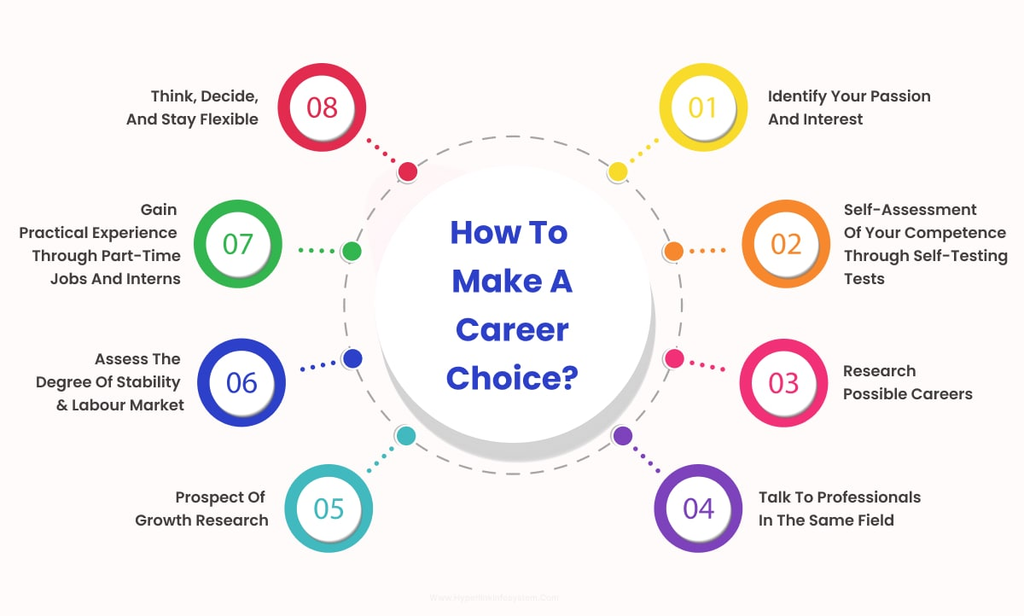
Employers also have a responsibility to rethink entry-level work. If AI handles repetitive tasks that once helped beginners learn, organizations need other ways to develop future experts.
Companies can provide structured mentorship, supervised projects, rotations across teams, and opportunities to review AI-generated work. They can also give junior employees responsibility for testing, quality assurance, customer research, and process improvement.
Rather than measuring productivity only by how much work AI can replace, employers can consider whether AI helps teams train people faster and produce better results.
Anthropic’s research describes internal redeployment and changes in how employees contribute as AI tools spread. Such examples illustrate that organizations have choices about how they manage technological change, even when the long-term labor-market effects remain uncertain.
Frequently Asked Questions
1. Will AI replace entry-level jobs in 2026?
AI is changing some entry-level tasks and hiring patterns, particularly in occupations involving routine digital work. However, there is no evidence that half of all entry-level jobs have already disappeared. The impact varies by industry, company, and role.
2. What did Anthropic’s CEO say about AI and jobs?
Dario Amodei warned in 2025 that AI could eliminate half of US entry-level white-collar jobs within one to five years. This was a forecast about a possible future scenario, not a confirmed outcome.
3. What does Anthropic’s October 2026 research show?
Anthropic reported that the share of junior technical hires at the company fell from 27% to 9% since early 2025. The research also describes greater use of AI agents and changes in the skills employers seek.
4. Which entry-level jobs are most exposed to AI?
Tasks involving routine data processing, basic coding, document handling, first drafts, and repetitive customer support may be more exposed. Exposure does not mean an entire job will necessarily disappear.
5. Should students stop learning coding or digital marketing?
No. Students should continue learning the fundamentals of their chosen field while developing the ability to use and evaluate AI tools. Understanding the work makes it easier to check AI output and solve problems beyond standard tasks.
6. What skills will help fresh graduates stand out?
Practical experience, domain knowledge, critical thinking, communication, data literacy, problem-solving, and responsible AI use can help graduates demonstrate value. A portfolio with measurable outcomes is often more persuasive than simply listing tools.
7. Is AI responsible for all recent declines in entry-level hiring?
No. Employment changes have several possible causes, including economic conditions, industry shifts, and business decisions. Stanford’s research identifies concerning patterns among younger workers in AI-exposed occupations but does not establish that AI alone caused them.
8. Can AI also create new jobs?
Yes, AI can create demand for new products, services, and responsibilities. The number, location, and timing of those opportunities are uncertain, and new jobs may require different skills from the roles being changed.
Conclusion
AI is reshaping entry-level work, but the evidence does not support the claim that half of all entry-level jobs have already vanished. Anthropic’s hiring data and Stanford’s labor-market research both point to a real concern: early-career opportunities may be changing faster in occupations where AI can automate routine tasks.
For students and fresh graduates, the practical response is to build strong fundamentals, learn to work effectively with AI, demonstrate real-world results, and develop judgment that goes beyond generating a first draft or basic solution.
For employers, the challenge is to preserve ways for beginners to gain experience and become the next generation of experts. The future of work will depend not only on what AI can do, but also on the decisions organizations make about people, training, and opportunity.