
1. Meta Releases Muse Spark Open: A New Era for Open-Weight AI Models
October 15, 2026
Meta released Muse Spark Open, a multimodal AI model with 816 billion total parameters, 42 billion active parameters and a reported one-million-token context window. Its ability to run on high-memory Mac desktop setups makes local AI deployment an important angle, although the hardware requirements remain substantial.
2. Microsoft Reveals MAI-Base-2: Inside Its 2.8 Trillion-Parameter AI Model
October 16, 2026
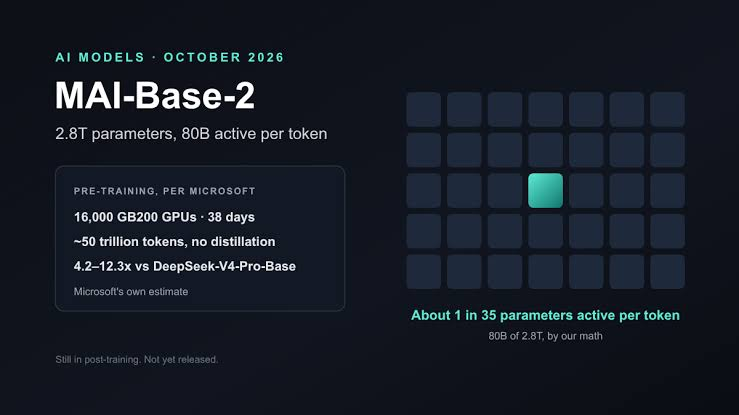
Microsoft published a pre-training report for MAI-Base-2, describing a 2.8-trillion-parameter mixture-of-experts model. The report focuses on training efficiency and Microsoft’s growing investment in its own AI infrastructure. The model is still undergoing post-training, and its weights are not publicly available.
3. AI Agent Costs Could Rise Fivefold by 2028, Gartner Forecast Suggests

October 16, 2026
As businesses deploy more sophisticated AI agents, lower token prices may not translate into lower overall bills. VentureBeat reports Gartner’s forecast that inference costs per agentic workflow could rise more than fivefold through 2028. The article can explore model routing, token monitoring and cost controls for businesses adopting AI automation.
4. Researchers Develop Self-Organizing AI Agents That Review and Improve Each Other

October 16, 2026
Researchers from Stanford University, Together AI and Emory University developed a framework called Self-Organizing Agent Teams. It enables AI agents to learn reusable collaboration strategies and review each other’s reasoning. The research suggests that structured cooperation can help with difficult mathematics and physics problems.
5. Z.ai’s GLM-Legal Challenges Leading AI Models on Legal Reasoning Tasks

Source: MarkTechPost · October 13, 2026
Z.ai’s GLM-Legal model targets legal research and document-based reasoning. MarkTechPost reports that it achieved a 19.17% all-pass score on Harvey’s Legal Agent Benchmark, outperforming several named models on that specific measure. An article should explain what the benchmark measures and why legal AI still requires careful human review.
6. NVIDIA Introduces Nemotron 3.5 Super VL for Multimodal AI Agents

October 15, 2026
MarkTechPost reports that NVIDIA released Nemotron 3.5 Super VL, an open multimodal mixture-of-experts model designed for agentic workloads. Its reported configuration includes 120 billion total parameters, 12 billion active parameters and a one-million-token context. Developers may be interested in how models that combine visual and textual understanding can support complex AI workflows.
7. Meta’s Muse Wonder AI Models Signal a New Push Into Advanced AI

October 15, 2026
Meta’s Muse Superintelligence Labs introduced Muse Wonder and Muse Wonder Full, positioning them as advanced models for personal and professional tasks. The Rundown reports strong benchmark results for both versions. A useful article angle is how Meta’s AI strategy is evolving and what the distinction between closed models and open-weight releases means for developers.
8. Alibaba’s QwenGyre Targets Long-Horizon Training for AI Coding Agents

October 12, 2026
Alibaba’s Qwen team introduced QwenGyre, an online reinforcement-learning framework aimed at training coding agents on long-running tasks. The research focuses on improving agent training through existing, unmodified execution harnesses. Explain how this approach differs from training a model simply to generate code snippets.
9. Black Forest Labs Opens FLUX 3 Image Klein Weights for Local AI Image Generation

October 15, 2026
VentureBeat reports that Black Forest Labs released FLUX 3 Image Klein weights for local image-generation workflows. Commercial use is subject to limits, particularly for larger businesses. This creates an opportunity for a practical guide covering local image generation, licensing, hardware requirements and alternatives for creators.
Read the VentureBeat AI coverage page ·
10. Microsoft’s Maia 300 AI Chip Could Change Its Dependence on Nvidia
October 15, 2026 coverage of the announcement
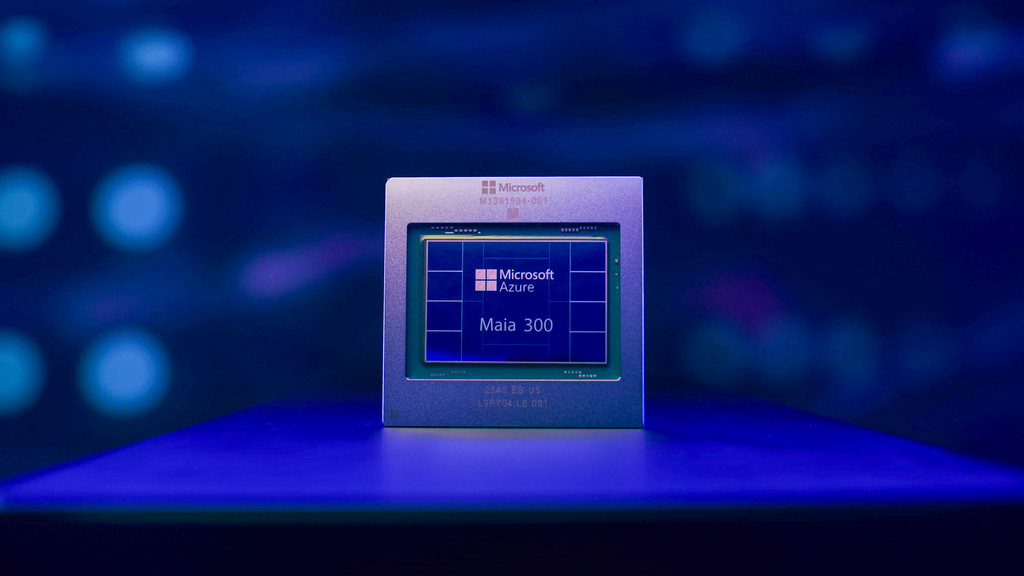
Microsoft is preparing Maia 300, its next-generation AI accelerator, for planned production deployment in 2027. The Rundown reports that Microsoft expects performance and energy-efficiency improvements from its custom silicon. The story is relevant to the wider competition around AI infrastructure, data-center costs and dependence on third-party GPU suppliers.