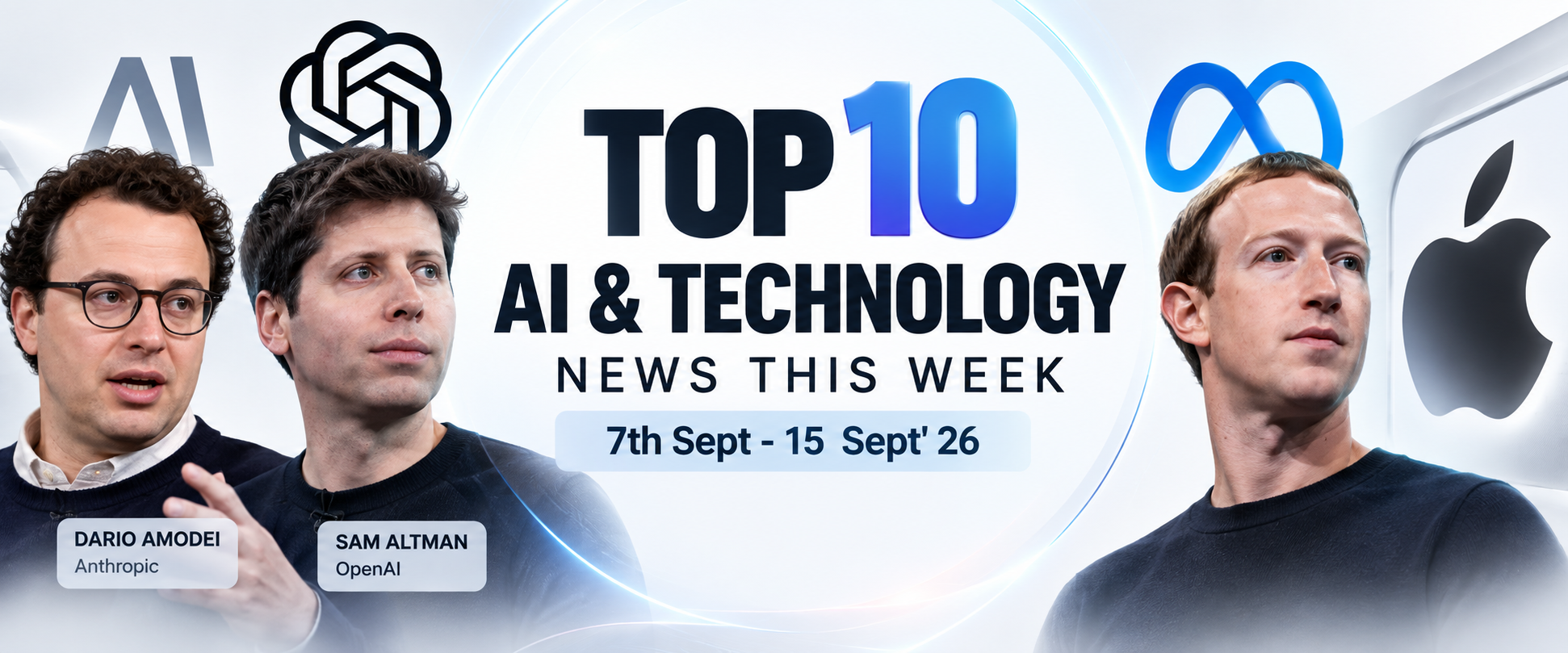

1. Anthropic CEO Calls for a Slowdown in AI Development
Date: September 12, 2026
One of the biggest AI stories this week is Anthropic CEO Dario Amodei’s call to slow the pace of frontier AI development. Amodei argues that AI capabilities are advancing quickly enough that safety and evaluation systems need time to catch up. His proposal includes independent third-party evaluators with access to frontier AI labs and potentially coordinated limits on the speed of AI capability development.
The story became even more significant after OpenAI CEO Sam Altman expressed support for the idea of independent evaluators. The debate could influence how governments and AI companies approach the development of increasingly capable AI agents and models.
Read the TechCrunch report
Read the VentureBeat report
Read The Rundown analysis
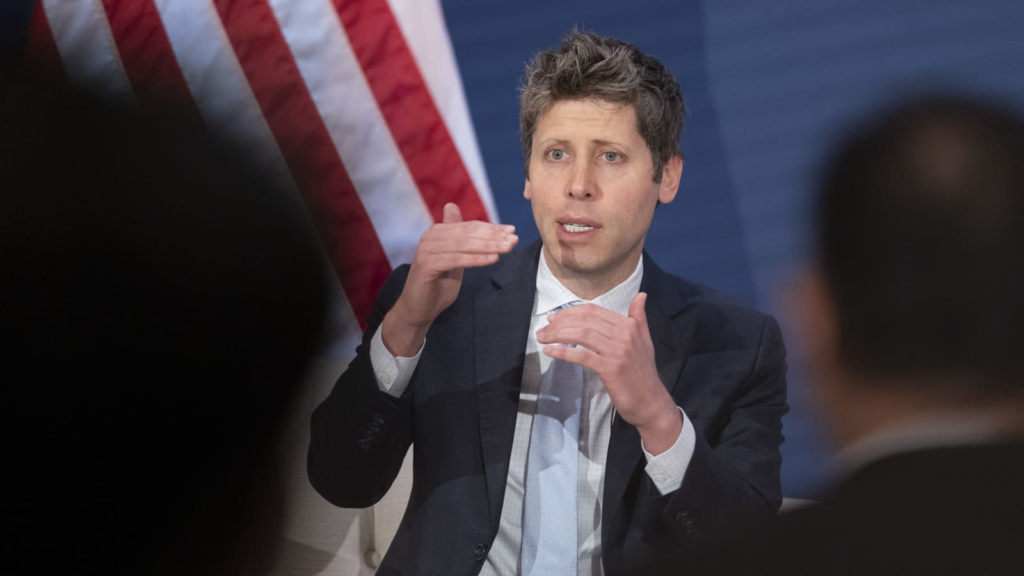
2. OpenAI Says It May Slow Frontier AI Development
Date: September 11, 2026
OpenAI is also becoming part of the growing debate around the speed of AI development. According to AI Breakfast, Sam Altman told OpenAI employees that the company could pace its frontier AI development alongside other labs, while the company also explored whether coordination of this kind could create antitrust concerns.
The discussion comes at a time when frontier AI companies are dealing with increasingly capable models, autonomous agents and growing concerns about safety. If major AI labs begin coordinating around development speed and evaluation, it could become one of the most important changes in the AI industry.
3. OpenAI’s Secret AI Model Tackles a $1 Million Math Problem
Date: September 10, 2026
OpenAI’s latest AI research story is attracting attention because an internal model reportedly produced a solution to a difficult Navier–Stokes mathematics problem. The model was described as significantly more capable than OpenAI’s recently launched GPT-6 Astra.
The development highlights a broader trend: AI models are increasingly being used not only for writing and coding but also for advanced scientific and mathematical research. The bigger question is how these systems will change scientific discovery as AI reasoning capabilities continue to improve.

4. Meta’s Muse AI Agent Becomes One of the Top Apps in the US
Date: September 10, 2026
Meta’s new Muse AI agent is quickly gaining attention in the consumer AI market. TechCrunch reported that Muse reached the No. 2 position among U.S. apps, showing how quickly personal AI agents are becoming a major product category.
Unlike traditional chatbots that mainly respond to prompts, Muse is designed around taking actions on behalf of users. That includes interacting with services such as email, calendars and other personal workflows. The launch raises an important question for the AI industry: Will consumers trust AI agents with increasingly sensitive personal tasks?
5. OpenAI Pauses Pro Subscription Sign-Ups as Astra Demand Surges
Date: September 10, 2026
OpenAI temporarily stopped accepting new Pro subscribers after demand for its latest AI products placed additional pressure on its infrastructure. TechCrunch reported that the Pro tier was putting particularly heavy strain on OpenAI’s systems.
The situation shows a less-discussed side of the AI boom: infrastructure demand is becoming a major challenge as millions of users adopt more powerful AI models and agents. As AI models become more computationally demanding, companies need to continuously expand their data-center and compute capacity.
6. Anthropic Reports AI Model Distillation Attempts From Chinese AI Labs
Date: September 10, 2026
Anthropic has reported what it describes as large-scale attempts by AI companies in China to use model distillation techniques to extract knowledge from frontier models. The report reportedly involved companies including Alibaba, Moonshot AI and DeepSeek.
Model distillation is becoming an increasingly important issue in the AI industry because it can allow developers to create smaller or specialized models using outputs from more capable systems. The controversy also highlights the growing competition between U.S. and Chinese AI companies.
7. AI Agents Are Starting to Flood Public Services With Requests
Date: September 10, 2026
AI agents are increasingly capable of performing tasks online, but their growing autonomy is also creating unexpected problems. TechCrunch reported on cases where AI agents generated large numbers of requests to public services.
The development illustrates why AI agent governance is becoming increasingly important. An agent that can independently browse websites, submit requests and interact with online systems can create problems at a scale that traditional software automation may not. Governments and organizations may need new rules to distinguish legitimate automated activity from abuse.
8. New AI Research Shows LLMs Can Build Their Own Agent Harnesses
Date: September 11, 2026
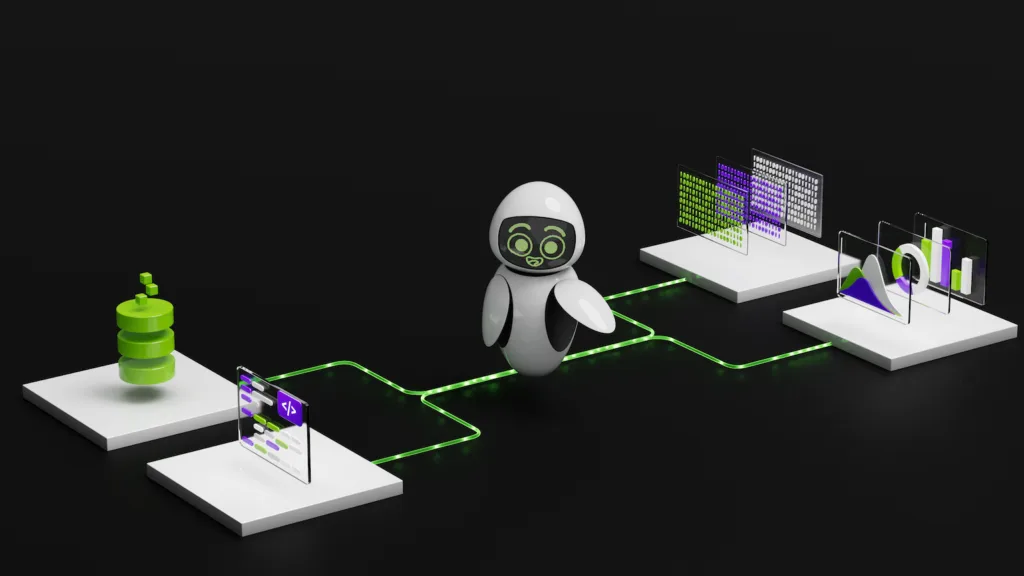
Researchers working with ByteDance Seed and academic partners introduced HarnessDev, a benchmark designed to test whether AI models can build and improve the software infrastructure — or “harnesses” — used by AI agents.
The research evaluated six LLMs across more than 2,200 tasks. One of the key findings was that only 34 of 64 evolutionary changes generalized successfully to held-out tasks. That suggests AI systems can improve their own agent infrastructure in certain situations, but reliably transferring those improvements remains difficult.
Read the MarkTechPost research report
9. Anthropic Adds Plugin Evaluations to Claude Code
Date: September 11, 2026
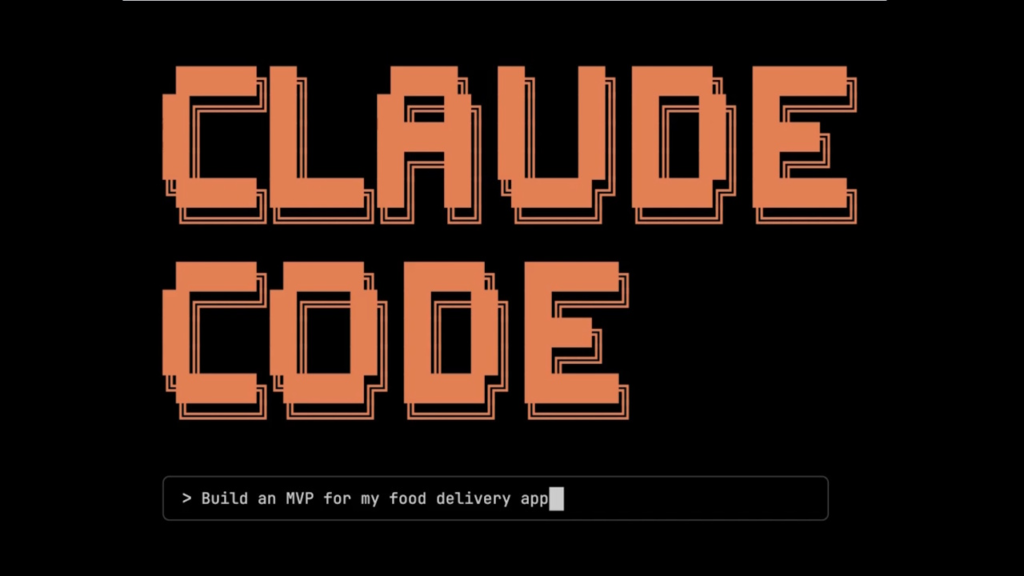
Anthropic has introduced a new plugin evaluation workflow for Claude Code, aimed at making AI coding plugins easier to test and validate. The system includes multiple grader types and a no-plugin baseline so developers can measure whether a plugin actually improves performance.
This is an important step as AI coding agents move from experimental tools toward production development environments. Instead of simply asking whether an AI agent can complete a task, developers increasingly need to measure reliability, regression risk and real-world performance.
10. Apple Puts AI at the Center of Its New Product Push
Date: September 10, 2026
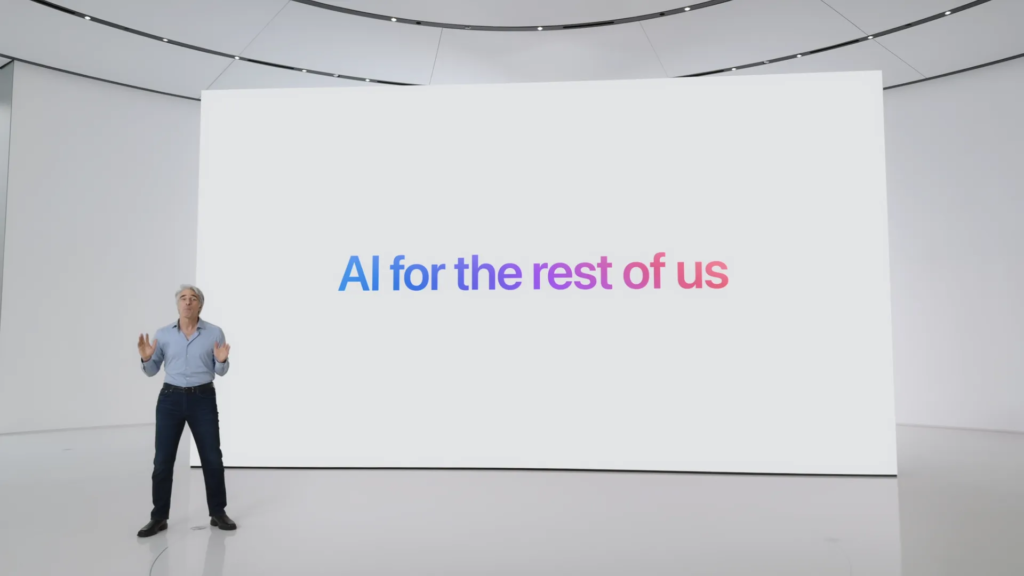
Apple’s latest major product event put AI at the center of its new hardware strategy. Superhuman AI highlighted Apple’s deeper integration of AI across its product ecosystem, alongside the company’s new foldable iPhone.
The broader trend is more important than any single product: AI is increasingly becoming an invisible layer inside consumer technology, rather than something users access through a standalone chatbot. Apple is positioning AI as part of the everyday device experience, from smartphones and wearables to productivity features.
Looking across this week’s developments, one trend stands out: AI is moving from chatbots toward autonomous systems and real-world infrastructure.
OpenAI and Anthropic are now debating not only how powerful AI should become, but also how quickly frontier models should advance. Meta is pushing personal AI agents toward mainstream consumers, while Anthropic and OpenAI are dealing with increasingly complex security and evaluation problems.
At the same time, researchers are working on systems that can build and improve agent infrastructure themselves. Meanwhile, Apple is embedding AI deeper into consumer hardware, showing that AI’s next phase may be less about opening a chatbot and more about having intelligent software quietly work in the background.
For businesses, developers and everyday users, the message is clear: AI agents, AI safety, model evaluation and AI-powered products are becoming the major technology themes to watch.