
Imagine heating up a universe until something unbelievable happens.
At first, everything seems normal. The universe is filled with hot particles, and as the temperature rises, the energy inside increases. You might expect the system to change gradually, just like water slowly heating up before it boils.
But then something strange happens.
Instead of changing little by little, the entire system suddenly switches into a black hole.
No slow transformation. No gradual warning. Just one dramatic change.
It sounds like science fiction, but physicists have been studying this possibility for decades. And now, an unexpected assistant has helped complete a calculation that researchers had struggled with for more than 20 years: Claude AI, working through a team of AI agents.
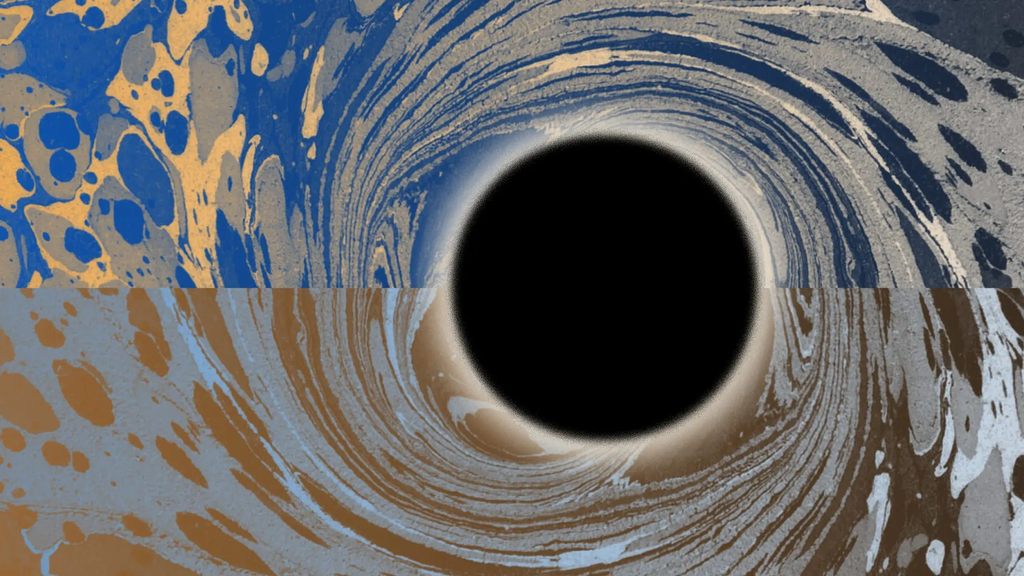
Anthropic announced in November 2026 that Claude had completed a difficult theoretical physics calculation connected to the famous Hawking-Page transition. The result supports the idea that this transition remains sudden even in a quantum regime where the familiar picture of smooth spacetime no longer works.
This is not a discovery of a black hole appearing somewhere in our actual universe. It is a major result in theoretical physics that helps researchers understand the relationship between gravity, quantum mechanics and black holes.
So, how did an AI system help solve a problem that had remained unfinished for so long? Let’s break it down.
What Did Claude AI Actually Discover?
Claude helped calculate a mathematical value that physicists needed to determine whether a particular theoretical phase transition happens suddenly or gradually.
The result was:
b = −1.48 × 10⁻³ λ²
You do not need to understand the equation immediately. The important detail is its negative sign.
That sign tells physicists that the transition in the model is first-order, meaning it happens as an abrupt jump rather than a smooth change.
This matters because the calculation connects two different ways of studying the same theoretical physics problem:
- The gravity side, where researchers describe a universe containing either a gas of particles or a black hole.
- The quantum side, where the same system is described using a quantum theory without gravity.
The surprising part is that the abrupt transition predicted by the gravity calculation also appears in the quantum description.
Anthropic says Claude completed this calculation using multiple AI agents that divided the work, performed mathematical steps and checked results against one another.
The Cosmic Goulash: Understanding the Black Hole Mystery
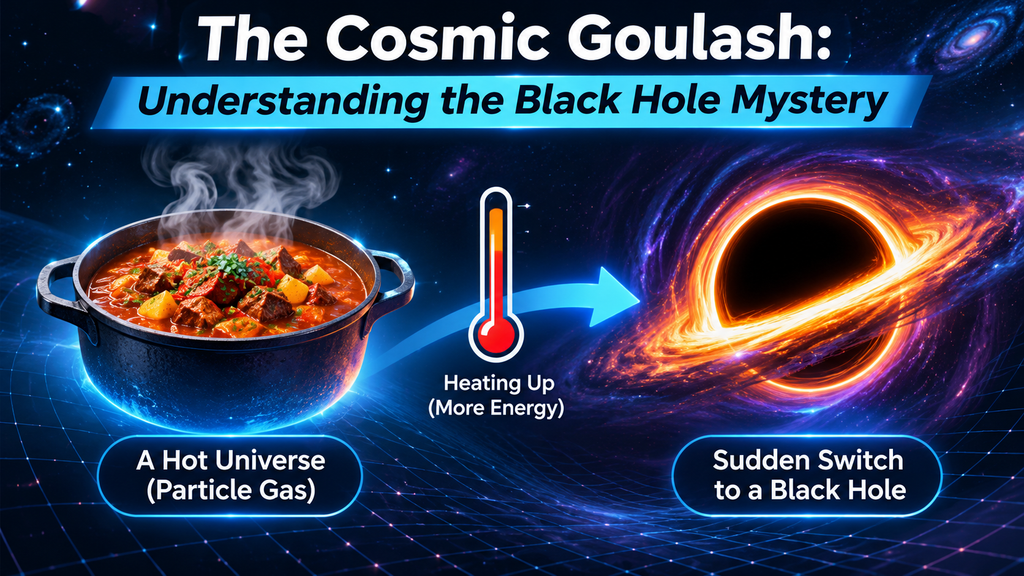
Let’s make this strange physics problem easier to imagine.
Think of a giant cosmic cooking pot. Inside it is a universe filled with particles, energy and heat.
For a little fun, imagine that the pot contains Hungarian goulash.
At low temperatures, everything behaves normally. The universe is filled with a gas of particles, and our imaginary goulash remains in the pot.
Now turn up the heat.
As the temperature increases, the system approaches a critical point. At that point, a different configuration becomes more important: a black hole.
The surprising part is that the change is not necessarily gradual. The system can suddenly switch from the particle-gas state to the black-hole state.
Of course, no real goulash is being cooked, and this is not a literal description of food turning into a black hole. It is simply an analogy for understanding how competing states in a theoretical universe can change as temperature rises.
This sudden switch is what physicists call a phase transition.
You have probably seen phase transitions in everyday life. Water changes from liquid to gas when it boils. Ice changes from solid to liquid when it melts.
The physics behind the black-hole transition is far more complicated, but the basic idea of one state suddenly giving way to another is similar.
What Is the Hawking-Page Transition?
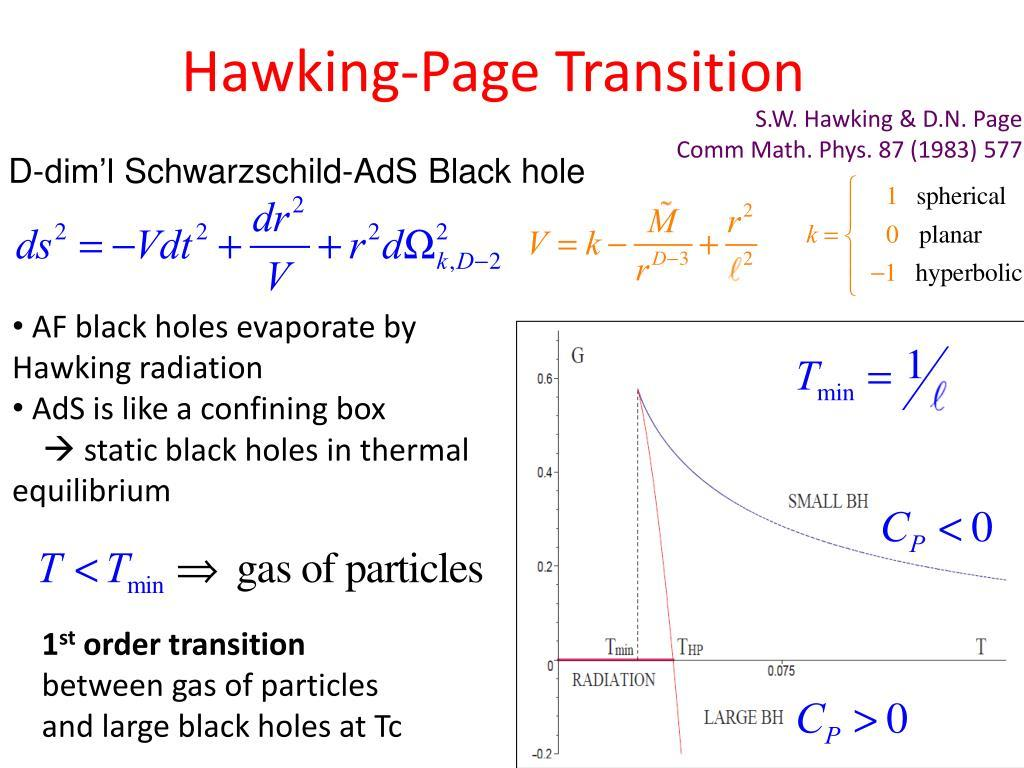
The story goes back to 1983, when physicists Stephen Hawking and Don Page studied black holes in a special type of theoretical universe called anti-de Sitter, or AdS, spacetime.
Their work revealed that this universe could have two competing configurations.
1. A universe filled with particles
At lower temperatures, the system is dominated by ordinary radiation and particles, including hypothetical particles called gravitons, which are associated with gravity.
2. A universe containing a large black hole
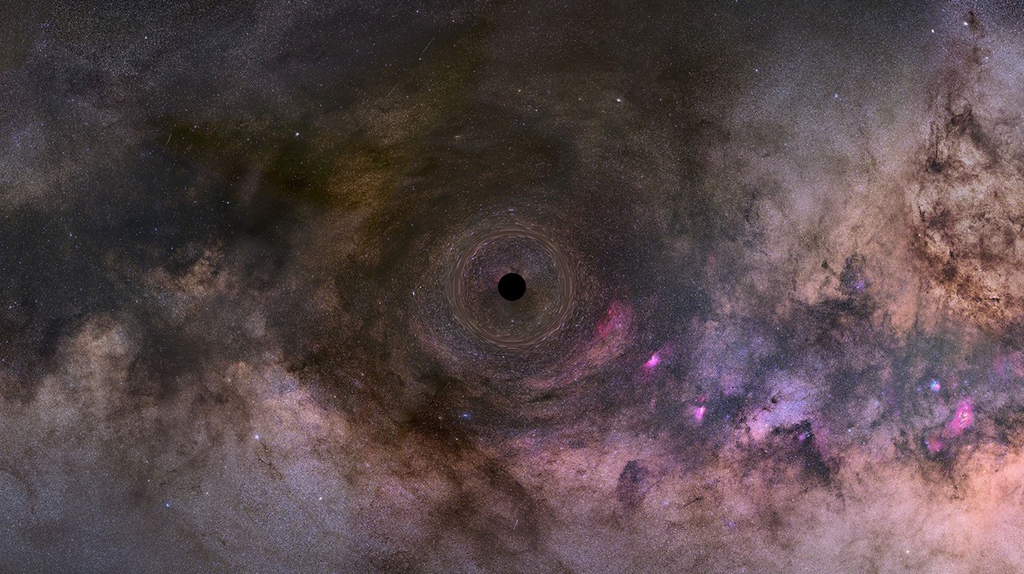
At higher temperatures, a black-hole configuration becomes the dominant one.
At a particular critical temperature, the dominant configuration switches from the particle-filled state to the black-hole state.
This is known as the Hawking-Page phase transition.
To picture anti-de Sitter spacetime, imagine a giant bowl. If you throw something inside, the curved geometry acts as if it keeps pulling the object back instead of letting it escape indefinitely.
This is only an analogy, but it helps explain why physicists use this special model when studying certain gravitational systems.
The original Hawking-Page calculation used Einstein’s general theory of relativity. That framework is excellent for describing large-scale objects and spacetime geometry.
But what happens when we move into a regime where quantum effects become important?
That is where the real challenge begins.
Why Relativity and Quantum Mechanics Create a Difficult Problem

Modern physics relies heavily on two powerful theories.
| Theory | What it explains |
|---|---|
| General Relativity | Gravity, spacetime, planets, stars and black holes |
| Quantum Mechanics | Atoms, particles and the behaviour of matter at extremely small scales |
Both theories work remarkably well in their own areas.
The problem is that they do not fit together easily in situations where extremely strong gravity and quantum effects become important at the same time.
Black holes are especially interesting because they involve enormous mass compressed into an extremely small region.
Physicists want a deeper framework that can describe both gravity and quantum mechanics consistently. This is one of the biggest unanswered challenges in theoretical physics.
One important tool in this research is called holographic duality.
The basic idea is surprising: certain theoretical universes with gravity can be described by a different quantum theory living on their boundary, with one fewer spatial dimension.
Think about a hologram. A flat surface can contain information that represents something with more dimensions.
In a similar way, holographic duality lets physicists study difficult gravitational questions using a quantum theory that does not contain gravity in the same way.
For the calculation Claude worked on, the relevant quantum theory is called N=4 super Yang-Mills theory.
It is a mathematical model used in theoretical physics, not a direct description of all the particles and forces in our everyday universe.
The 20-Year-Old Calculation That Physicists Could Not Finish
Here is where the story gets even more interesting.
Physicists already knew that a related phase transition existed in the quantum description. Research in 1999 established important groundwork.
But there was still a major unanswered question:
Would the transition remain abrupt, like the original Hawking-Page transition, or would it become smooth and gradual?
In 2003, researchers identified a mathematical calculation that could settle this question.
The answer depended on a particular coefficient that appears at the three-loop level of the calculation.
In simple terms, physicists calculate complicated interactions by building up a result in stages. Each additional stage introduces more corrections and makes the calculation harder.
These stages are called loops.
The relevant coefficient only appears after several layers of calculation, making it extremely difficult to obtain.
There was another problem. If researchers simply combined all the mathematical pieces, some expressions produced infinity.
Those infinities had to be handled carefully using the right mathematical corrections before a meaningful answer could be extracted.
The calculation was not just long. It required precision, careful bookkeeping and repeated checks.
For more than two decades, the full calculation remained unfinished.
Why Was This Physics Calculation So Difficult?
The difficulty came from the number of interacting mathematical pieces.
Researchers needed to combine many contributions from the theory while making sure that the final result was mathematically consistent.
Even a small mistake in one part could affect the final coefficient and change the conclusion.
The challenge included:
- Tracking a large number of mathematical contributions.
- Calculating higher-order corrections.
- Handling expressions that initially produce infinities.
- Applying the correct corrections so those infinities cancel.
- Checking the final result against previously known results.
The calculation also needed to distinguish between two possible outcomes.
If the relevant coefficient had one sign, the transition could behave in one way. If it had the opposite sign, the physical interpretation would be different.
That is why calculating one number became so important.
How Claude AI Agents Worked Together to Solve It
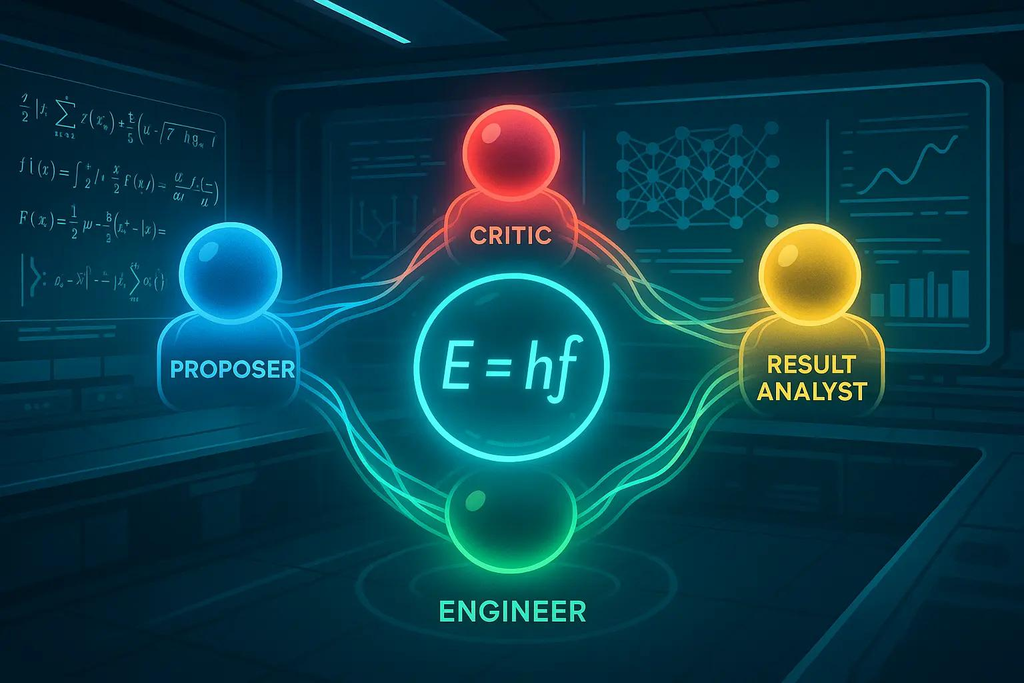
Instead of asking one AI model to solve the entire problem in a single response, Anthropic used a multi-agent approach.
An Anthropic researcher, Hongbin Chen, explored possible open problems in theoretical physics with Claude.
Claude suggested 22 candidate problems. The researcher then set up separate AI agents to investigate them.
These agents could work in the background, share progress notes and collaborate when their tasks were related.
According to Anthropic, the agents worked for approximately six weeks.
For the Hawking-Page calculation, the system divided the difficult mathematical work into smaller parts.
The process involved several steps:
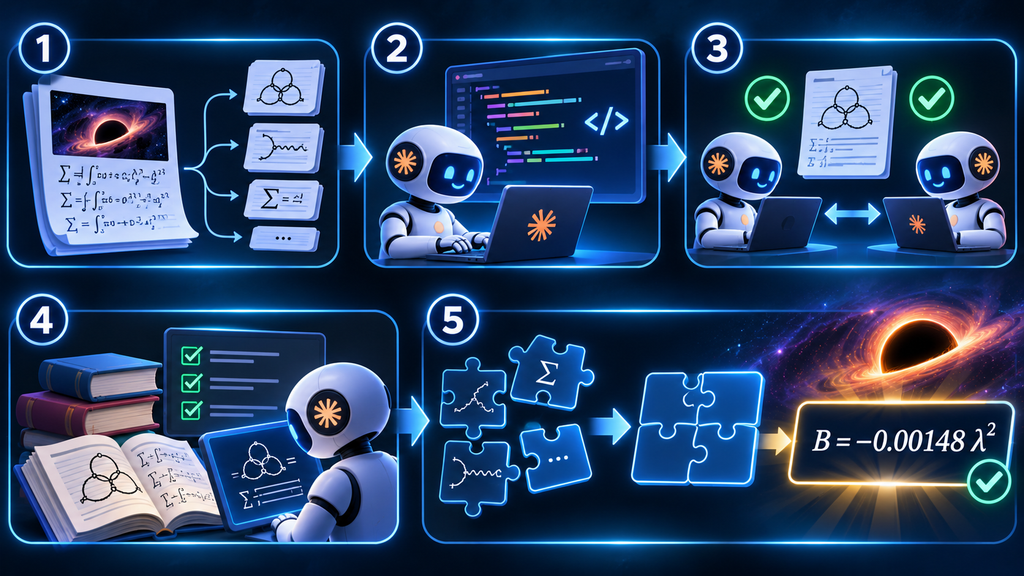
1. Breaking the problem into smaller calculations
Rather than handling the entire problem at once, agents worked on individual mathematical components.
2. Writing programs to perform calculations
The agents developed code to handle parts of the mathematical work and reduce the burden of manual calculation.
3. Checking results independently
Almost every part of the calculation was worked out twice by separate agents. This helped identify mistakes and compare results.
4. Comparing with known physics results
The calculations were checked against results already established in the scientific literature.
5. Combining the pieces
After the individual contributions were checked, they could be combined to obtain the final coefficient.
This approach is interesting because it shows how AI agents can work as a coordinated research team rather than simply acting as chatbots that answer individual questions.
What Does the Negative Number Actually Mean?
Now we reach the most important part of the story.
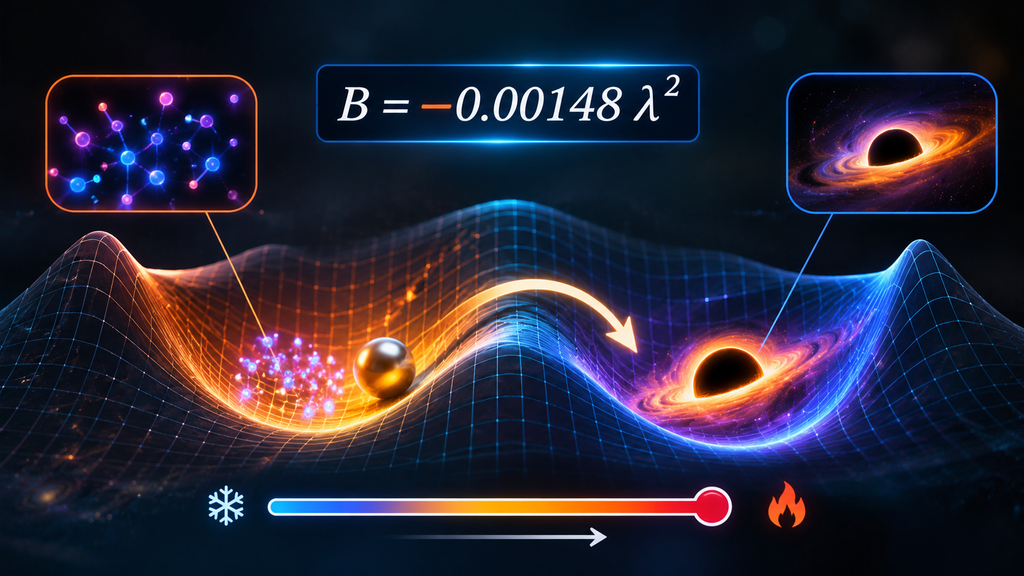
Claude’s reported result was:
b = −1.48 × 10⁻³ λ²
Here, λ represents the ‘t Hooft coupling, a parameter that describes the interaction strength in the mathematical theory.
The value of the coefficient is negative.
Why does that matter?
Because the sign determines the nature of the phase transition in the model.
Imagine a ball sitting in a landscape with two valleys.
One valley represents the particle-gas state. The other represents the black-hole-related state.
As the temperature changes, the mathematical landscape changes too. Depending on the value of the coefficient, the system can move between these competing states in different ways.
A negative coefficient gives the result associated with a first-order transition.
That means the transition is abrupt rather than a smooth, gradual change.
In other words, the quantum calculation supports the same basic behaviour that Hawking and Page found using general relativity.
The paper also reports that the transition lies slightly below the Hagedorn temperature and that the relevant mathematical configurations appear, exchange dominance and disappear in an order matching the corresponding gravitational picture.
That is a surprisingly strong connection between two different descriptions of theoretical physics.
Does This Mean Claude AI Has Solved Quantum Gravity?
No. And this distinction is important.
Claude has not solved the entire problem of quantum gravity.
It has not discovered a complete theory that unifies Einstein’s relativity with quantum mechanics.
It has helped complete a specific calculation within a carefully defined theoretical model.
The result is important because it supports a connection between the gravitational and quantum descriptions of that model.
But many questions remain unanswered.
Physicists still need to understand how these ideas behave in more complicated situations and how far the mathematical connections can be extended.
Anthropic itself makes clear that these results do not directly describe our actual universe and do not have immediate practical applications.
That does not make the result unimportant. Theoretical physics often advances through mathematical results that help researchers understand what a more complete theory might look like.
What Does This Mean for the Future of AI Research?
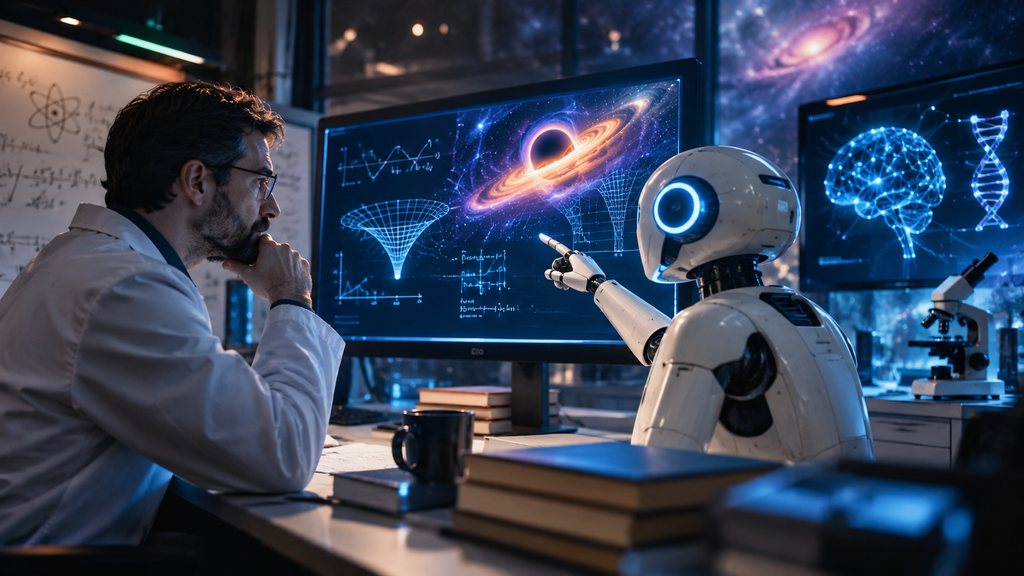
The bigger story may be about how scientific research is changing.
AI assistants have already become useful for writing code, analysing documents, explaining complex topics and helping researchers explore ideas.
But this example shows a more ambitious possibility: AI agents may be able to contribute to long-running mathematical and scientific investigations.
There are several reasons this matters.
AI can divide complex work
Large research problems can sometimes be separated into smaller tasks. Multiple agents can work on those tasks and compare their results.
AI can help automate calculations
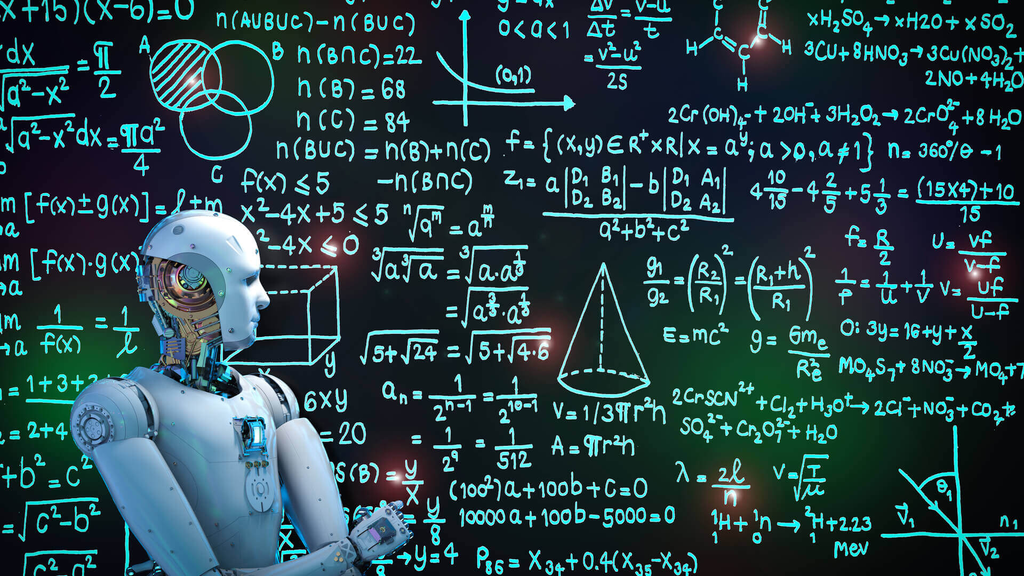
Researchers can use AI to write programs, test mathematical expressions and explore complicated possibilities.
AI can make research workflows faster
A system that handles repetitive calculations and cross-checks may free researchers to focus on deeper questions and interpretation.
AI still needs verification
A mathematical answer is not automatically correct because an AI system produced it. Researchers need independent checks, reproducible methods and scientific scrutiny.
The real opportunity is not simply replacing scientists with AI. It is giving researchers new tools to investigate problems that are difficult, time-consuming or error-prone.
Important Limitations: What We Should Not Assume
There is a difference between a reported research result and a universally accepted scientific discovery.
The Hawking-Page calculation is presented in a research preprint associated with Anthropic. Its provenance statement says an internal Claude research model, prompted by a physicist, obtained the result. The physicist checked it against known special cases, and a separate Claude computation using another method reportedly reached the same result.
That is useful evidence, but it is not the same as independent replication by multiple research groups.
Readers should also remember:
- The calculation concerns a specific theoretical model.
- It does not show that black holes suddenly appear in our universe when it gets hot.
- It does not prove that AI can independently solve every scientific problem.
- The result still belongs in the wider process of scientific examination and verification.
These limitations do not take away from the achievement. They help us understand exactly what has been accomplished.
Final Thoughts: AI Is Becoming a Serious Research Partner

For years, the Hawking-Page transition has been an important idea in theoretical physics. A difficult calculation connected to it remained unfinished for more than two decades.
Now, Claude and a group of AI agents have helped complete that calculation and produced a result supporting an abrupt transition in the quantum description of the model.
The most interesting part is not just the negative number or the black-hole analogy.
It is the process: AI agents divided a complex problem, performed mathematical work, checked one another’s results and helped researchers move forward on a question that had remained open for years.
We should not confuse this with AI solving all of physics. There is still a huge amount of work ahead.
But it offers a fascinating glimpse of what could happen when human scientific knowledge and increasingly capable AI systems work together.
What do you think? Could AI agents become regular research partners for physicists, mathematicians and scientists? Or should we remain cautious until more results are independently verified?
Share your thoughts in the comments.
This article is for educational and informational purposes. It explains a theoretical physics result and does not claim that the research describes a real-world black hole event.