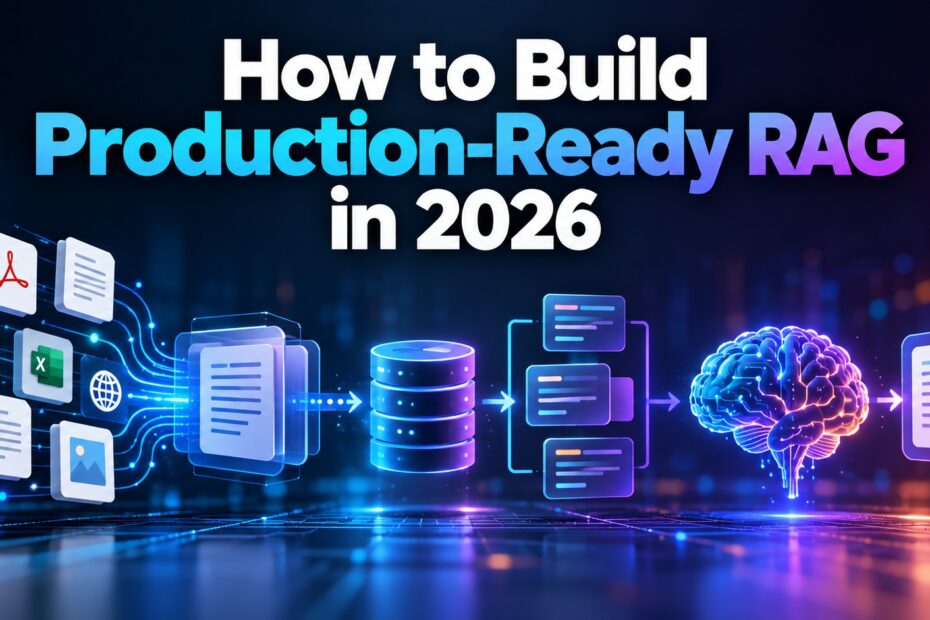
Retrieval-Augmented Generation (RAG) has evolved far beyond the basic workflow of “embed documents, search a vector database, and send the results to an LLM.” A production-ready RAG system needs reliable data ingestion, intelligent chunking, strong retrieval, reranking, grounding, citations, caching, observability, security, and continuous evaluation.
A production RAG pipeline typically looks like this:
Data sources → ingestion → parsing → chunking → metadata → embeddings → hybrid retrieval → reranking → context assembly → LLM generation → citations → evaluation → monitoring
The important shift in 2026 is that RAG should be treated as an application architecture, not simply a database feature. Modern approaches can combine semantic search with keyword retrieval, contextualized chunks, reranking, long-context models, and automated evaluation. Anthropic’s published experiments, for example, found that combining contextual embeddings, contextual BM25, and reranking substantially reduced retrieval failures in its test setup.
What Is Production-Ready RAG?
Production-ready RAG is a retrieval-augmented generation system designed to operate reliably with real users, real data, changing knowledge, and measurable performance requirements.
A prototype might answer questions correctly on ten test documents. A production system must also handle:
- Thousands or millions of documents
- Different file formats
- Duplicate and outdated information
- Ambiguous user queries
- Exact keyword searches
- Access-control requirements
- Changing embeddings or models
- Latency constraints
- API and infrastructure costs
- Hallucination detection
- Evaluation and regression testing
- Monitoring and debugging
The goal isn’t simply to make an LLM answer questions. The goal is to make the entire retrieval-to-generation pipeline dependable.
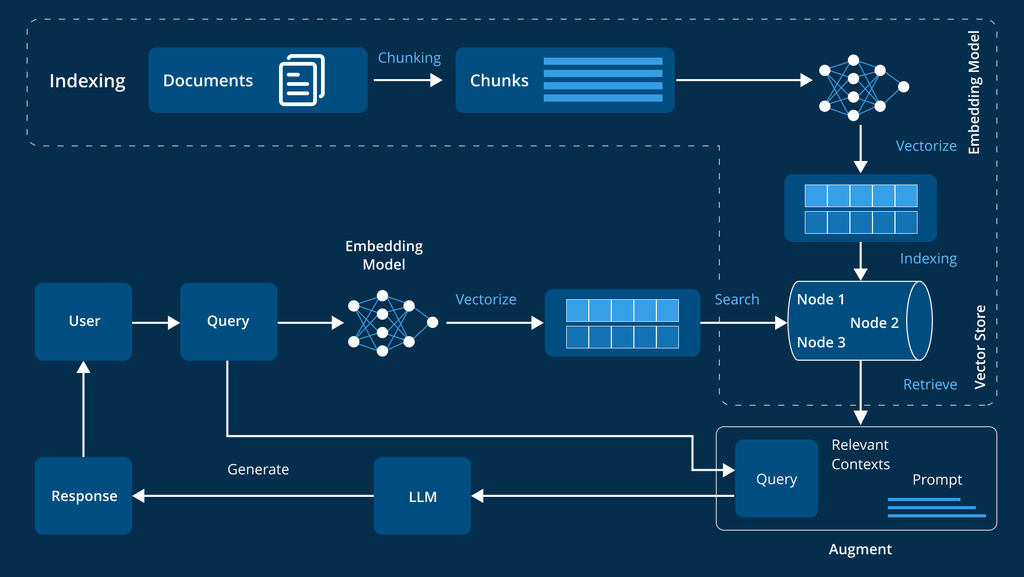
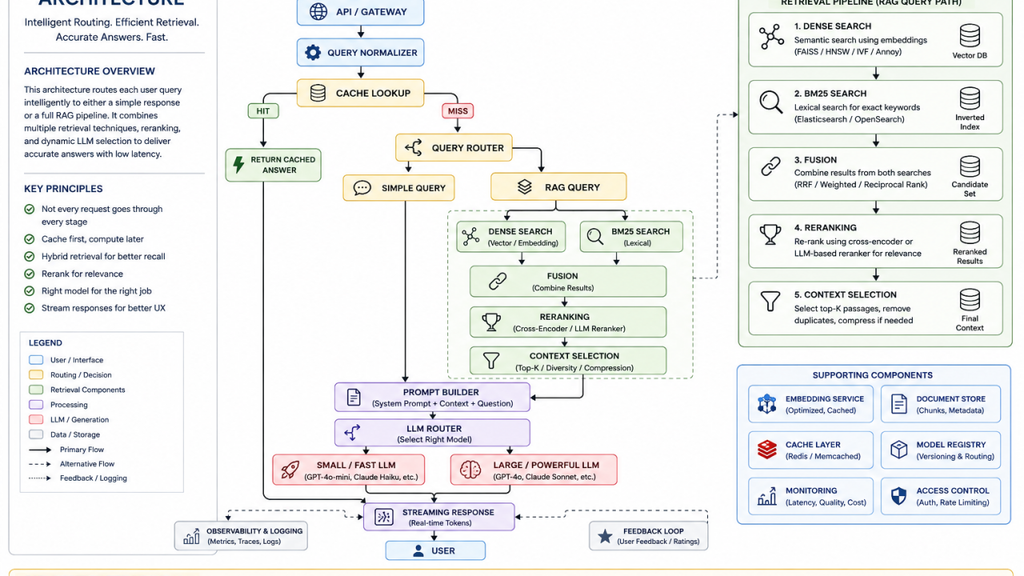
Production RAG Architecture
A practical architecture can be divided into two major pipelines.
Offline ingestion pipeline
Documents → parsing → cleaning → chunking → metadata → contextual enrichment → embeddings → indexes
This pipeline prepares your knowledge base.
Online query pipeline
User query → query processing → hybrid retrieval → reranking → context assembly → LLM → citations → evaluation/feedback
This pipeline handles user requests.
Keeping these two paths separate makes the system easier to scale, debug, and modify.
For example, changing your embedding model should not require rebuilding your entire application architecture. You should be able to create a new index, benchmark it, and migrate traffic when the new configuration performs better.
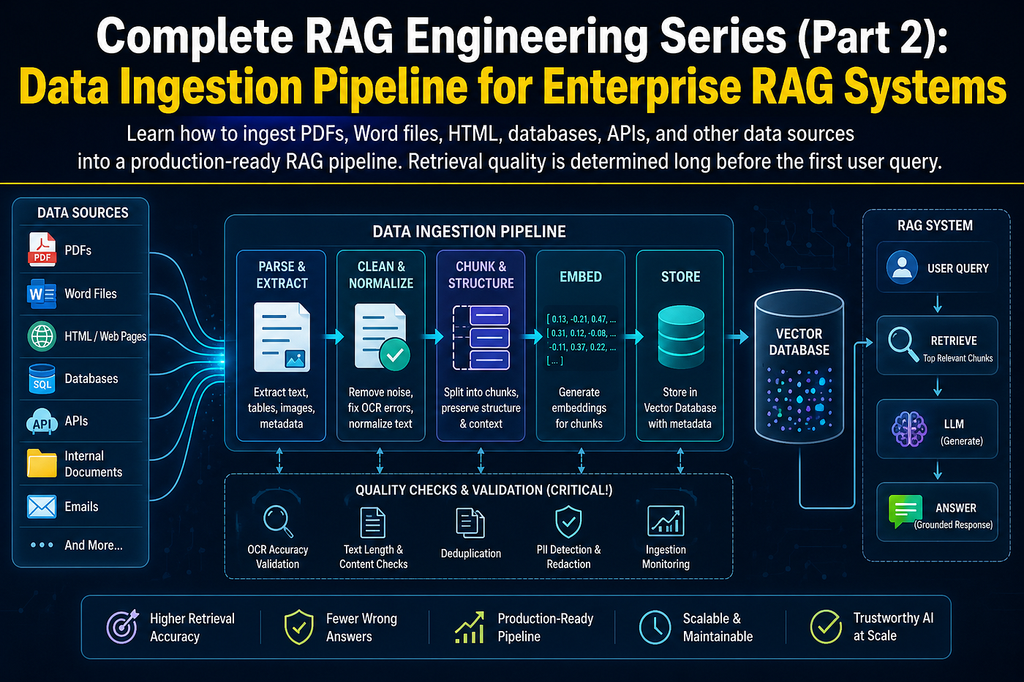
Step 1: Build a Reliable Data Ingestion Pipeline
RAG quality starts with your source data.
If your ingestion pipeline produces poor or incomplete content, better embeddings and larger language models cannot completely fix the problem.
Your ingestion layer may receive information from:
- PDFs
- Websites
- Product documentation
- Word documents
- Markdown
- Databases
- Cloud storage
- APIs
- Internal knowledge bases
- Git repositories
- Customer-support systems
Create a normalized internal document representation before sending content to your retrieval system.
Useful metadata can include:
| Metadata | Example |
|---|---|
document_id | product-doc-123 |
source | docs.example.com |
title | API Authentication |
section | OAuth |
version | 3.2 |
created_at | 2026-08-01 |
updated_at | 2026-09-20 |
access_group | engineering |
language | en |
Metadata becomes extremely important later for filtering, permissions, freshness, and debugging.
Modern retrieval APIs also expose document and vector-store metadata as part of their retrieval infrastructure.
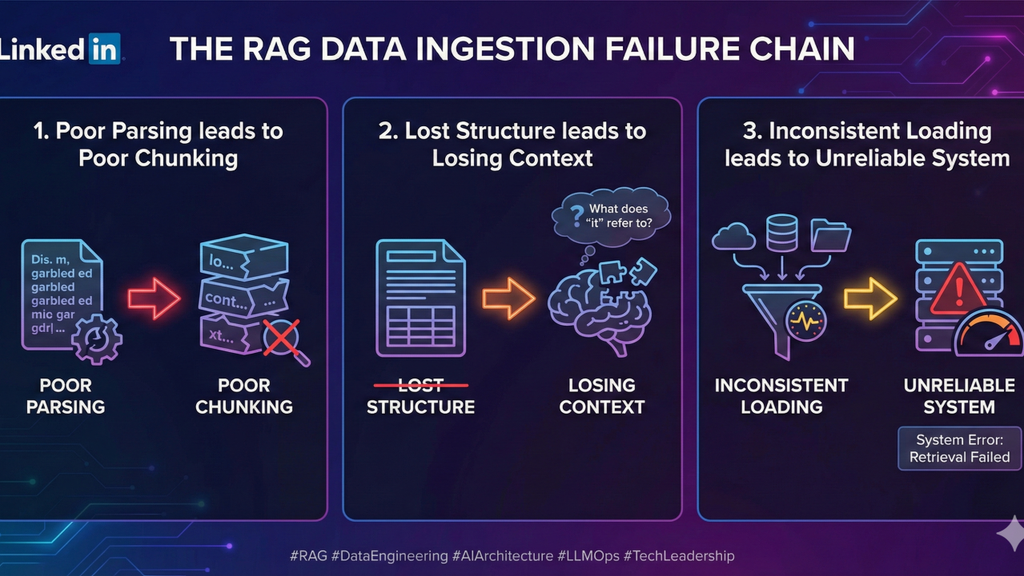
Step 2: Parse and Clean Documents
Don’t immediately split raw PDFs or HTML into arbitrary text chunks.
First, understand the document structure.
A technical PDF might contain:
- Title
- Headings
- Paragraphs
- Tables
- Code blocks
- Footnotes
- Captions
- Lists
Flattening everything into plain text can destroy relationships that matter for retrieval.
A better processing pipeline is:
File → parser → structural representation → cleaned content → semantic sections
For example, instead of creating:
“The timeout is 30 seconds.”
your system should preserve the surrounding section:
API Client → Request Configuration → Timeout
Default timeout: 30 seconds.
That additional structure gives retrieval more useful context.
Step 3: Choose the Right Chunking Strategy
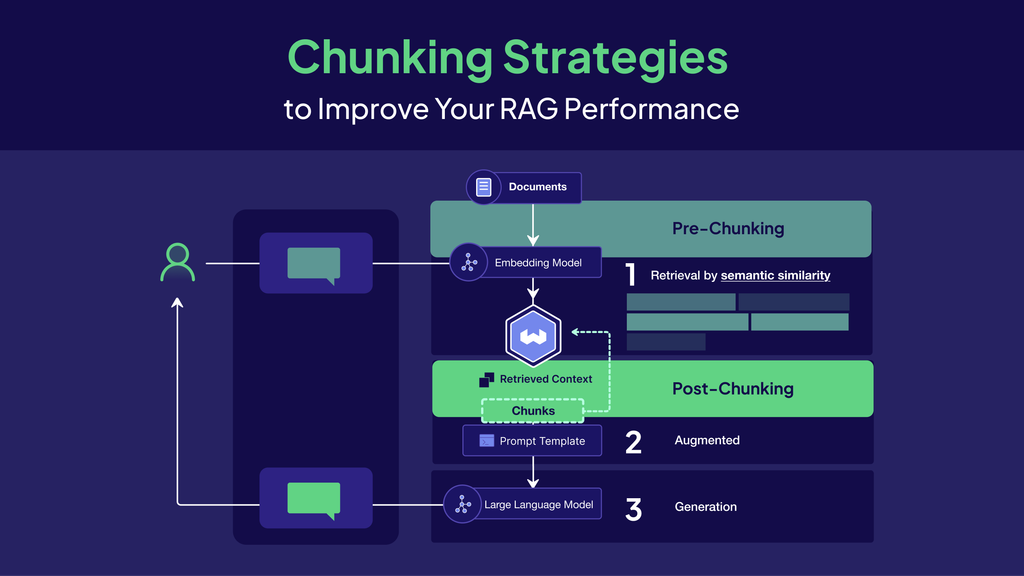
Chunking is one of the most underestimated parts of RAG.
If chunks are too large, retrieval may return excessive irrelevant information.
If chunks are too small, the retrieved text may lose the context necessary to answer the question.
There is no universal chunk size that works for every application.
Consider:
- Document structure
- Sentence boundaries
- Paragraph boundaries
- Heading hierarchy
- Token count
- Query complexity
- Document type
- Embedding model
- Retrieval method
For technical documentation, semantic or structure-aware chunking is often more useful than blindly splitting every document into fixed-size blocks.
You can also preserve relationships using parent-child retrieval:
Parent document → section → child chunks
The system searches smaller chunks but can retrieve a larger parent section when necessary.
Anthropic’s research on Contextual Retrieval highlights the same fundamental problem: isolated chunks can lose the context needed to understand what they refer to.
Step 4: Generate and Manage Embeddings
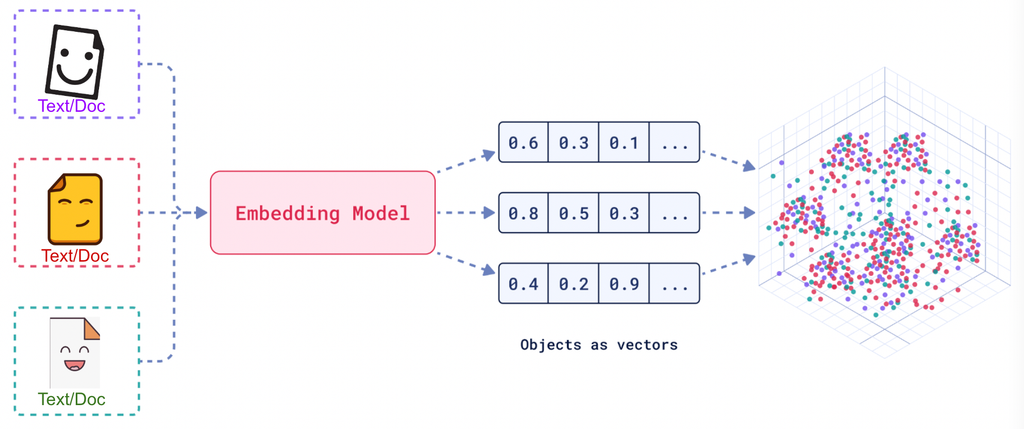
After processing and chunking, convert your chunks into embeddings.
An embedding represents text as a numerical vector that can be compared against other vectors.
At query time:
User query → query embedding → similarity search → candidate chunks
Your embedding strategy should account for:
- Retrieval quality
- Dimensions
- Latency
- Cost
- Languages
- Domain-specific terminology
- Context length
- Versioning
Most importantly, benchmark embedding models on your own data.
A model that performs well on a public benchmark may not be the best choice for your specific documents.
Also maintain embedding versions.
For example:
embedding_model = model-v2
embedding_dimension = 1536
index_version = 2026-09
This makes migrations and rollbacks much safer.
Step 5: Use Hybrid Retrieval
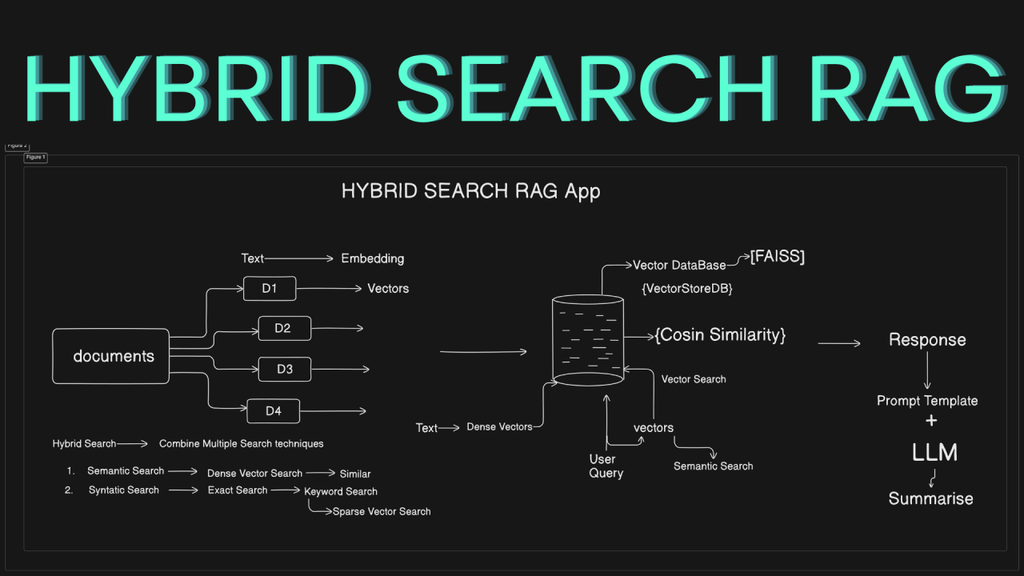
Vector search is powerful, but semantic similarity isn’t perfect.
Consider a user searching:
“Error TS-999”
A semantic search system may return documents about general error codes.
A lexical search system such as BM25 can be better at finding the exact identifier.
This is why production RAG often benefits from hybrid retrieval:
Semantic search + keyword search → merged candidates
Anthropic’s Contextual Retrieval research specifically describes combining embeddings with BM25 because semantic embeddings can miss exact terms, identifiers, and technical strings.
A typical architecture is:
- Run vector search.
- Run keyword/BM25 search.
- Combine results.
- Remove duplicates.
- Apply metadata filters.
- Send candidates to reranking.
This is usually more robust than relying on a single retrieval method.
Step 6: Add Reranking
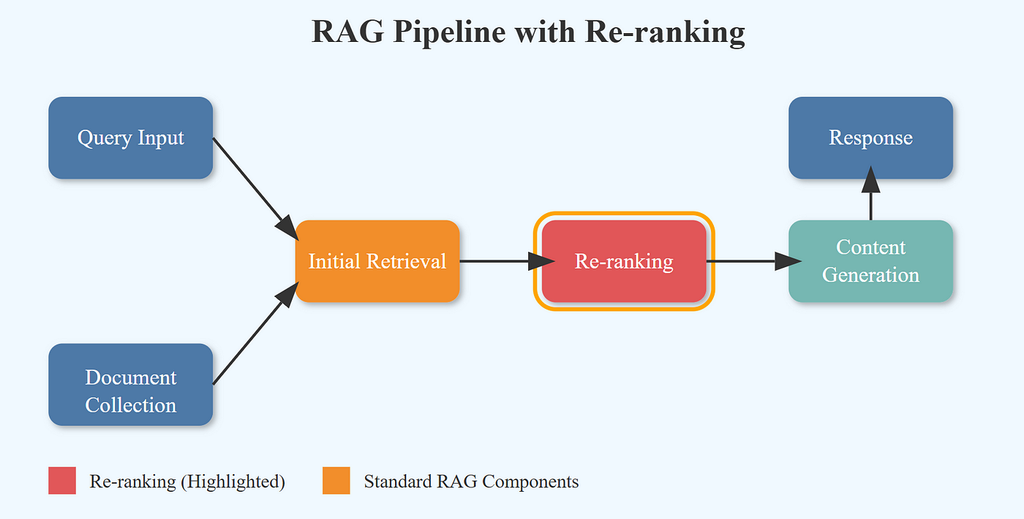
Initial retrieval is optimized for finding a reasonably broad candidate set.
Reranking is optimized for deciding which candidates are actually most relevant.
For example:
Query
  ↓
Vector + BM25 retrieval
  ↓
Top 50–150 candidates
  ↓
Reranker
  ↓
Top 5–20 chunks
  ↓
LLM
A reranker can examine the query and candidate passages together and produce a more relevance-focused ranking.
This can improve answer quality while reducing the amount of irrelevant text sent to the generation model.
But reranking has a cost.
More candidates generally mean:
- More computation
- More latency
- Potentially higher cost
Anthropic’s published experiments found that adding reranking to its contextual retrieval setup reduced its measured top-20 retrieval failure rate further, while also noting the latency/cost trade-off. These results are experiment-specific, so teams should benchmark their own workloads rather than treating the numbers as universal.
Step 7: Build the Generation Layer
Once retrieval produces high-quality context, assemble the final prompt.
A useful structure is:
System instructions

User question

Retrieved context:
[Source 1]
[Source 2]
[Source 3]

Answer requirements:
- Answer using the supplied context.
- Do not invent unsupported facts.
- Cite the relevant sources.
- Say when the information is unavailable.
The generation model should not be responsible for discovering the knowledge base from scratch.
Its job is to reason over the retrieved evidence and produce the response.
This separation makes debugging much easier.
If the answer is wrong, you can ask:
- Was the correct document indexed?
- Was it retrieved?
- Was it ranked highly enough?
- Was it passed into the prompt?
- Did the model interpret it correctly?
Without this separation, every failure simply looks like “the LLM hallucinated.”
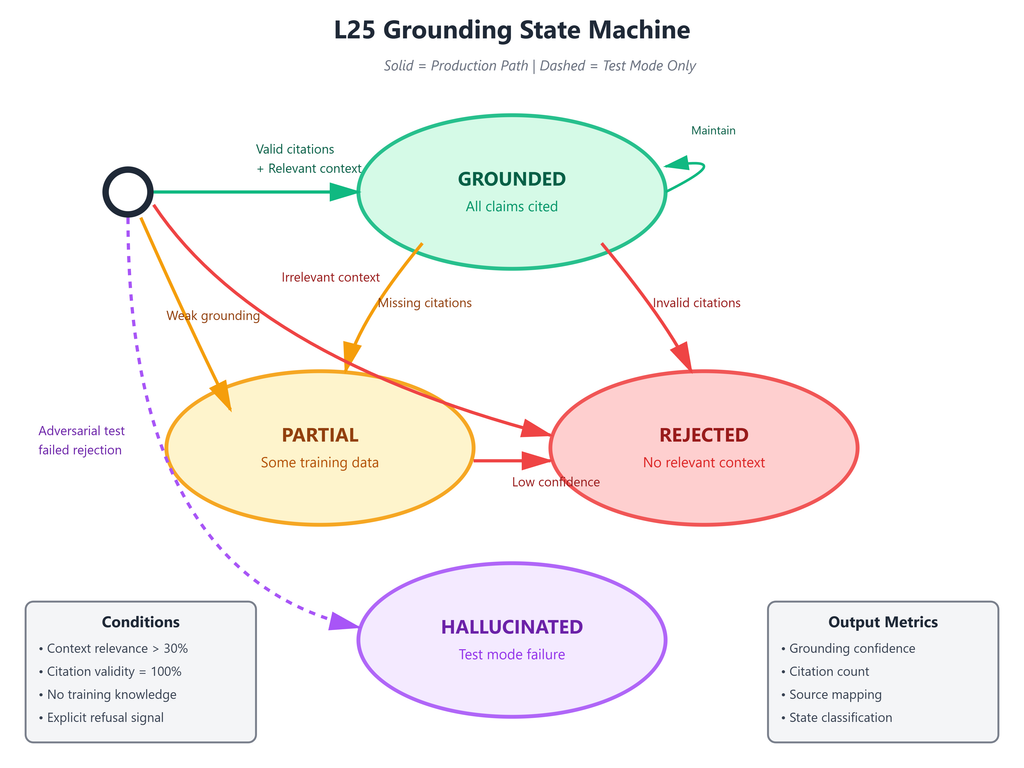
Step 8: Add Citations and Grounding
Citations are particularly valuable for enterprise, research, technical, legal, financial, and support applications.
Instead of returning:
The API supports 50 requests per second.
return:
The API supports 50 requests per second. [Source: API Rate Limits]
Your retrieval objects should therefore retain source metadata:
chunk_id
document_id
document_title
source_url
section
page_number
updated_at
The application can then map generated claims back to retrieved sources.
This also makes human verification easier.
A useful rule is:
If your system cannot show where an important answer came from, it becomes harder to trust and debug.
Step 9: Optimize RAG Cost and Latency
A production RAG system can become expensive if every request triggers multiple searches, reranking, large context windows, and expensive LLM calls.
Optimize the entire pipeline.
Retrieval optimization
Use:
- Metadata filtering
- Appropriate top-K values
- Hybrid retrieval
- Efficient indexes
- Query caching
- Deduplication
Context optimization
Use:
- Relevant chunks only
- Context compression
- Duplicate removal
- Parent-child retrieval
- Contextual chunking
Model optimization
Consider:
- Smaller models for simple tasks
- Larger models for complex synthesis
- Model routing
- Batch processing
- Streaming
- Prompt caching where supported
Caching can be especially useful when users repeatedly ask questions against stable knowledge.
The correct target isn’t simply the lowest latency.
You want to optimize:
quality × latency × cost
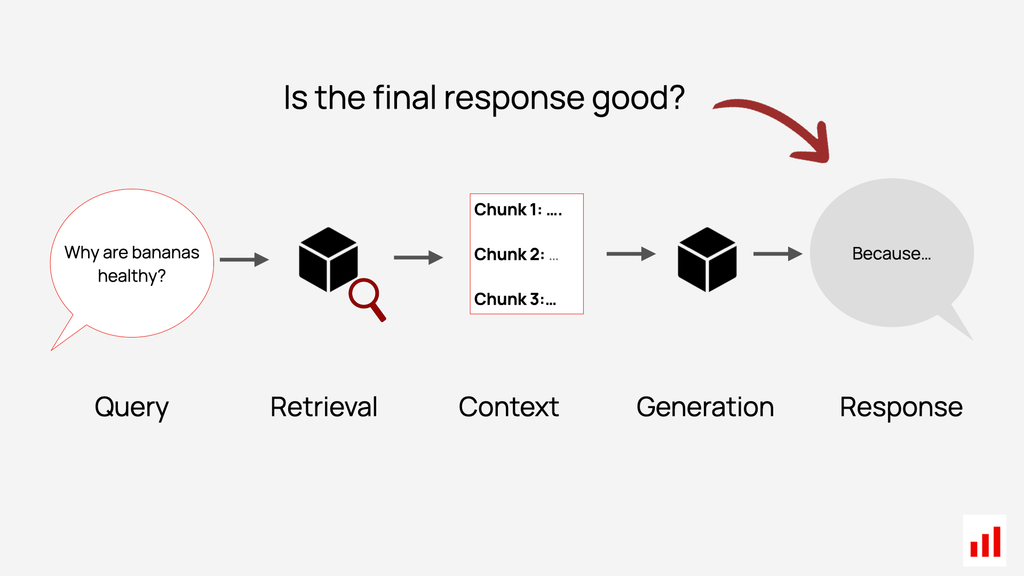
Step 10: Evaluate RAG Before Production
Never launch a RAG application based only on a few manual tests.
Create a representative evaluation dataset containing:
- Real user questions
- Expected answers
- Relevant source documents
- Difficult queries
- Ambiguous queries
- No-answer questions
- Exact-match queries
- Multi-document questions
Then evaluate the retrieval and generation layers separately.
Retrieval metrics
Useful measurements include:
- Context precision
- Context recall
- Recall@K
- MRR
- NDCG
Ragas defines Context Precision as measuring whether relevant chunks are ranked above irrelevant chunks in retrieved context.
Generation metrics
Useful measurements include:
- Faithfulness
- Answer relevance
- Factual correctness
- Groundedness
Ragas defines faithfulness around whether claims in the generated answer are supported by the retrieved context.
This distinction matters.
A system can have excellent retrieval but poor generation.
It can also have an excellent LLM but poor retrieval.
You need to measure both.
Production RAG Checklist
Before launching, verify the following:
Data
- All important sources are indexed.
- Documents are parsed correctly.
- Duplicate documents are handled.
- Metadata is preserved.
- Document versions are tracked.
- Access permissions are enforced.
Retrieval
- Chunking has been tested.
- Embedding models have been benchmarked.
- Metadata filtering works.
- Hybrid search has been considered.
- Reranking has been evaluated.
- Top-K has been optimized.
Generation
- The model receives relevant context.
- Unsupported claims are discouraged.
- Citations are generated where appropriate.
- No-answer behavior is defined.
Production
- Latency is monitored.
- Token usage is tracked.
- API costs are monitored.
- Retrieval failures are logged.
- Model and embedding versions are tracked.
- Regression evaluations run before major changes.
Frequently Asked Questions About Production RAG
What is the difference between basic RAG and production RAG?
Basic RAG usually focuses on retrieving documents and passing them to an LLM. Production RAG adds the engineering required for reliability, including data pipelines, metadata, access control, evaluation, monitoring, caching, cost controls, versioning, and failure handling.
Is vector search enough for production RAG?
Not always. Vector search is strong at semantic similarity, but keyword retrieval can be better for exact identifiers, product names, error codes, and technical terms. Hybrid retrieval combines both approaches.
How many chunks should RAG retrieve?
There is no universal number. A larger candidate set can improve recall but may increase latency and introduce irrelevant context. The correct value should be determined through evaluation on your own dataset.
Should every RAG system use reranking?
Not necessarily. Reranking can improve relevance but introduces additional computation and latency. It is most useful when initial retrieval produces many plausible candidates and ranking quality is a bottleneck.
What causes poor RAG answers?
Common causes include poor source data, bad parsing, inappropriate chunking, weak embeddings, missing metadata filters, poor retrieval, insufficient reranking, excessive context, and generation errors.
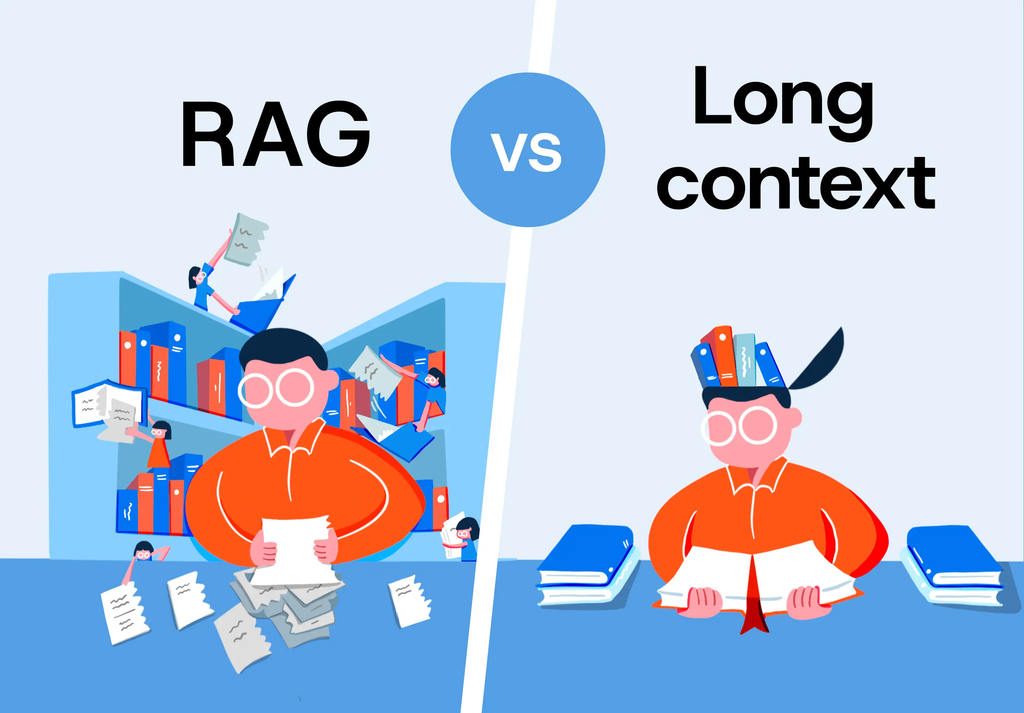
RAG vs long context: which should you use?
It depends on the workload. Smaller knowledge bases may sometimes fit directly into a model’s context, while larger or frequently changing knowledge bases benefit from retrieval. Anthropic has explicitly noted that for sufficiently small knowledge bases, placing the entire knowledge base into the prompt can sometimes be simpler than using RAG.
How do you measure RAG quality?
Measure retrieval and generation separately. Retrieval can use metrics such as context precision and recall, while generation can be evaluated for faithfulness, relevance, and factual correctness.
How often should a RAG system be evaluated?
Evaluation should happen whenever important components change, including embedding models, chunking logic, retrieval configuration, rerankers, prompts, or generation models. Continuous evaluation is preferable for applications receiving significant production traffic.
Conclusion: Production RAG Is a System, Not a Vector Database
The biggest mistake teams make when building RAG is treating it as:
Documents → embeddings → vector database → LLM
A production system is considerably more sophisticated:
Data ingestion → parsing → semantic chunking → metadata → embeddings → hybrid retrieval → reranking → context engineering → generation → citations → evaluation → monitoring
The most important lesson is to optimize the entire pipeline rather than obsess over one component.
If retrieval is weak, a better LLM may not solve the problem.
If retrieval is excellent but context is poorly assembled, the model can still produce a bad answer.
And if the application isn’t evaluated continuously, a seemingly harmless change to an embedding model, chunking strategy, prompt, or LLM can introduce regressions.
The strongest production RAG systems therefore treat retrieval quality, grounding, observability, cost, latency, and evaluation as first-class engineering concerns.
RAG isn’t finished when the chatbot produces an answer. It’s finished when you can measure why that answer was produced, verify where its information came from, detect when quality drops, and improve the system without breaking what already works.