

1. OpenAI Launches GPT-6 Cyber With Advanced Cybersecurity Capabilities

OpenAI has introduced GPT-6 Cyber, a specialized AI model designed to identify software vulnerabilities, support security investigations and help researchers develop fixes. VentureBeat reports improvements over GPT-5.6 Cyber in several security evaluations. Access is initially restricted to approved users and organizations.
Source: GPT-6 Cyber.
2. AWS Launches Kiro AI Bots With Persistent Memory for Developers
Amazon Web Services has introduced Kiro bots inside its development workspace. These AI agents can maintain separate memories, manage recurring tasks, monitor code changes and coordinate multiple development sessions. Developers can assign bots responsibilities such as checking failed builds and reviewing proposed code changes.
Source: AWS Kiro Bots.
3. Ricursive AI Releases Ripple-65B: A New Open-Weight Coding Model

Ricursive Intelligence has introduced Ripple-65B Preview, an open-weight AI model focused on coding and software engineering. The company claims competitive results on Terminal-Bench 2.1 and SWE-bench Pro v2.0 Hard. The model is available through Hugging Face and selected API providers.
Its reported benchmark results vary across evaluations, so developers should test it against their own workloads before treating the claims as a general performance ranking.
Source: Ripple-65B
4. Anthropic’s AI Progress May Be Accelerating Faster Than Expected
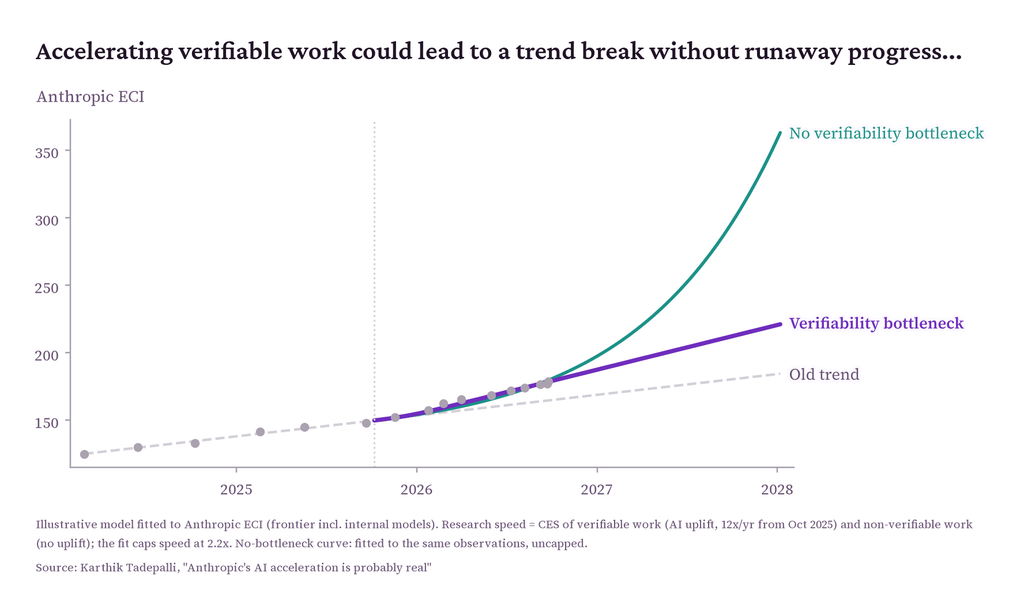
An evaluation by METR, discussed in The Rundown AI’s November 6 newsletter, estimates that Anthropic’s AI development progress has roughly doubled compared with its earlier pace. The report attributes much of the acceleration to AI-assisted research and development.
The findings raise an important question: could AI systems increasingly help researchers build more capable AI systems?
Source: The Rundown AI – Anthropic’s AI Speedup
5. Xiaomi’s Humanoid Robots Complete an Eight-Hour Factory Shift
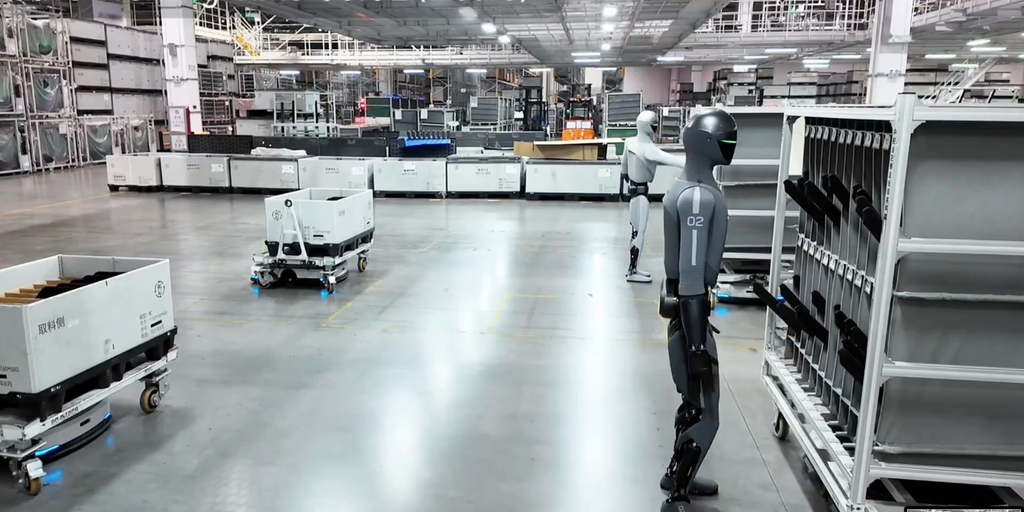
Xiaomi has shared footage of humanoid robots working an eight-hour shift at its electric vehicle factory. The reported tasks include sorting car parts from bins and placing them into storage racks. Xiaomi says the robots worked autonomously and corrected their own mistakes.
Source: Xiaomi Robots
6. MIT Researchers Help Robots Correct Their Own Memory Errors

MIT researchers have developed a system that helps robots identify uncertain object descriptions and correct mistakes by comparing images from different angles. The Superhuman AI report says the system resolved ambiguities for around 92% of objects in testing.
This could improve how robots recognize objects, remember their surroundings and follow instructions in homes and factories.
Source: MIT Robot Research
7. Atmanity Introduces AI Avatars That Can Talk Using a Single Image

Atmanity has introduced Atmee v2, a real-time video avatar model that can turn a single image and a short voice recording into an interactive digital avatar. The company claims its technology can generate avatars faster and at lower operating costs than leading video models.
This development could create new possibilities for virtual assistants, digital creators, customer support and interactive content.
Source: Atmanity Atmee v2
8. ChatGPT Images 2.6 Adds GIF Creation Capabilities

OpenAI’s ChatGPT Images 2.6 update brings image animation capabilities, allowing users to turn still images into GIF-style visuals with subtle motion. This could be useful for creators, marketers and businesses looking to make more engaging visual content.
The update also highlights how AI image tools are expanding beyond static image generation.
Source: ChatGPT GIF Update
9. AI Data Centers Face Growing Public Opposition

The Rundown AI reported that data center construction has become a growing political issue in the United States. Communities are raising concerns about energy use, local infrastructure and the impact of large AI facilities. OpenAI is reportedly considering a different way to position these facilities as AI compute campuses.
Source: AI Data Center Backlash
10. Ripple Effects of the AI Race: Rising Costs for GPUs, Memory and Software
VentureBeat reports that the expansion of AI is putting pressure on business technology budgets. Rising GPU and memory costs, AI inference spending and software renewals are becoming important considerations for companies investing in AI.
The story highlights a growing challenge: businesses need to measure whether AI investments are delivering enough value to justify their costs.
Source: AI Infrastructure Costs