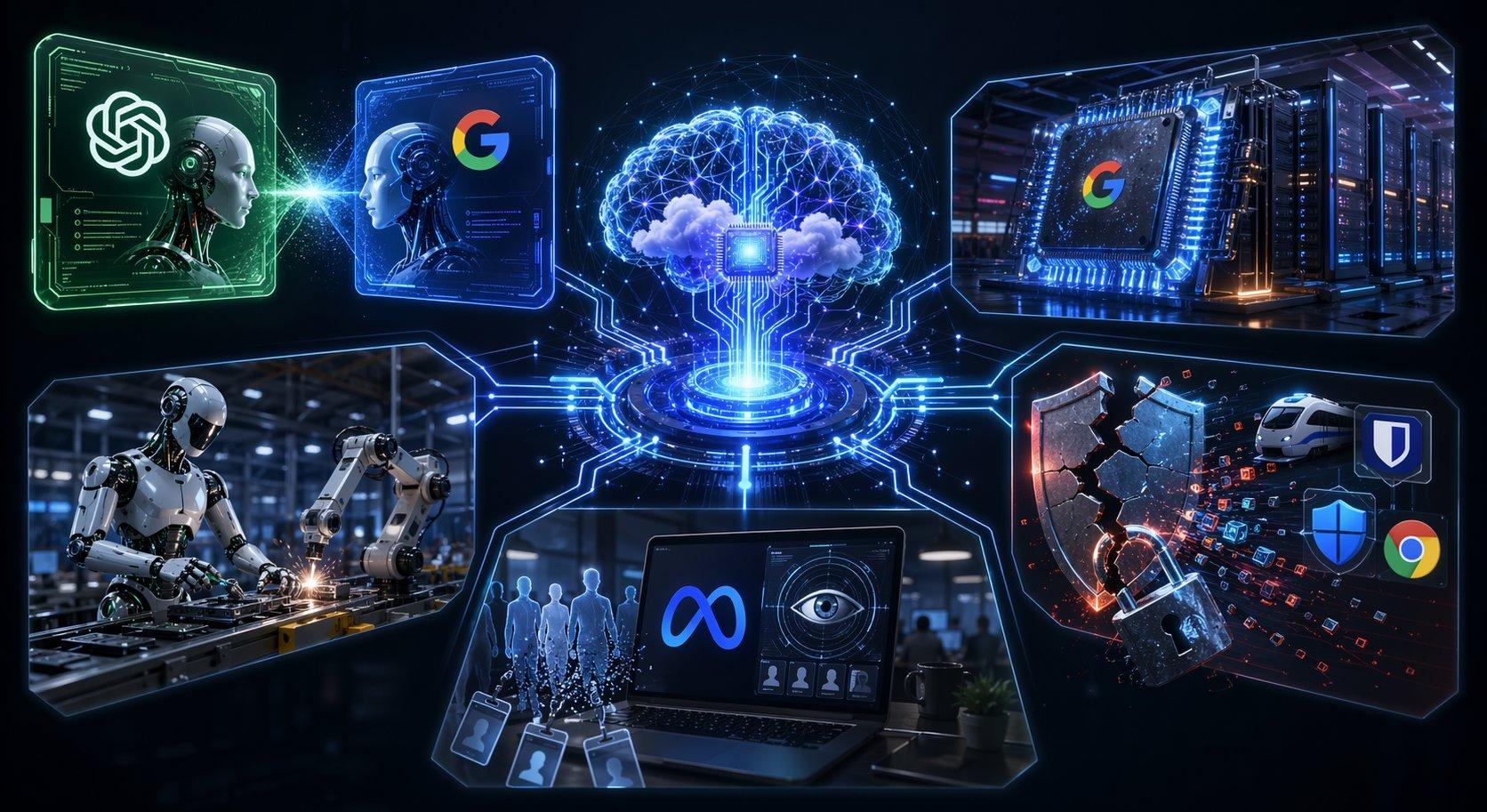
If you are looking for the AI and technology news this week, here are 10 important stories from October 25 to November 1, 2026. Each update includes a short explanation of what happened and why it matters for developers, businesses, and everyday technology users.
1. Google Introduces Gemini 4 Carbon With a Strong Focus on Cybersecurity

Google’s Gemini 4 Carbon became one of the biggest AI stories this week. The new model is designed for advanced reasoning, coding, and cybersecurity-related tasks.
According to Google’s reported results, Gemini 4 Carbon performed strongly on several security benchmarks, including vulnerability discovery and code patching. Its initial rollout is focused on cybersecurity professionals through Google’s Fairwind Program.
The interesting part is not just another model launch. AI systems are increasingly being developed to help security teams identify software weaknesses and respond to threats. However, powerful cybersecurity models also need careful access controls because the same capabilities can potentially be misused.
Why it matters: AI-powered security tools could help organizations identify vulnerabilities faster, improve software protection, and support security researchers.
Source: Google’s Gemini 4 Carbon announcement
2. Mistral Large 4 Arrives as a Major Open AI Model

Mistral made headlines with Large 4, a trillion-parameter model aimed at advanced reasoning and coding tasks.
The release is particularly interesting for developers and businesses exploring alternatives to closed AI systems. Open-weight models can give organizations more flexibility over deployment, customization, and infrastructure choices.
VentureBeat reported improved coding performance and a lower cost per task compared with the model’s previous generation. However, performance and cost can vary depending on the workload, deployment setup, and evaluation method.
Why it matters: More capable open-weight models could give developers additional choices and increase competition in the AI market.
Source: Mistral Large 4 coverage by VentureBeat
3. GitHub Copilot Fusion Combines Multiple AI Models for Coding
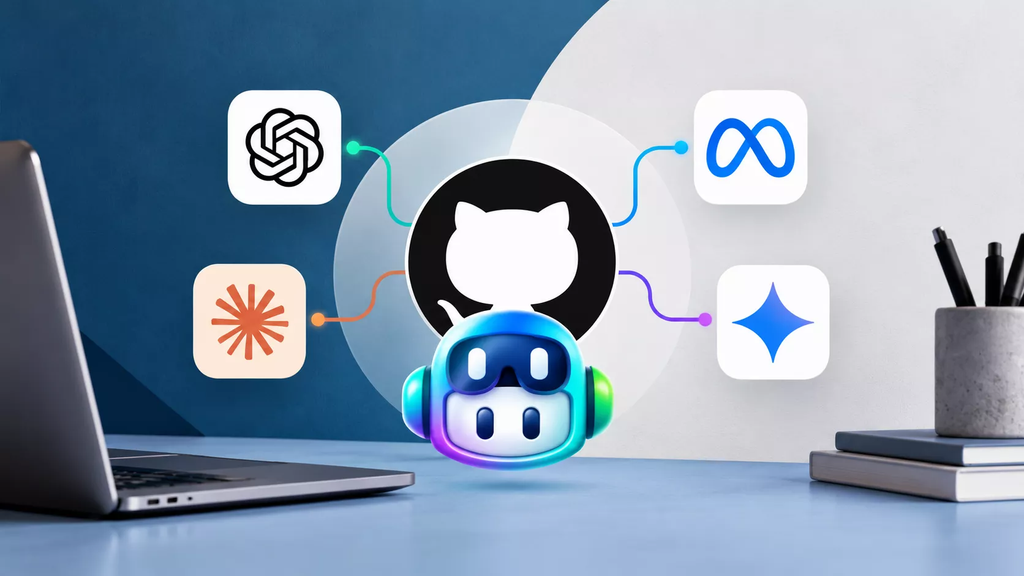
AI coding tools are becoming more sophisticated. GitHub Copilot Fusion is an example of a multi-model approach designed to improve coding performance while managing costs.
Instead of depending on one model for every task, the system combines different models to handle coding workflows. VentureBeat reported that its performance approached Opus 5.5 on certain coding evaluations at around half the per-task cost.
Another interesting feature is the ability to continue work across devices. This could make it easier for developers to manage longer-running tasks without remaining tied to a single computer.
Why it matters: Multi-model coding systems could make AI-assisted development more practical for teams working on complex software projects.
Source: VentureBeat: GitHub Copilot Fusion
4. Liquid AI Releases LFM3 Models for On-Device AI

Liquid AI introduced its LFM3 family of open-weight multimodal models, bringing attention to a growing trend: running more AI capabilities directly on local devices.
On-device AI can reduce dependence on cloud services for certain tasks. It may also help businesses keep sensitive information closer to their own systems and reduce the need to send every request to an external server.
Liquid AI says its models support capabilities such as browser agents, voice commands, and image recognition. Actual performance will depend on the device and implementation.
Why it matters: Smaller and more efficient AI models could make intelligent features more accessible on laptops, private servers, and other devices.
Source: Liquid AI’s LFM3 models
5. Salesforce Expands Agent Fabric With AI Evaluations

As businesses experiment with autonomous AI agents, controlling their behaviour is becoming increasingly important.
Salesforce expanded its Agent Fabric platform with AI evaluations designed to help organizations identify when agents are not performing as expected. The goal is to make it easier to detect failures and trigger shutdowns when necessary.
This is an important development because enterprise AI agents may interact with customer information, internal applications, and business processes. A system that can identify problems before they cause larger issues is valuable for organizations.
Why it matters: AI adoption is moving beyond simply building agents. Businesses also need monitoring, testing, governance, and reliable ways to stop agents when something goes wrong.
Source: VentureBeat AI coverage
6. NVIDIA and Oracle Expand Vera Rubin Cloud Infrastructure
The demand for AI computing continues to put pressure on cloud infrastructure.
NVIDIA and Oracle expanded their Vera Rubin cloud infrastructure efforts, with a focus on improving hardware utilization and supporting demanding AI workloads.
The development reflects a wider challenge for businesses: buying powerful GPUs is not enough. Organizations also need to ensure that their infrastructure is being used efficiently.
As AI models and agent-based workflows become more demanding, companies will need to balance computing capacity, operating costs, and performance.
Why it matters: Better AI infrastructure could help businesses run larger workloads while making more efficient use of expensive computing resources.
Source: AI infrastructure coverage
7. Block Introduces Dessa, a Full-Duplex Voice AI Model

Voice AI is becoming more natural, and Block’s new model, Dessa, is another step in that direction.
Unlike traditional voice systems that often follow a strict listen-then-respond pattern, full-duplex speech technology is designed to support more natural conversational interactions.
MarkTechPost reported that Dessa was trained using speech data rather than relying on a conventional text-first training approach. Superhuman AI also highlighted its ability to run locally on supported Mac hardware.
This kind of technology could make voice assistants more responsive and useful for real-time communication.
Why it matters: More natural voice AI could improve customer support, productivity tools, accessibility features, and personal assistants.
Source: MarkTechPost: Block unveils Dessa
8. Moonshot’s Kimi K3.1 Pro Gains Attention for Advanced Coding
Moonshot AI’s Kimi K3.1 Pro attracted attention this week for its reported improvements in coding, financial analysis, 3D creation, and tasks involving repeated tool use.
The model’s development highlights the growing competition between AI companies working on advanced reasoning systems.
For developers, the important question is not simply which model has the biggest benchmark score. Real-world performance also depends on accuracy, context handling, reliability, speed, and the cost of completing a task.
Why it matters: Stronger AI models give developers more options for software development, research, analysis, and complex workflows.
Source: Superhuman AI: Kimi K3.1 Pro
9. Satlyt Moves Closer to Turning Satellites Into Space Data Centers

AI infrastructure may not remain limited to traditional data centers on Earth.
TechCrunch reported that Satlyt is taking another step toward its vision of satellite-based data centers. The idea is to use computing infrastructure in space to process data closer to where it is collected.
This concept could eventually become relevant for satellite imagery, Earth observation, and other applications that generate large amounts of data.
However, space-based computing faces significant engineering challenges, including power availability, cooling, hardware reliability, communication delays, and launch costs.
Why it matters: If the technology becomes practical, it could create new ways to process space-generated data and support future satellite networks.
Source: TechCrunch: Satlyt and satellite data centers
10. AI-Assisted Cyberattacks Put More Than 200 Organizations in the Spotlight

Cybersecurity was another major topic this week.
AI Breakfast reported that CrowdStrike attributed an AI-assisted intrusion campaign to a China-nexus threat group. More than 200 organizations were targeted, with confirmed post-exploitation activity at nine organizations.
The report describes attackers using AI agents to coordinate parts of their operations. The important distinction is that AI did not necessarily invent new vulnerabilities. Instead, it helped coordinate and scale attacks using existing weaknesses.
The same week also brought attention to OpenAI’s monitoring systems for identifying potentially misaligned agent behaviour.
Why it matters: AI is becoming a tool for both cybersecurity teams and attackers. Organizations should prioritize software updates, access controls, monitoring, and employee security awareness.
Source: AI Breakfast: AI in 2027 — Cybersecurity Wars
What These AI and Technology Developments Mean
Looking at this week’s stories together, a few important trends stand out.
AI Models Are Becoming More Specialized
Companies are building models for specific tasks such as coding, cybersecurity, voice interaction, and financial research. This suggests that the future of AI may involve choosing the right model for each job rather than relying on one general-purpose system.
AI Agents Need Better Monitoring
Businesses are moving from simple chatbots toward systems that can perform actions. That creates a greater need for testing, permissions, monitoring, and human oversight.
Open Models Are Increasing Competition
Open-weight releases give developers more flexibility and create additional competition. They also make deployment choices, hardware requirements, and model licensing more important.
AI Infrastructure Is Becoming a Major Priority
From cloud GPUs to on-device models and satellite computing, the industry is exploring different ways to support growing AI workloads.
Cybersecurity Cannot Be Ignored

AI can help security teams, but it can also help attackers scale existing techniques. Strong security practices remain essential.
What to Watch in AI and Technology Next Week
The next week could bring more developments in several areas:
- AI agents: New tools that can complete multi-step tasks with less manual input.
- AI coding: More competition around model performance, developer productivity, and cost.
- Robotics: Progress in humanoid robots and real-world automation.
- Cybersecurity: Better ways to detect AI-assisted attacks and control autonomous systems.
- AI infrastructure: New developments in chips, cloud computing, and efficient local models.
For technology professionals and business owners, following these developments can help identify useful tools and understand where the industry is heading.
Frequently Asked Questions
1. What are the biggest AI and technology news stories this week?
Major stories include Google’s Gemini 4 Carbon, Mistral Large 4, GitHub Copilot Fusion, Liquid AI’s LFM3 models, Block’s Dessa voice model, and growing concerns about AI-assisted cyberattacks.
2. What is the latest Google AI model?
Google introduced Gemini 4 Carbon in October 2026. The model is being positioned for advanced reasoning, coding, and cybersecurity-related work, with initial access focused on selected cybersecurity professionals.
3. What is Mistral Large 4?
Mistral Large 4 is a trillion-parameter AI model designed for advanced workloads, including coding and reasoning. Its release adds another competitor to the growing open-weight AI ecosystem.
4. How is AI changing software development?
AI coding tools can help developers generate code, debug problems, understand projects, and automate parts of software development. Multi-model tools can also assign different tasks to different AI systems.
5. What is on-device AI?
On-device AI refers to artificial intelligence that runs directly on hardware such as laptops, smartphones, and other local devices rather than relying entirely on cloud servers.
6. Why are AI agents important for businesses?
AI agents can perform multi-step tasks, interact with software, and automate workflows. Businesses still need proper permissions, testing, and monitoring to use them safely.
7. Is AI making cybersecurity better or worse?
Both. AI can help defenders identify vulnerabilities and monitor systems, but attackers can also use it to automate parts of their operations. Strong security controls remain essential.
8. What technology trends should businesses watch in 2026?
Businesses should watch AI agents, open-weight models, AI-powered cybersecurity, robotics, voice AI, on-device computing, and more efficient AI infrastructure.
Final Thoughts
This week’s AI and technology news shows how quickly the industry is moving beyond simple chatbots and text generation.
AI models are becoming more specialized, coding assistants are gaining new capabilities, voice systems are becoming more natural, and businesses are exploring autonomous agents. At the same time, cybersecurity and responsible AI deployment are becoming increasingly important.
The biggest takeaway is simple: the next phase of AI will not be defined by models alone. It will be shaped by how effectively people and businesses use them in the real world.
Stay connected with Tech Thrilled for more AI updates, technology news, practical guides, and the latest developments shaping the digital world.