But what does this mean for people looking for data science vacancies in 2026?
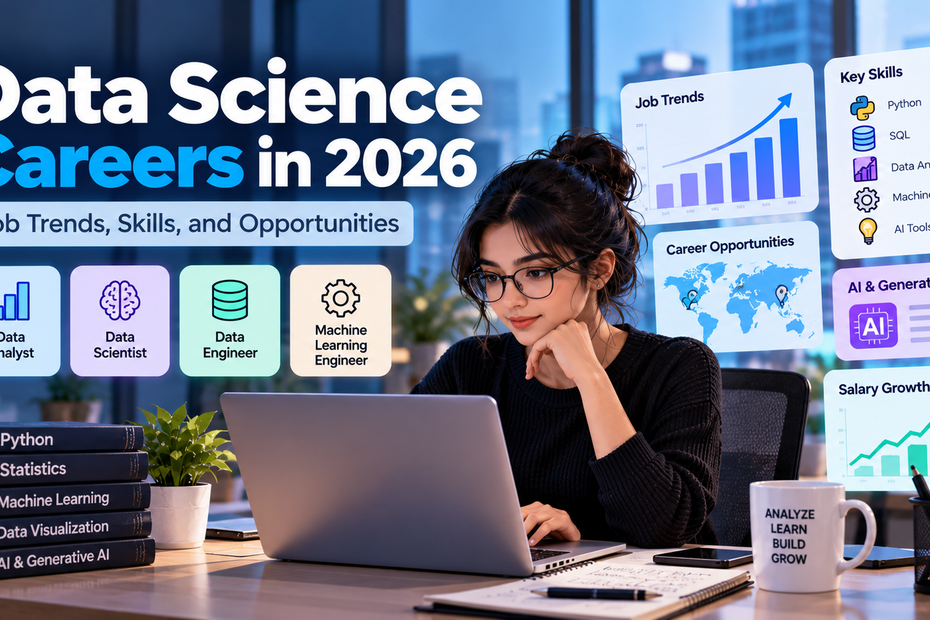
Data science careers in 2026 offer opportunities across analytics, engineering, machine learning, and business intelligence. The best path depends on your existing skills, interests, experience, and local job market. Rather than relying on job titles alone, candidates should build practical skills and projects that demonstrate how they can solve business problems.
Is Data Science Still a Good Career in 2026?
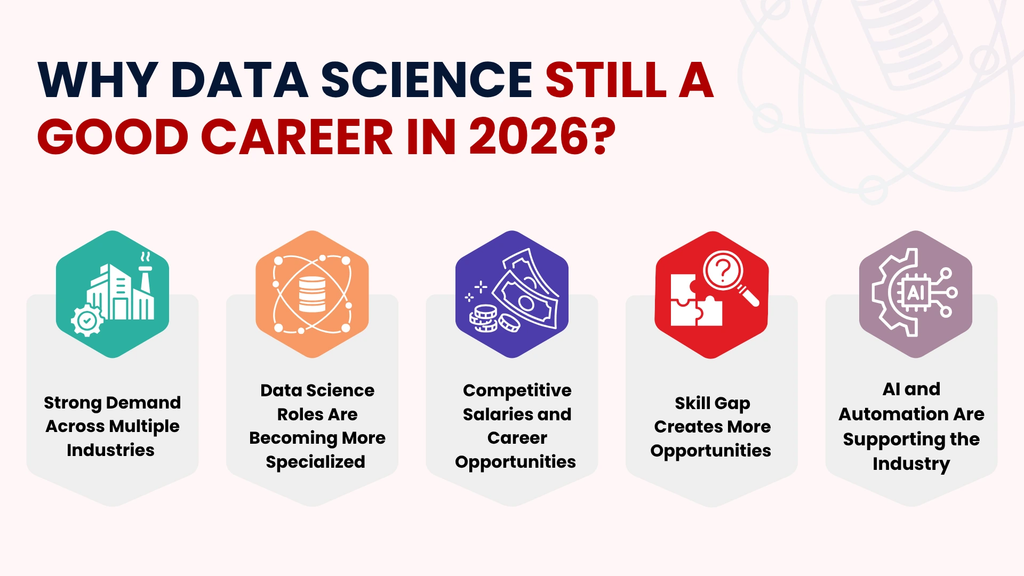
Data science can still be a valuable career choice, but it is not an automatic route to a high-paying job. Entry-level candidates may face competition, and employers often expect a combination of technical knowledge, practical experience, and communication skills.
The World Economic Forum’s Future of Jobs Report 2025 identifies Big Data Specialists, AI and Machine Learning Specialists, and Data Analysts and Scientists among technology-related roles expected to grow by 2030. These findings reflect employer expectations, not a guarantee that every location or industry will experience the same hiring trend.
Source: World Economic Forum — Future of Jobs Report 2025.
Data-related work is valuable because organisations need to turn large amounts of information into useful decisions. A retailer may analyse purchasing patterns, a bank may monitor suspicious transactions, and a healthcare organisation may study operational performance.
However, demand varies by sector, experience level, and location. Some companies are hiring specialised machine learning professionals, while others primarily need analysts who can prepare reports and explain business performance.
The practical takeaway: Data science is worth exploring if you enjoy analytical thinking, problem-solving, and continuous learning. Start by checking real job descriptions in your target market before investing in a course or certification.
What Is Driving Demand for Data Professionals?
Several developments are shaping data-related careers in 2026.
1. Businesses are collecting more data
Companies generate data through websites, mobile apps, transactions, customer support, connected devices, and internal systems. This information is only useful when teams can clean it, organise it, and extract meaningful insights.
Data professionals help businesses understand what is happening, why it is happening, and what action might be appropriate.
2. AI adoption is creating new technical needs
Organisations experimenting with machine learning and generative AI need reliable data pipelines, evaluation processes, monitoring, and governance. Poor-quality data can lead to unreliable outputs, making data preparation and validation important parts of AI projects.
3. Decisions increasingly depend on measurement
Businesses use analytics to monitor sales, customer retention, product performance, costs, and operational efficiency. Data analysts and business intelligence professionals help teams measure results instead of relying entirely on intuition.
4. Data privacy and governance matter
Companies must consider data quality, access controls, privacy, security, and regulatory obligations. These responsibilities create work for professionals who understand both technical systems and responsible data handling.
Top Data Science Jobs to Explore in 2026
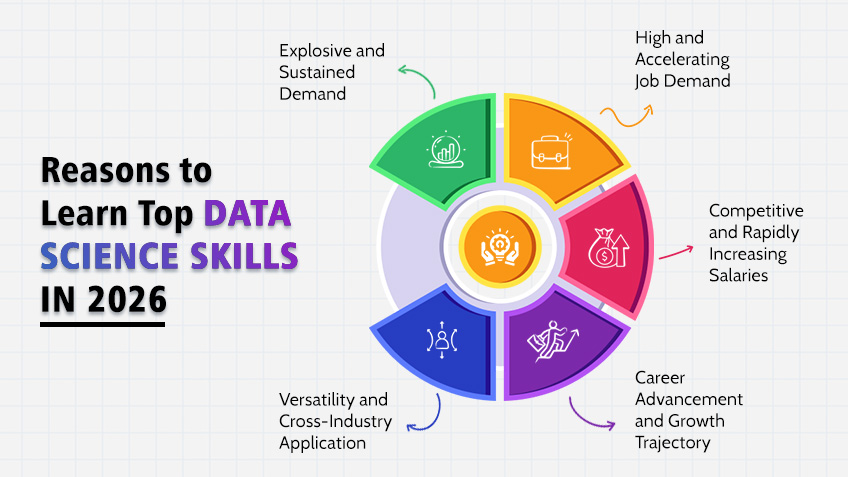
Data science is a broad field. You do not need to become a machine learning researcher to build a career working with data.
1. Data Analyst
Data analysts examine information to answer business questions. They may build dashboards, track key performance indicators, investigate changes in performance, and prepare reports for decision-makers.
Common skills include SQL, spreadsheets, data visualisation, basic statistics, and clear communication. Python can be useful, but requirements vary between employers.
This role can be a practical starting point for people who enjoy working with numbers and explaining what they mean.
2. Data Scientist
Data scientists use statistics, programming, experimentation, and analytical methods to investigate complex questions. Depending on the role, they may build predictive models, conduct experiments, develop features, or support machine learning projects.
Common requirements include Python or R, SQL, statistics, data preparation, model evaluation, and problem-solving. Some positions require advanced mathematics or postgraduate study, while others prioritise applied experience.
3. Data Engineer
Data engineers build and maintain systems that collect, transform, store, and deliver data. Their work helps analysts and data scientists access reliable information.
Useful skills include SQL, Python, data modelling, ETL or ELT pipelines, cloud platforms, orchestration, and distributed processing tools. The precise technology stack depends on the company.
4. Machine Learning Engineer
Machine learning engineers help turn models into reliable software systems. They may develop training pipelines, deploy models, monitor performance, and integrate predictions into applications.
These roles often require strong programming, machine learning fundamentals, software engineering, testing, and deployment knowledge.
5. Business Intelligence Analyst
Business intelligence analysts focus on reporting and decision support. They work with business data, create dashboards, track performance, and help teams understand trends.
SQL, data modelling, dashboard design, and stakeholder communication are often important skills.
6. AI and Data Specialist
Some organisations hire professionals to support AI applications, retrieval systems, model evaluation, data preparation, or analytics automation. These positions can overlap with data science, data engineering, software development, and AI operations.
Read job descriptions carefully. Titles are not standardised, and two jobs with similar names may involve very different responsibilities.
Data Scientist vs. Data Analyst vs. Data Engineer
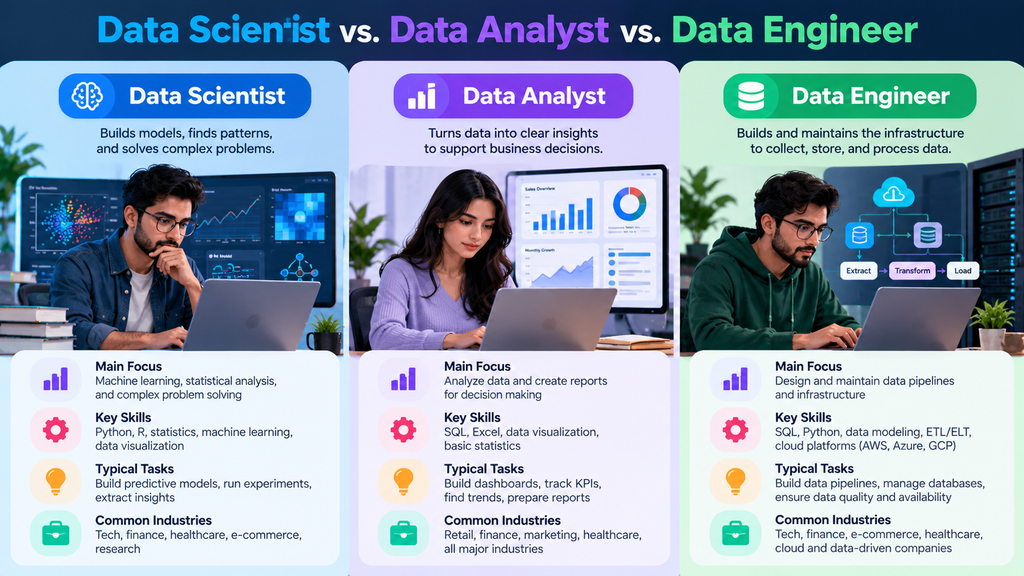
Understanding these roles can help you choose a realistic learning path.
| Role | Main responsibility | Useful starting skills |
|---|---|---|
| Data Analyst | Explain business performance | SQL, spreadsheets, dashboards |
| Data Scientist | Investigate complex questions and build models | Python, statistics, SQL |
| Data Engineer | Build reliable data pipelines and infrastructure | SQL, Python, data systems |
| Machine Learning Engineer | Deploy and maintain machine learning systems | Python, ML, software engineering |
| BI Analyst | Turn business data into reports and insights | SQL, visualisation, business metrics |
These are general distinctions, not strict rules. In smaller companies, one employee may handle several responsibilities. Larger organisations often divide the work across specialised teams.
If you are new to the field, choose a role based on the tasks you enjoy rather than selecting a title simply because it sounds advanced.
Essential Skills for Data Science Jobs in 2026
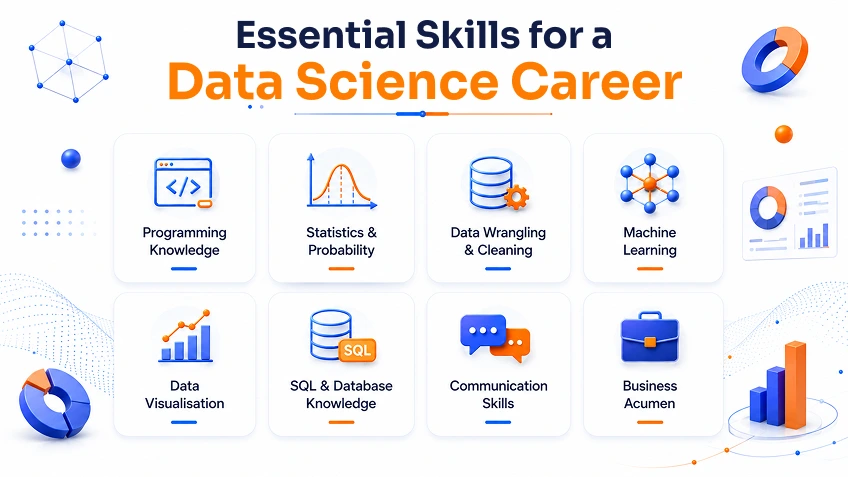
Employers do not all look for the same skill set, but several foundations are useful across many data roles.
SQL and data handling
SQL helps you retrieve, filter, join, and aggregate information from databases. It is one of the most useful skills for analysts and many data scientists and engineers.
Practise queries involving joins, grouping, subqueries, common table expressions, and window functions. Learn how to check for missing values, duplicates, and inconsistent records.
Python and programming fundamentals
Python is widely used for data analysis, automation, and machine learning. Start with core programming concepts, then learn tools such as pandas and NumPy for data manipulation.
Focus on writing readable code and understanding what it does instead of copying scripts without knowing how they work.
Statistics and analytical thinking
You should understand concepts such as averages, distributions, sampling, correlation, uncertainty, and basic hypothesis testing. Machine learning roles may require deeper mathematical knowledge.
Most importantly, learn to question results. A pattern in a dataset does not automatically prove that one factor caused another.
Data visualisation
Charts and dashboards help teams understand findings quickly. Learn how to select appropriate visualisations, label them clearly, and explain the message without overwhelming the reader.
Tools may include Power BI, Tableau, spreadsheets, or Python visualisation libraries.
Communication and business understanding
A technically correct analysis is less useful if nobody understands its implications. Employers value people who can explain assumptions, limitations, and recommended next steps.
Develop the habit of connecting your analysis to a specific question, such as why customer churn increased or which product categories are contributing to revenue growth.
AI literacy and modern tools
LinkedIn’s 2026 skills research highlights growing interest in technical and strategic AI skills, including large language models and AI-related business strategy. It also emphasises collaboration, communication, and other human skills.
Source: LinkedIn — Skills on the Rise 2026.
For data professionals, AI tools can help draft code, explain errors, document queries, and explore analytical approaches. But generated results need to be tested. Candidates should understand data privacy, validate outputs, and be able to explain their work without relying entirely on AI.
How Is AI Changing Data Science Careers?
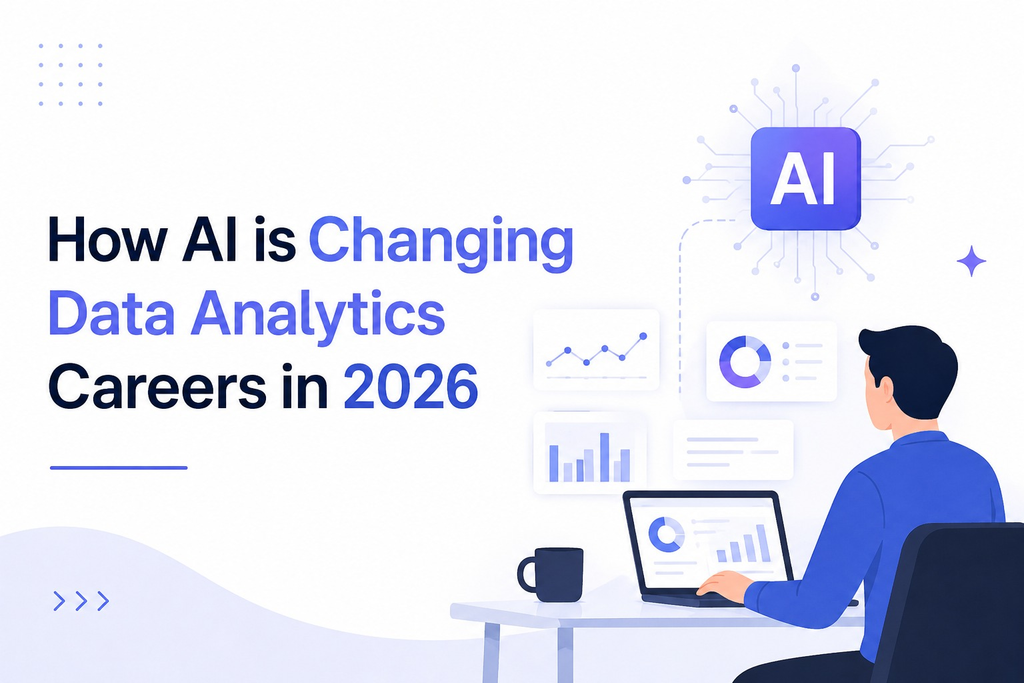
Generative AI is changing parts of the data workflow, but it does not remove the need for reliable analysis.
AI assistants can help users draft SQL queries, write starter code, summarise documentation, suggest visualisations, and automate repetitive tasks. This may allow experienced professionals to spend more time on problem definition, validation, and communicating results.
At the same time, AI-generated code can contain mistakes, and an apparently convincing answer may rely on incorrect assumptions. Data professionals still need to verify results, understand the underlying data, and recognise when a method is unsuitable.
Three capabilities are becoming especially useful:
- AI-assisted productivity: Use AI to speed up routine tasks while checking the output.
- Model and data evaluation: Test whether results are accurate, robust, and appropriate for the intended use.
- Human judgment: Understand business context, communicate uncertainty, and make responsible decisions.
The strongest approach is to learn data fundamentals alongside AI tools. Knowing how to evaluate an answer is more valuable than simply knowing how to generate one.
Data Science Salaries and Career Growth
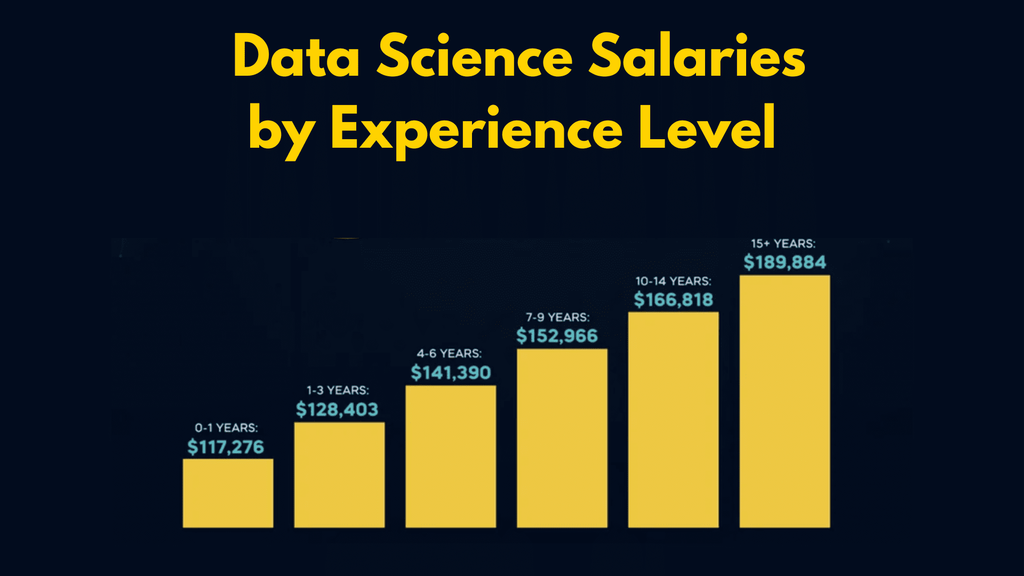
Salary is an important factor when comparing data science opportunities, but there is no single reliable salary figure for every candidate in 2026.
Compensation varies by country, city, industry, company size, experience, technical specialisation, and the scope of responsibility. A data analyst in one market may earn considerably less or more than a machine learning engineer in another.
When researching salaries, compare roles in the same location and at a similar experience level. Use multiple sources, including recent job postings, reputable salary surveys, and local recruitment reports.
Consider the complete offer rather than base salary alone. Benefits, bonuses, remote-work policies, training support, working hours, and career progression can also affect the value of a position.
For long-term growth, develop skills that transfer across companies: analytical reasoning, programming, data modelling, communication, and the ability to work with evolving tools.
How to Start a Data Science Career: A Practical Roadmap
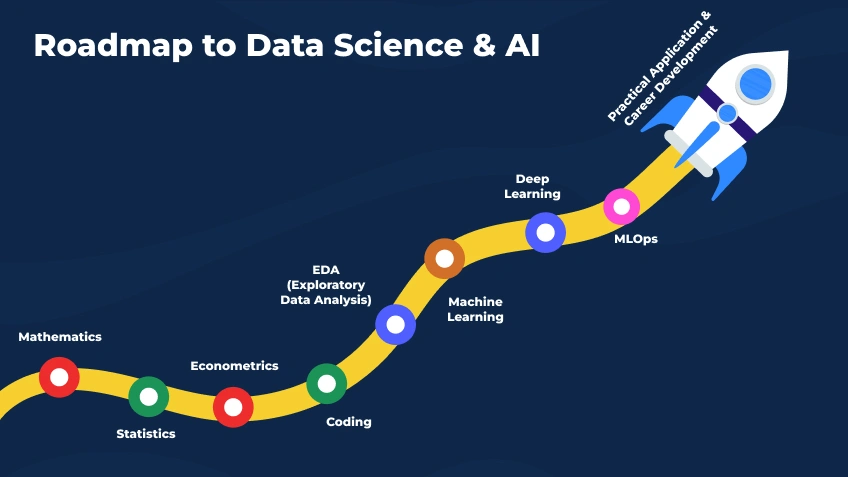
If you are a student, fresh graduate, or career switcher, a structured plan can make the learning process easier.
Step 1: Choose a target role
Start by comparing several job descriptions for the role you want. Record the skills that appear repeatedly and separate essential requirements from optional ones.
This prevents you from spending months learning tools that are rarely relevant to your target jobs.
Step 2: Learn the foundations
For an analyst path, begin with spreadsheets, SQL, basic statistics, and data visualisation. For data science, add Python and machine learning fundamentals. For data engineering, prioritise SQL, programming, data modelling, and pipelines.
You do not need to master everything at once.
Step 3: Build practical projects
Use public or synthetic datasets to solve clear problems. For example, analyse retail sales, investigate customer churn, or build a dashboard showing business performance.
Explain the question, the data, your method, your findings, and the limitations. Publish your code or project documentation where appropriate.
Step 4: Create a portfolio
Choose two or three projects that demonstrate different skills. A clean, well-explained project is often more useful than a large collection of unfinished notebooks.
Avoid presenting copied tutorials as original work. If you learn from an existing tutorial, clearly explain what you changed and what you learned.
Step 5: Prepare for interviews
Practise SQL problems, analytical case studies, statistics, and questions about your own projects. Be ready to explain why you selected a method and how you checked the result.
For entry-level candidates, being able to explain a small project confidently can help demonstrate practical understanding.
Step 6: Apply and improve
Tailor your CV to each role, using truthful descriptions of your skills and experience. Track applications, review job requirements, and use feedback to identify gaps.
Do not wait until you feel that you know everything. Apply when you can reasonably demonstrate the core requirements for the roles you are targeting.
Best Projects for a Data Science Portfolio

A portfolio should demonstrate how you think, not just which libraries you can use.
Sales performance dashboard: Analyse revenue, product categories, regional performance, and changes over time. Use SQL and a dashboard tool to present the results.
Customer churn analysis: Explore which customer characteristics are associated with cancellations. Explain the difference between correlation and causation, and discuss data limitations.
Predictive modelling project: Use a suitable public dataset to build and evaluate a basic model. Compare it with a simple baseline and explain the evaluation metrics.
Data cleaning and pipeline project: Start with messy data, document the cleaning process, and create a repeatable workflow that produces a reliable dataset.
AI-assisted analytics project: Use an AI assistant to help with a limited task, then document how you tested its output and corrected any mistakes. Never upload confidential or personal data to an unapproved tool.
A strong portfolio includes readable code, a clear README, meaningful visualisations, and honest explanations of what the project can and cannot show.
Where to Find Data Science Vacancies
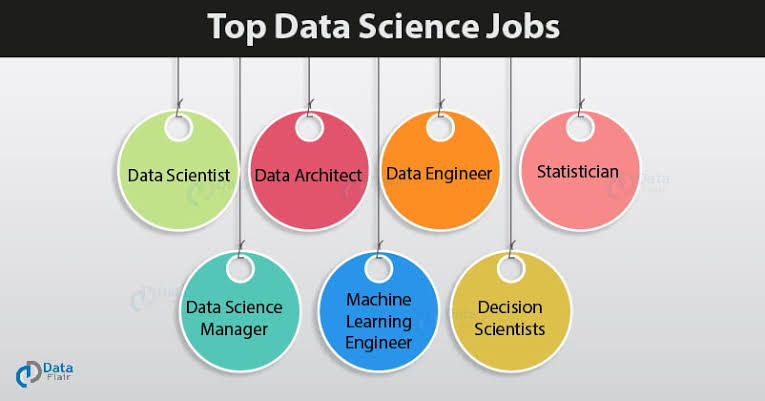
Finding relevant openings requires more than searching for “data scientist jobs.”
Check company career pages, professional networks, reputable job boards, university career services, and specialist recruitment sites. Search for several related titles, including data analyst, business intelligence analyst, analytics engineer, data engineer, and machine learning engineer.
Useful search phrases include:
- Entry-level data analyst jobs
- Junior data scientist vacancies
- Data engineer jobs
- Business intelligence analyst roles
- Machine learning engineer positions
- Data analytics internships
Filter by location, experience level, required skills, and work arrangement. Review the date of each posting and apply through the employer’s official channel whenever possible.
Be cautious about recruiters or job listings that ask for payment to guarantee employment. Verify the employer, avoid sharing unnecessary sensitive information, and never misrepresent your qualifications.
Common Mistakes to Avoid

One common mistake is collecting certificates without building practical skills. Courses can provide structure, but candidates also need to practise, solve problems, and explain their work.
Another mistake is learning too many tools at once. Start with a small set relevant to your target role and develop a strong foundation before adding specialised technologies.
Avoid using AI-generated code or analysis without checking it. An attractive dashboard or impressive model is not enough if the underlying result is unreliable.
Finally, do not assume that a single job title or technology guarantees employment. Hiring depends on many factors, including the employer’s needs, competition, location, experience, and economic conditions.
Frequently Asked Questions
1. Is data science in demand in 2026?
Data-related roles remain an important area to watch. The World Economic Forum’s 2025 report lists several data and AI roles among those employers expect to grow by 2030. Actual demand varies by country, industry, and role.
2. Can a fresher get a data science job?
Yes, entry-level opportunities exist, although competition can be significant. Fresh graduates can improve their applications by learning core skills, building projects, practising interviews, and considering related roles such as data analyst or BI analyst.
3. Do I need a degree to become a data scientist?
Requirements vary. Some employers prefer a degree in computer science, statistics, mathematics, engineering, or a related field. Others may place greater emphasis on relevant experience and demonstrated skills. Check the requirements for the jobs you want.
4. Which programming language should I learn first?
Python is a useful starting point for data analysis and machine learning. SQL is also essential for many data roles because it allows you to work with information stored in databases. Your learning order should reflect the responsibilities of your target position.
5. Will AI replace data scientists?
AI can automate parts of data work, but it does not make analytical judgment, validation, business understanding, or responsible decision-making unnecessary. The effect will differ by role and organisation, so professionals should learn to use AI while strengthening their fundamentals.
6. Which data science role is best for beginners?
Data analyst and BI analyst roles can be accessible entry points for people who enjoy working with data and business questions. Candidates who prefer programming and infrastructure may be interested in junior data engineering roles. The best fit depends on your skills and interests.
7. How long does it take to learn data science?
There is no universal timeline. It depends on your starting point, study time, target role, and project experience. Focus on demonstrating the skills employers request rather than relying on a fixed number of months.
8. Are data science certifications worth it?
Certifications can provide structure and help demonstrate learning, but their value depends on the provider, subject, and employer. They are most useful when combined with practical projects and a clear explanation of what you can do.
9. How can I find genuine data science vacancies?
Use reputable job platforms, employer career pages, and professional networks. Check the employer’s identity, read the full job description, and be wary of offers that demand payment or promise guaranteed placement.
Conclusion
Data science careers in 2026 span analytics, engineering, machine learning, and AI-enabled workflows. Employers’ needs vary, but strong foundations in SQL, programming, statistics, data quality, and communication can help candidates prepare for a range of opportunities.
For beginners, the most practical strategy is to choose a target role, learn the skills that appear repeatedly in real job descriptions, and build a small portfolio of projects that demonstrate genuine problem-solving.
AI tools are changing the way data professionals work, making validation and critical thinking especially important. Rather than chasing every new technology, focus on learning the fundamentals and showing how you can turn data into useful, reliable decisions.