Can AI Replace Software Engineers Artificial Intelligence has changed software development faster than almost anyone expected.
Just a few years ago, writing hundreds of lines of code could take hours. Today, AI tools like ChatGPT, GitHub Copilot, Claude, Gemini, and Cursor can generate code, explain programming concepts, fix bugs, and even write documentation within seconds.
Because of these rapid advances, one question keeps appearing across developer communities, YouTube videos, Reddit discussions, and LinkedIn posts:
Can AI Replace Software Engineers?
It’s a reasonable concern.
Every month, a new AI model showcases impressive coding abilities. Some startups even claim you can build complete applications without writing a single line of code. Headlines often suggest that programming jobs are disappearing and that developers should prepare for an AI-driven future.
But is that really true?
The short answer is no.
AI is changing how software is built, but it is not replacing software engineers. Instead, it is becoming one of the most valuable tools developers have ever had.
In this guide, you’ll learn:
- Whether AI can truly replace software engineers
- What AI coding assistants can already do
- What AI still cannot do
- How companies are using AI in software development
- The skills developers should learn to stay relevant
- What the future of software engineering looks like
Whether you’re a student learning to code, a junior developer, or an experienced software engineer, understanding how AI fits into the industry will help you prepare for the future.
Quick Answer
If you’re looking for a simple answer, here it is:
No, AI cannot replace software engineers in 2026.
AI can automate repetitive programming tasks such as writing boilerplate code, generating documentation, suggesting code improvements, and finding common bugs. However, software development involves much more than writing code.
Developers solve business problems, design software architecture, communicate with clients, review security risks, collaborate with teams, and make technical decisions that require human judgment.
AI is making developers more productive—not making them obsolete.
Why Is Everyone Talking About AI Replacing Programmers?
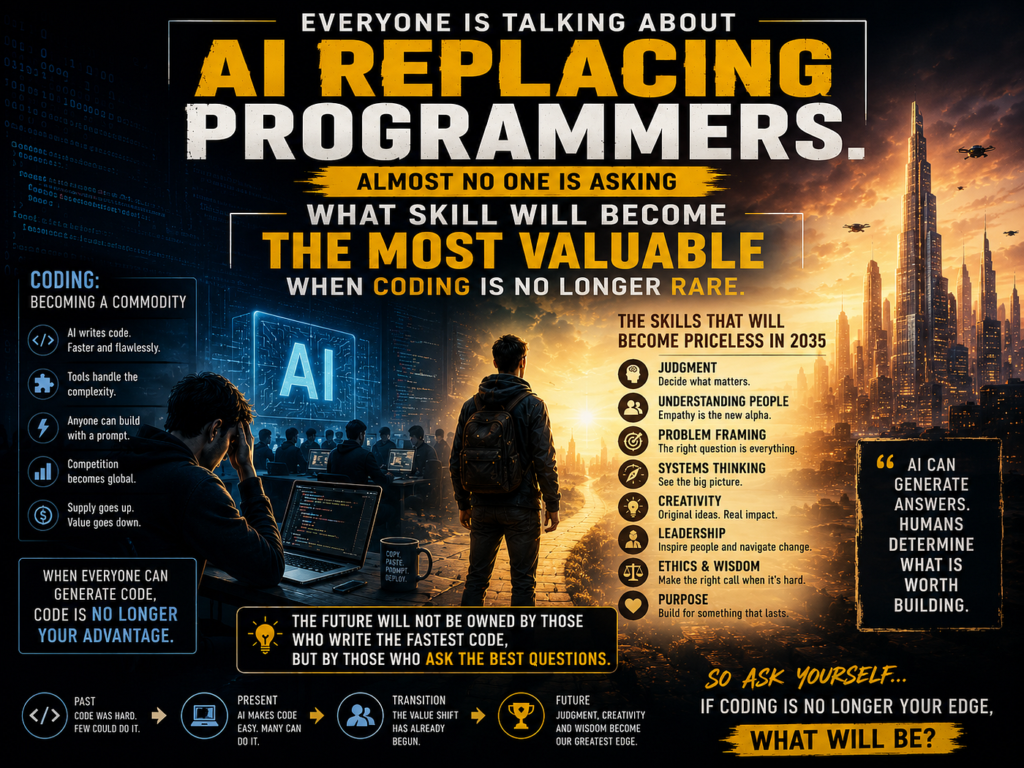
The concern comes from how quickly AI coding tools have improved.
Modern AI assistants can:
- Generate code from plain English prompts
- Explain complex programming concepts
- Detect bugs and suggest fixes
- Create unit tests
- Convert code between programming languages
- Write API documentation
- Recommend performance improvements
For many people, it feels like AI is doing the work that programmers used to do manually.
Social media has also amplified this perception. Videos showing people building websites or apps with a few prompts often go viral, giving the impression that coding skills are no longer necessary.
While these demonstrations are impressive, they only show a small part of software development.
Building a production-ready application requires planning, architecture, security, testing, deployment, scalability, and ongoing maintenance—areas where experienced engineers still play a critical role.
How AI Is Changing Software Development
Instead of replacing developers, AI is transforming the way they work.
Think of AI as an intelligent coding assistant. It handles repetitive tasks so developers can focus on solving more meaningful problems.
For example, instead of spending an hour writing repetitive boilerplate code, a developer can generate it in seconds using AI and spend the saved time improving performance or designing better features.
This shift is helping companies build software faster without sacrificing quality.
Developers are now spending less time on repetitive coding and more time on creativity, product strategy, and user experience.
Why Companies Are Investing Billions in AI
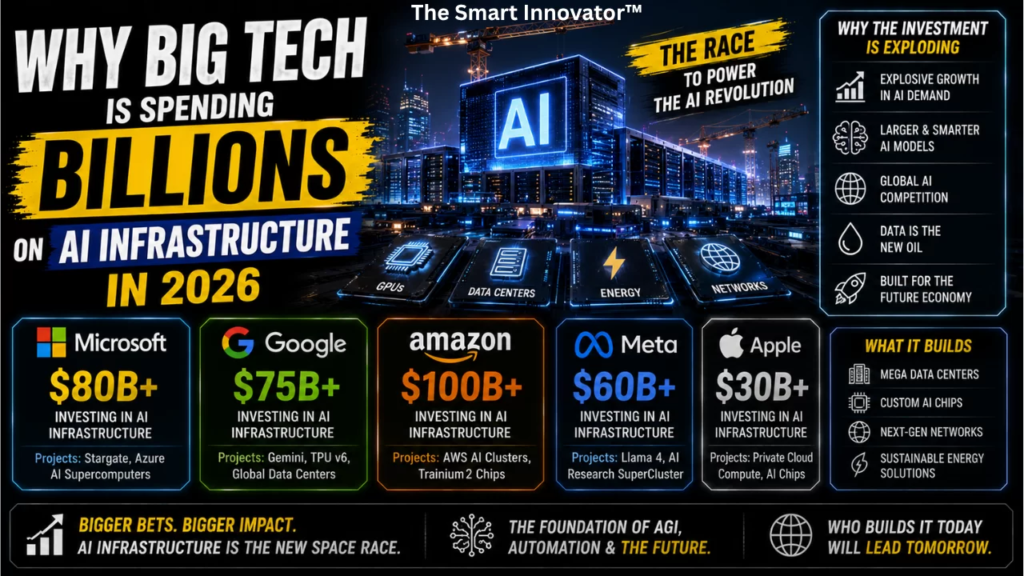
Major technology companies are investing heavily in AI because it improves developer productivity.
When engineers complete routine tasks faster, they can focus on work that creates greater value for customers.
For businesses, this means:
- Faster product development
- Reduced development costs
- Better software quality
- Shorter release cycles
- Improved developer productivity
Rather than replacing engineering teams, companies are equipping them with better tools.
That’s why AI has become a standard part of many modern software development workflows.
Popular AI Coding Tools Developers Use
Several AI-powered tools are already helping developers write better code.
GitHub Copilot
GitHub Copilot works as an AI pair programmer. It suggests code while developers type, generates repetitive functions, and speeds up everyday programming tasks.
It’s especially useful for reducing repetitive coding and improving productivity.
ChatGPT
ChatGPT is widely used by developers to explain code, debug errors, learn new technologies, generate scripts, brainstorm solutions, and review programming logic.
Many engineers treat it like an experienced technical assistant rather than a replacement.
Claude
Claude is known for handling large codebases and providing detailed explanations.
Developers often use it to review long files, understand unfamiliar projects, and generate technical documentation.
Gemini
Google’s Gemini integrates with Google’s ecosystem and supports coding, debugging, documentation, and AI-assisted development across multiple programming environments.
AI Is a Tool, Not a Replacement
The biggest misconception about AI is that writing code is the same as building software.
Writing code is only one part of software engineering.
Successful software projects require:
- Understanding customer requirements
- Designing scalable systems
- Choosing the right technologies
- Protecting user data
- Collaborating with designers and product managers
- Maintaining software after release
These responsibilities still depend on human expertise.
AI can assist developers throughout the process, but it cannot independently manage an entire software project from idea to deployment.
Key Takeaways
Before moving to the next section, here are the most important points to remember:
- AI is transforming software development, not replacing software engineers.
- Modern AI tools help developers write code faster and reduce repetitive work.
- Human developers remain essential for architecture, decision-making, security, and innovation.
- Companies are investing in AI to improve engineering productivity rather than eliminate programming jobs.
- Developers who learn to work with AI will have a significant advantage in the future job market.
What’s Next?
Now that we’ve covered why AI has become such a hot topic, it’s time to explore its real capabilities.
In the next section, we’ll look at:
- What AI can already do for software engineers
- What AI still cannot replace
- AI vs. human developers
- How leading tech companies are using AI in real-world software development
What AI Can Already Do for Software Engineers
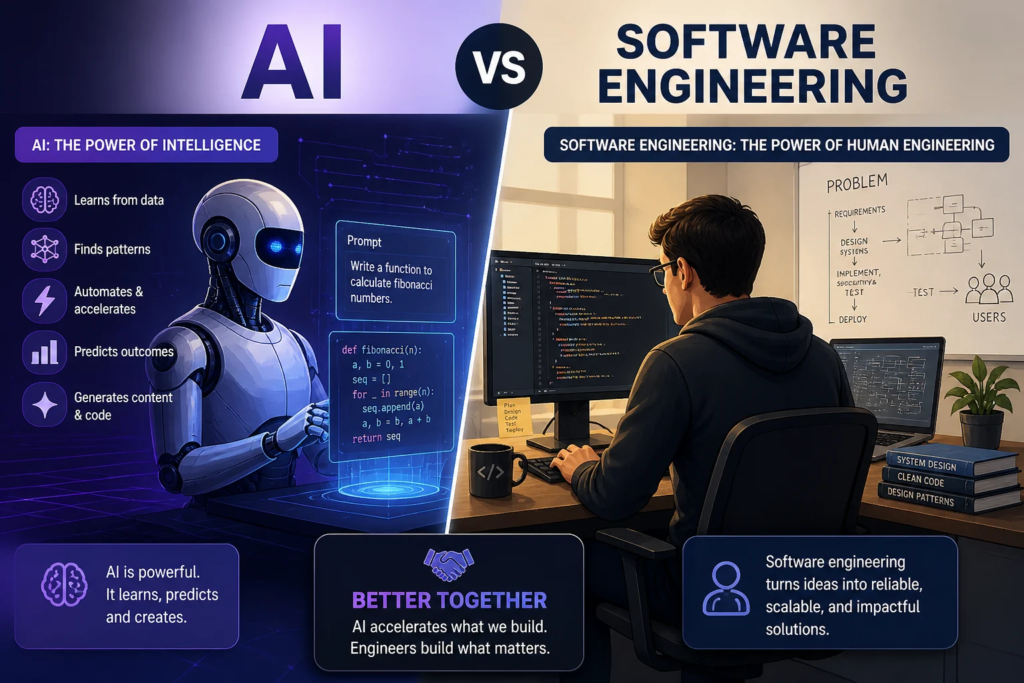
Artificial Intelligence has become an everyday tool for millions of developers around the world. Whether you’re building a website, developing a mobile app, or maintaining enterprise software, AI can help you complete tasks faster and more efficiently.
However, it’s important to understand one thing:
AI doesn’t replace developers—it helps them work smarter.
Let’s look at what AI is already capable of in modern software development.
1. Writing Boilerplate Code in Seconds
Every developer has written the same type of code multiple times.
Examples include:
- User authentication
- Login systems
- Database connections
- CRUD operations
- API routes
- Form validation
- Configuration files
These tasks are repetitive but necessary.
Instead of writing everything from scratch, developers can now describe what they need in plain English, and AI generates a working starting point within seconds.
For example, you can simply ask:
“Create a REST API in Node.js using Express and MongoDB with JWT authentication.”
Within moments, AI can generate the project structure, routes, authentication logic, and sample code.
This saves valuable development time while allowing engineers to focus on more complex features.
2. Explaining Complex Code
One of the biggest challenges for developers is understanding code written by someone else.
Imagine joining a new company and opening a project with thousands of lines of unfamiliar code.
Instead of spending hours reading every file, developers can ask AI questions like:
- What does this function do?
- Why is this algorithm used?
- Can you explain this code in simple language?
- Are there any possible improvements?
AI can break down complicated code into easy-to-understand explanations, making it an excellent learning companion for both beginners and experienced developers.
3. Finding Bugs Faster
Debugging is one of the most time-consuming parts of software development.
Modern AI assistants can quickly identify:
- Syntax errors
- Logic mistakes
- Missing variables
- Unused code
- Security vulnerabilities
- Performance issues
Although AI doesn’t catch every bug, it significantly reduces the time developers spend searching for common mistakes.
Think of it as having an extra pair of experienced eyes reviewing your code.
4. Improving Existing Code
Writing code is only the beginning.
Professional developers constantly improve their code to make it easier to maintain.
AI helps by:
- Simplifying long functions
- Removing duplicate code
- Suggesting cleaner variable names
- Improving readability
- Following coding best practices
This process, known as code refactoring, helps teams maintain large projects more efficiently.
5. Generating Unit Tests
Testing ensures software works correctly before users interact with it.
Unfortunately, writing tests can be repetitive.
AI can automatically generate:
- Unit tests
- Integration test templates
- Edge-case scenarios
- Mock objects
- Sample test data
Developers still review these tests before deployment, but AI removes much of the repetitive work involved.
6. Creating Documentation
Documentation often gets ignored because developers are busy building features.
AI makes documentation much easier by generating:
- README files
- API documentation
- Installation instructions
- Function descriptions
- Code comments
Good documentation helps future developers understand projects without reading every line of code.
7. Helping Developers Learn Faster
Many developers now use AI as a personal programming tutor.
Instead of searching through dozens of websites, they ask AI questions like:
- How does React work?
- Explain recursion with examples.
- What’s the difference between SQL and NoSQL?
- Show me how JWT authentication works.
AI provides instant explanations, examples, and learning resources tailored to the developer’s skill level.
This makes learning new technologies much faster.
Key Takeaway
AI is excellent at handling repetitive and well-defined programming tasks. It can dramatically increase productivity, but it still relies on human engineers to make important technical and business decisions.
What AI Still Cannot Replace
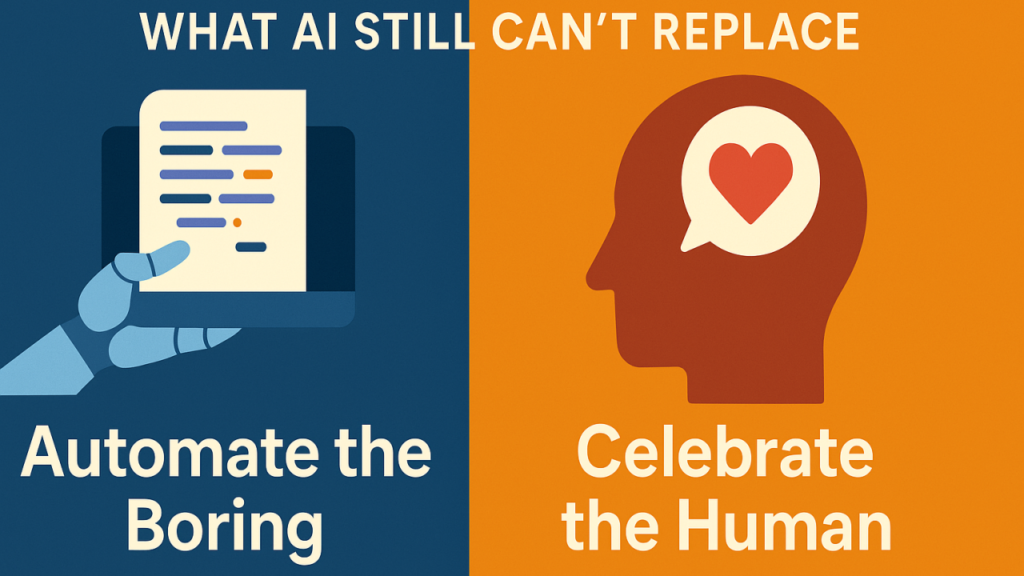
Despite its impressive capabilities, AI has significant limitations.
Writing code is only one small part of software engineering.
Successful software products require planning, communication, creativity, and critical thinking—areas where human developers continue to play a leading role.
1. Designing Software Architecture
Large software applications aren’t built by randomly generating code.
Someone must decide:
- How different services communicate
- Which database fits the project
- How users will authenticate
- How the application scales to millions of users
- How data is protected
These architectural decisions require experience, trade-offs, and long-term thinking.
AI can suggest ideas, but experienced software engineers make the final decisions.
2. Understanding Business Problems
Clients rarely ask developers to “build an API.”
Instead, they say things like:
“We want customers to complete purchases faster.”
A software engineer must translate that business goal into technical solutions.
AI doesn’t truly understand customer needs, business priorities, or organizational strategy.
Developers bridge the gap between business requirements and technology.
3. Solving New Problems
AI learns from existing information.
Software engineers solve problems that have never existed before.
Every project introduces unique challenges:
- Changing client requirements
- Legacy systems
- Third-party API failures
- Unexpected bugs
- Scalability issues
These situations require creativity and critical thinking—skills that AI still struggles to replicate.
4. Making Security Decisions
Cybersecurity isn’t just about writing secure code.
Developers must consider:
- Authentication
- Data privacy
- Access control
- Compliance requirements
- Threat prevention
- Risk assessment
AI can recommend secure coding practices, but experienced engineers are responsible for protecting real-world applications.
5. Communicating With People
Software development is a team effort.
Developers regularly work with:
- Product managers
- UI/UX designers
- Clients
- QA engineers
- DevOps teams
Explaining technical ideas, gathering feedback, and making collaborative decisions are essential parts of the job.
These human interactions remain difficult for AI.
6. Innovation and Creativity
AI generates content based on patterns it has learned.
Humans create entirely new ideas.
Many of today’s most successful products started with someone asking:
“What if we built something that doesn’t exist yet?”
That kind of innovation still comes from people.
AI vs Human Software Engineers
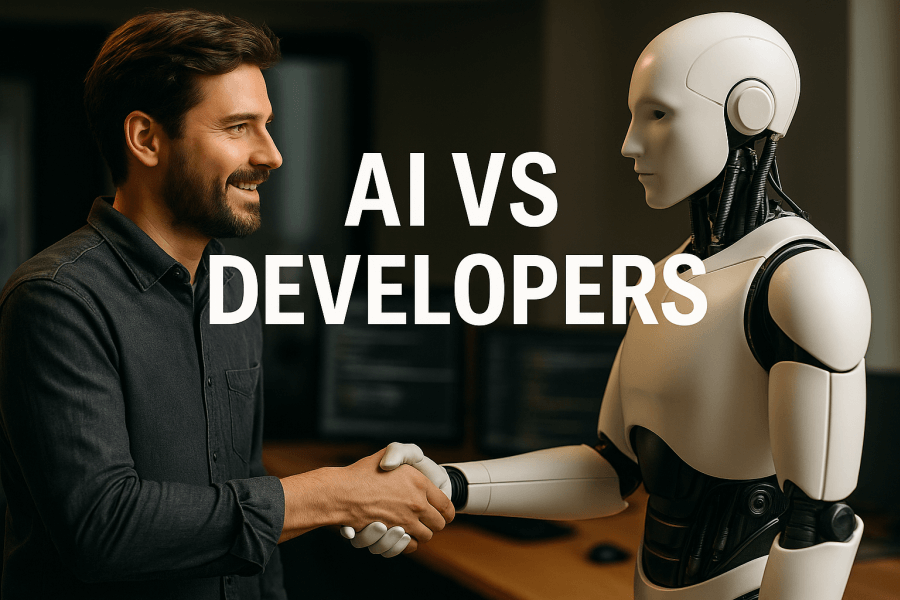
The future isn’t about AI versus developers.
It’s about developers using AI effectively.
Here’s how they compare.
| Feature | AI Coding Tools | Human Software Engineers |
|---|---|---|
| Writing repetitive code | ⭐⭐⭐⭐⭐ | ⭐⭐⭐ |
| Speed | Very Fast | Moderate |
| Creativity | Limited | Excellent |
| Business understanding | Poor | Excellent |
| System architecture | Basic suggestions | Expert-level |
| Security decisions | Limited | Excellent |
| Team collaboration | Minimal | Essential |
| Long-term planning | Cannot plan | Strong strategic thinking |
| Accountability | None | Full responsibility |
AI handles repetitive tasks.
Humans solve meaningful problems.
Together, they create better software.
How Leading Tech Companies Are Using AI
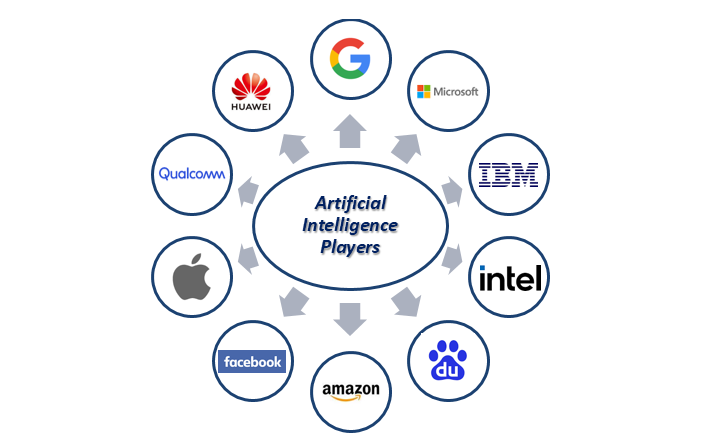
Many people believe AI is replacing software engineers.
The reality is quite different.
The world’s biggest technology companies are using AI to support developers, not replace them.
Microsoft
Microsoft has integrated AI into GitHub Copilot and Visual Studio to help developers write code faster, review pull requests, and generate documentation.
Engineers still make architectural decisions and review AI-generated code before deployment.
Google uses AI throughout its software development workflow.
Engineers use AI to speed up coding, automate testing, and improve developer productivity while continuing to design and maintain complex systems.
Amazon
Amazon applies AI across cloud computing, logistics, and software engineering.
Developers use AI to automate testing, improve code quality, and accelerate software delivery.
Shopify
Shopify encourages developers to use AI to build features faster while maintaining high-quality user experiences for millions of merchants worldwide.
Salesforce
Salesforce integrates AI into customer relationship management (CRM), automation, and analytics.
Its engineering teams also rely on AI tools to increase productivity rather than replace developers.
The Real Trend in 2026
Across the technology industry, one trend is becoming increasingly clear.
Companies aren’t looking for fewer software engineers.
They’re looking for software engineers who know how to use AI effectively.
The developers who combine programming knowledge with AI skills are becoming some of the most valuable professionals in today’s job market.
Instead of fearing AI, successful developers are learning how to make it part of their daily workflow.
That’s where the real opportunity lies.
Common Myths About AI Replacing Software Engineers
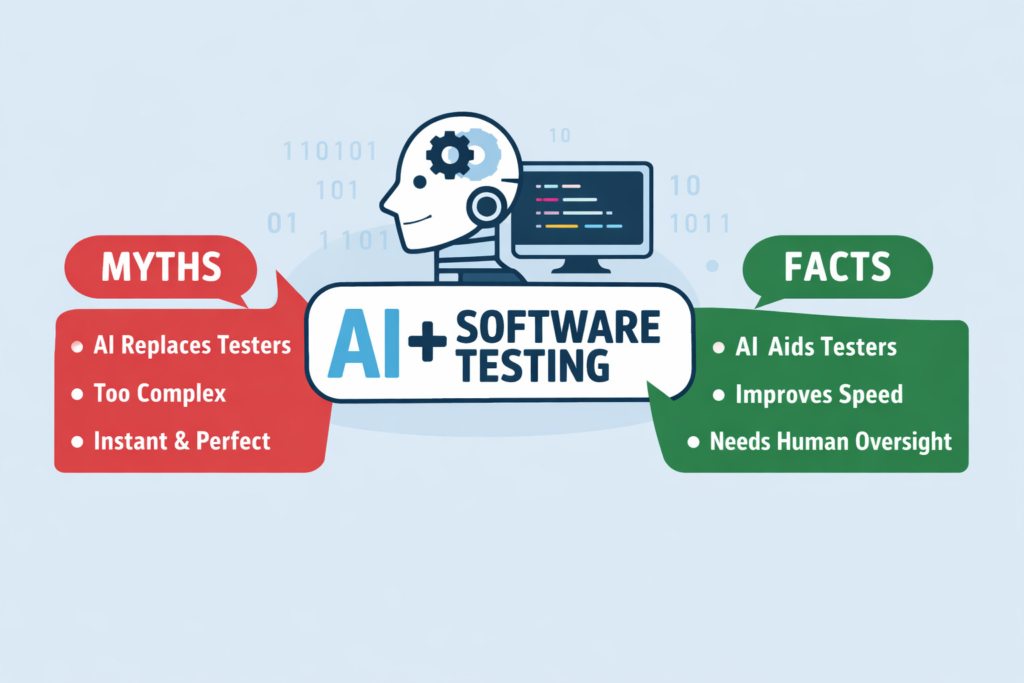
Artificial Intelligence has become one of the hottest topics in technology, but it has also created plenty of confusion. Social media headlines often exaggerate AI’s capabilities, making it seem like software engineering is becoming obsolete.
Let’s separate the myths from reality.
Myth 1: AI Will Replace All Software Engineers
Reality: AI can write code, but software engineering is much more than coding.
A software engineer spends time:
- Understanding customer requirements
- Designing scalable systems
- Solving business problems
- Reviewing security risks
- Collaborating with designers and product managers
- Maintaining software after launch
AI can assist with many of these tasks, but it cannot independently own an entire software project.
Myth 2: You Don’t Need to Learn Programming Anymore
Some people believe AI can generate any code they need, so learning programming has become unnecessary.
That’s far from the truth.
Without understanding programming fundamentals, you won’t know:
- Whether AI-generated code is correct
- How to fix bugs
- Why the code works
- How to improve performance
- Whether the code is secure
Think of AI like a calculator.
A calculator makes solving equations faster, but you still need to understand mathematics.
Programming works the same way.
Myth 3: AI Always Writes Perfect Code
AI is impressive—but it’s not perfect.
Sometimes it generates:
- Incorrect logic
- Outdated syntax
- Security vulnerabilities
- Inefficient algorithms
- Code that doesn’t match business requirements
That’s why experienced developers always review, test, and improve AI-generated code before using it in production.
Myth 4: Junior Developers Won’t Have Jobs
This is one of the biggest fears among students and aspiring programmers.
While entry-level roles are changing, they are not disappearing.
Companies still need junior developers who can:
- Learn quickly
- Review AI-generated code
- Fix bugs
- Build small features
- Collaborate with senior engineers
In fact, developers who know how to use AI tools effectively may become more valuable than those who avoid them.
Myth 5: AI Can Build Any Software Application
You’ve probably seen videos where someone creates a website in just a few minutes using AI.
These demonstrations are impressive—but they’re often simplified.
Building real-world software involves:
- Business requirements
- Security
- Scalability
- Database design
- Testing
- Performance optimization
- Continuous maintenance
AI can generate a starting point, but experienced engineers are still needed to turn that into a reliable, production-ready application.
Will Software Engineers Lose Their Jobs?
This is one of the most searched questions on Google today.
The answer is both yes and no.
Yes—Some Tasks Will Be Automated
AI is already reducing the time spent on repetitive work, such as:
- Writing boilerplate code
- Creating documentation
- Generating unit tests
- Explaining code
- Refactoring simple functions
These tasks no longer require as much manual effort.
No—Software Engineering Isn’t Going Away
As routine work becomes automated, engineers can focus on more valuable responsibilities.
These include:
- Solving complex problems
- Designing software architecture
- Improving user experience
- Making security decisions
- Building AI-powered products
- Leading engineering teams
History has shown that technology changes jobs—it rarely eliminates entire professions.
The same happened with cloud computing, mobile development, DevOps, and automation.
AI is simply the next major evolution.
Skills Every Software Engineer Should Learn in the AI Era
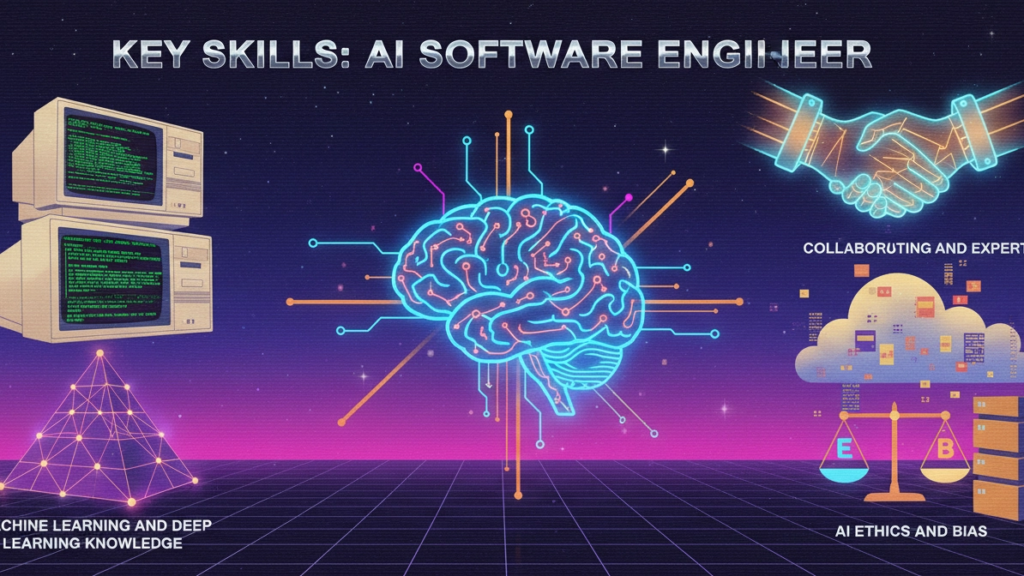
The developers who continue learning will have the strongest career opportunities over the next decade.
Here are the skills worth investing in.
1. Learn How to Work With AI
Knowing how to ask AI the right questions is becoming a valuable technical skill.
Developers who write clear prompts receive better code, faster debugging help, and more accurate solutions.
AI works best when guided by someone who understands software development.
2. Strengthen Your Programming Fundamentals
Frameworks and AI tools change constantly.
Programming fundamentals remain the foundation.
Focus on:
- Data structures
- Algorithms
- Object-oriented programming
- Databases
- APIs
- Version control with Git
These skills make it easier to understand, review, and improve AI-generated code.
3. Master System Design
Senior developers are valued because they design systems—not because they type faster.
Learn concepts like:
- Microservices
- Event-driven architecture
- Caching
- Scalability
- Load balancing
- High availability
AI can suggest ideas, but experienced engineers make the final architectural decisions.
4. Learn Cloud Technologies
Modern software runs in the cloud.
Understanding platforms like AWS, Microsoft Azure, or Google Cloud can significantly improve your career prospects.
Cloud computing remains one of the most in-demand skills for software engineers.
5. Improve Cybersecurity Knowledge
As AI generates more code, security becomes even more important.
Developers should understand:
- Authentication
- Authorization
- Encryption
- Secure APIs
- OWASP security principles
- Data protection
Security expertise is difficult to automate and will remain highly valuable.
6. Build Strong Communication Skills
Technical knowledge alone isn’t enough.
The best software engineers can:
- Explain complex ideas clearly
- Work with clients
- Collaborate across teams
- Mentor junior developers
- Lead technical discussions
These human skills become even more valuable as AI handles routine coding tasks.
What Does the Future Look Like?
The future of software engineering isn’t about competing with AI.
It’s about working alongside AI.
Tomorrow’s developers will spend less time writing repetitive code and more time solving meaningful problems.
Instead of manually creating every function, engineers will:
- Review AI-generated code
- Design better systems
- Build AI-powered applications
- Improve software quality
- Focus on innovation
This shift will make software engineering more strategic and creative than ever before.
Frequently Asked Questions
Can AI completely replace software engineers?
No.
AI can automate repetitive coding tasks, but software engineers are still needed for system architecture, business logic, security, collaboration, and strategic decision-making.
Is software engineering still a good career in 2026?
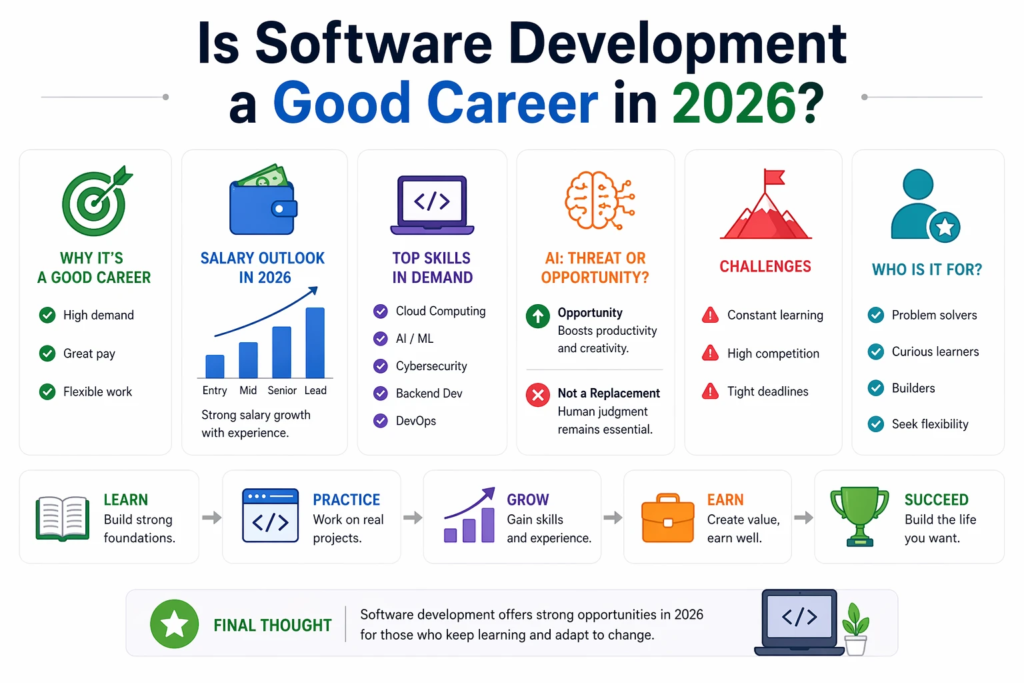
Absolutely.
Demand for skilled software engineers remains strong, especially for professionals who understand cloud computing, AI tools, cybersecurity, and software architecture.
Which AI coding tools are most popular?
Some of the most widely used AI coding assistants include:
- GitHub Copilot
- ChatGPT
- Claude
- Gemini
- Cursor
- Amazon Q
Each tool has strengths depending on your workflow and programming language.
Should beginners still learn programming?
Yes.
AI is most useful when you already understand programming fundamentals.
Learning to code helps you evaluate AI-generated solutions, debug problems, and build reliable applications.
Which software engineering jobs are safest from AI?
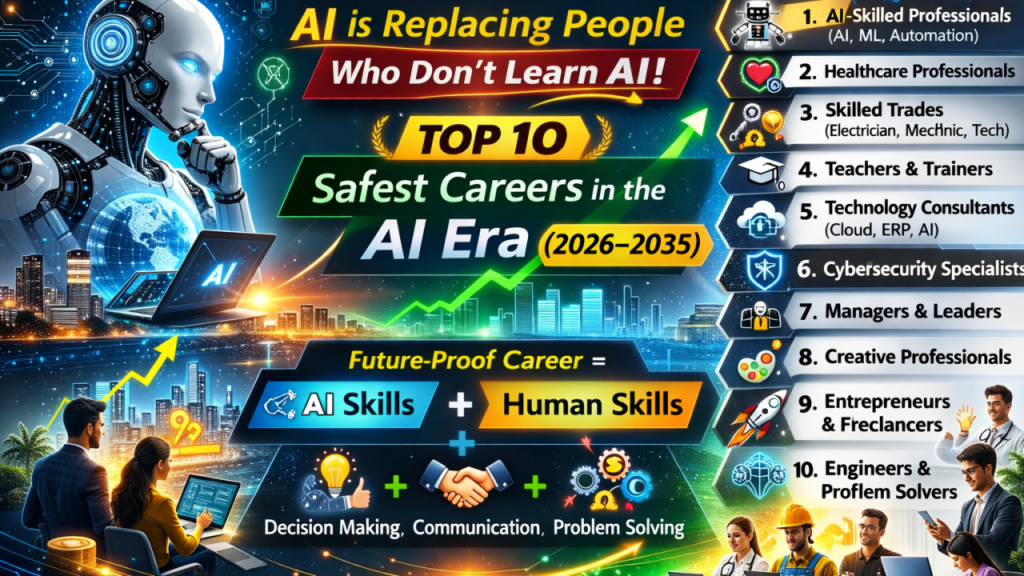
Roles involving decision-making and complex system design are expected to remain in high demand, including:
- Software Architect
- AI Engineer
- Cloud Engineer
- Cybersecurity Engineer
- DevOps Engineer
- Solutions Architect
- Staff Software Engineer
Final Verdict
Artificial Intelligence is transforming software development faster than any technology we’ve seen before.
It can generate code, explain programming concepts, automate repetitive tasks, and help developers work more efficiently.
But software engineering is about far more than writing code.
Building successful software requires creativity, problem-solving, communication, business understanding, security expertise, and architectural thinking—areas where human developers continue to play a critical role.
The future doesn’t belong to AI alone.
It belongs to software engineers who know how to use AI effectively.
If you’re a student, don’t stop learning to code.
If you’re already a developer, embrace AI as a productivity tool rather than seeing it as competition.
Those who continue learning, adapting, and improving their skills will remain valuable no matter how technology evolves.
Key Takeaways
✔ AI is transforming software development, not replacing software engineers.
✔ Companies are using AI to increase productivity—not eliminate engineering teams.
✔ Human creativity, communication, and decision-making remain essential.
✔ Learning AI tools alongside programming fundamentals gives developers a competitive advantage.
✔ The future belongs to engineers who can combine technical expertise with AI-powered workflows.
Continue Reading on TechThrilled.com
If you enjoyed this guide, you may also like:
- Best AI Coding Tools for Developers in 2026
- GitHub Copilot vs ChatGPT vs Claude vs Gemini
- Future of Software Engineering: Skills Every Developer Needs
- Top AI Tools Every Programmer Should Try
- How Artificial Intelligence Is Transforming Software Development
Last Updated: August 2026